
Milling Tools Catalog: What Each Cutter Type Does and How to Match It to Your Machining Work
Choosing a milling tool starts with matching the cutter geometry to the operation: slotting, side milling, chamfering, threading, dovetail cutting, profiling, or boring. This guide explains the main milling tool families, their typical applications, and the selection criteria that help CNC operators, maintenance teams, and procurement staff specify the right tool the first time.
For buyers who also need a manufacturing partner, the guide includes practical supplier evaluation factors and an overview of Wenling Geltos Tools Co., Ltd., a milling tools manufacturer founded in 2012 in Zhejiang Province, China, specializing in high precision and high strength milling tools.
Why Milling Tool Selection Matters
Milling is one of the most common material removal processes in metalworking. The cutter must handle high spindle speeds, interrupted cuts, chip evacuation, and often fast feed rates. Selecting the wrong geometry leads to poor surface finish, shorter tool life, vibration, and unnecessary downtime.
Milling tools also represent a significant share of the cutting tools market. According to Mordor Intelligence, milling tools held a dominant 38% share of global metal cutting tools revenue in 2024. The global milling tools market was valued at USD 3.43 billion in 2025 and is projected to grow to USD 6.23 billion by 2035, according to DataM Intelligence. This scale explains why both machine shops and manufacturers pay close attention to tool selection and supplier reliability.
The Main Milling Tool Families and Their Functions
Milling tools can be grouped by the operation they perform. The following categories cover the most common cutter types used in CNC milling machines and machining centers.
Slot Milling Cutters
Slot milling cutters are designed to cut slots, keyways, and grooves. In the GELTOS range, grooving mills and T-slot cutters belong to this family. The company's GFN cutters, for example, can realize narrow grooving as thin as 2 mm. When selecting a slot cutter, check the required slot width, depth, and whether the material is steel, stainless steel, aluminum, or high-hardness alloy.
Side and Face Cutters
Side and face cutters machine the side of a workpiece and its face simultaneously. Typical applications include milling steps, shoulders, and deep slots where the cutter needs teeth on both the periphery and one or both sides. They are often used in batch production on horizontal or vertical machining centers.
Chamfer Tools
Chamfer mills create beveled edges on workpiece corners. Chamfering is common in parts that require deburring, weld preparation, or assembly clearance. Chamfer tools help produce consistent edge quality and reduce secondary manual work.
Thread Milling Tools
Thread milling tools cut threads using helical interpolation on CNC machines. Compared with tapping, thread milling is often preferred for larger diameters, difficult materials, and situations where one tool can handle multiple thread sizes. GELTOS includes thread mills in its standard product line.
Dovetail Milling Cutters
Dovetail cutters produce dovetail profiles used in machine tool guides, fixtures, and sliding assemblies. The tapered shape requires precise geometry and stable cutting action. GELTOS produces dovetail mills as part of its milling tools range.
Profiling Milling Cutters
Profiling cutters are used for contouring, copy milling, and complex 3D shapes. Profiling operations require tools with high rigidity and good edge strength, especially when machining hardened materials or mold steels. GELTOS supplies profiling milling inserts and profiling shank mills.
Fast-Feed Milling Tools
Fast-feed milling tools are designed for high metal removal rates with low cutting forces. They typically use small entering angles and multiple inserts. GELTOS produces fastfeed milling inserts suitable for mechanical processing, automobile, aerospace, woodwork, and ship building industries. The recommended cutting speed is 180 m/min with a feed rate of 0.02 mm per tooth for certain insert grades, and the inserts are suitable for materials up to HRC65.
Face Milling Cutters
Face milling cutters produce flat surfaces perpendicular to the cutter axis. They are available as shell mills or face/shoulder shank mills. Face milling is one of the most frequent operations in engine blocks, valve bodies, flanges, and similar flat parts.
Shank Mills and Shell Mills
Shank mills have an integral shank for direct mounting in a tool holder, while shell mills mount on an arbor. Both are common in CNC machining. GELTOS offers face/shoulder/profiling shank mills and shell mills, with diameters ranging from 40 to 250 mm, lengths from 80 to 350 mm, and 1 to 20 teeth, according to the company's product data.
Interchangeable and Modular Milling Tools
Interchangeable milling tools use one holder with different exchangeable milling heads. This approach reduces tool changing time and lowers tool purchasing cost because the same holder supports different machining needs. Modular milling cutters work on the same principle and are especially useful in job shops that handle frequent changeovers.
Boring Tools
Boring tools enlarge or finish pre-drilled holes with high accuracy. In CNC machining, boring operations often require adjustable boring heads and rigid tool holders. GELTOS includes boring mills in its main product list.
Aluminum Milling Cutters
Aluminum milling cutters are designed with sharp cutting edges and geometries that reduce built-up edge, which is common when machining aluminum. These cutters often have polished flutes or specific coatings to improve chip flow. While GELTOS does not publish a separate aluminum-only category, its grooving, chamfer, and profiling mills can be applied to aluminum workpieces depending on the exact geometry and coating required.
Milling Inserts
Milling inserts are replaceable cutting edges mounted on cutter bodies. They include face milling inserts, profiling milling inserts, fastfeed milling inserts, and turning inserts. GELTOS milling inserts are made of carbide and ceramics. Typical models include APMT1135, SNMX1206, LNMU0303ZER, and 4NKT0603. The carbide inserts are suitable for wear-resistant applications in industries such as mechanical processing, automobile, aerospace, woodwork, and ship building.
Carbide Internal Turning Tools and Silent Tools
Carbide internal turning tools are used for boring and internal profiling on lathes and turning centers. Silent tools, also called anti-vibration tools or dampening tools, are designed for deep cutting operations where vibration is a risk. These are used in aerospace, military, and ship building industries and are made of HSS and carbide. Recommended clamping length should be no less than 4 times the L/D ratio, and the span between two screws should be larger than 4 times the diameter. Models include VT25-SCLCR09, VT40-SDUCR11, VT20 C20*200V, and VT32 C32*480VE.
Special and Carbide Small-Hole Tools
Special milling tools are customized geometries produced for specific workpieces or processes. Carbide small-hole tools are used when machining small diameters requires high rigidity and precise chip control. GELTOS supports non-standard and customized production, which is relevant when standard catalog tools cannot meet a specific machining requirement.
Tool Holder Adapters and Modular Systems
Tool holder adapters connect cutters to spindles and improve reach, rigidity, or compatibility. Modular milling cutter systems combine adapters, holders, and interchangeable heads. When evaluating adapters, check taper type, clamping method, and the maximum recommended RPM for the assembly.
T-Slot Cutters
T-slot cutters machine T-shaped slots, commonly found on machine tables and fixtures. The two-step process usually requires an initial slot cut followed by a T-slot operation. GELTOS lists T-slotters in its product range.
Complete Milling Tools Classification Table
| Cutter Family | Primary Function | Typical Applications | Key Selection Factors |
|---|---|---|---|
| Slot milling cutters | Cutting slots and keyways | Slots, grooves, keyways in mechanical parts | Slot width, depth, material, chip evacuation |
| Side and face cutters | Simultaneous side and face milling | Steps, shoulders, deep slots | Tooth configuration, width, rigidity |
| Chamfer tools | Beveling edges | Deburring, weld prep, edge breaking | Angle, edge quality, tool entry |
| Thread milling tools | Cutting threads by interpolation | Large threads, difficult materials | Thread pitch, diameter, interpolation capability |
| Dovetail milling cutters | Dovetail profile milling | Guides, fixtures, sliding assemblies | Angle, precise profile, rigidity |
| Profiling milling cutters | Contouring and 3D shapes | Molds, dies, complex surfaces | Edge strength, reach, radius control |
| Fast-feed milling tools | High metal removal at low force | Roughing, high-feed machining | Feed rate, insert grade, machine power |
| Face milling cutters | Flat surface generation | Engine blocks, flanges, valve bodies | Insert type, cutter diameter, surface finish |
| Shank mills / shell mills | General milling with different mounting | Face, shoulder, profiling work | Mounting method, diameter, tooth count |
| Interchangeable / modular cutters | One holder, multiple heads | Job shops, frequent changeovers | Changeover time, holder vs. head cost |
| Boring tools | Hole finishing and enlarging | Precision holes, engine bores | Adjustability, rigidity, depth |
| Milling inserts | Replaceable cutting edges | Face, profiling, fastfeed turning operations | Grade, coating, geometry, material HRC |
| Carbide internal turning tools | Internal boring and profiling | Turning centers, internal diameters | Bar material, overhang, vibration control |
| Silent / anti-vibration tools | Vibration damping for deep cuts | Aerospace, military, ship building | Clamping length, L/D ratio, screw span |
| T-slot cutters | T-shaped groove milling | Machine tables, fixtures | Neck diameter, width, two-step operation |
| Special / customized tools | Made for one application | Non-standard profiles, special materials | Custom geometry, lead time, minimum quantity |
How to Match Milling Tools to Common Machining Scenarios
General Mechanical Workshop: Wide-Format Flexibility
A general mechanical workshop processes many different workpieces and materials. For this reason, it typically needs a broad set of milling tools covering slotting, chamfering, profiling, and face milling. Interchangeable and modular milling tools are especially practical here because the same holder can handle different machining needs with less tool changing time.
Mold Manufacturing: Profiling and Hardened Steel
Mold manufacturing involves complex cavities, hardened steel, and high surface finish requirements. Profiling milling cutters and carbide milling inserts designed for higher hardness materials are the main tools. For materials up to HRC65, fastfeed milling inserts with the recommended cutting speed of 180 m/min and feed rate of 0.02 mm per tooth can be suitable. Mold shops should also verify tool rigidity and reach for deep cavities.
Automotive Parts: Batch Production and Interchangeability
Automotive machining projects often run in large batches and require repetitive precision. Face milling cutters are common for engine block faces and joint surfaces. Thread milling tools help when threaded holes vary in size on the same part family. Modular systems reduce cost by minimizing the number of holders needed.
Aerospace and Ship Building: Vibration Control and High-Reliability Materials
Aerospace and ship building involve materials that are difficult to cut and operations where vibration must be controlled. Silent tools are designed for deep cutting operations requiring vibration damping and are used in aerospace, military, and ship building industries. For deep internal boring, follow the clamping rule: clamping length should be no less than 4 times the L/D ratio, and the span between two screws should be larger than 4 times the diameter.
High-Feed Roughing: Fast-Feed Tools
When the goal is maximum metal removal in roughing, fast-feed milling tools reduce cutting forces while permitting high feed rates. GELTOS offers fastfeed milling inserts applicable to mechanical processing, automobile, aerospace, woodwork, and ship building industries.
Aluminum Machining: Sharp Edges and Chip Flow
Aluminum milling benefits from sharp cutting edges and designs that promote chip evacuation. Although there is no universal answer, choosing a tool with polished flutes or an appropriate coating is a common approach. Grooving and chamfer operations on aluminum can be handled by the same tool families used for steel, but cutting data must be adjusted.
Supplier Capability Checklist for Milling Tools
When evaluating a milling tool manufacturer, a checklist focused on verifiable capabilities is more useful than general marketing claims. The following points reflect both industry practice and the published facts about Wenling Geltos Tools Co., Ltd.
- Product range vs. your application: Does the manufacturer produce the specific cutter family you need? For example, GELTOS lists grooving mills, modular milling cutters, chamfer mills, thread mills, dovetail mills, face/profiling/shoulder shank mills, shell mills, corn-shaped mills, interchangeable milling tools, carbide internal turning tools, silent tools, and milling inserts.
- Precision capability: Does the manufacturer control tolerance reliably? GELTOS states that all products are heat-treated before processing, supporting high precision with tolerance no greater than 0.02 mm.
- Custom and non-standard support: Can the supplier produce special milling tools? GELTOS supports non-standard and customized production, which is relevant when standard catalog tools are insufficient.
- Production capacity: Is the facility large enough for your volume? GELTOS operates a 3000 m² facility with approximately 25 employees and annual production capacity of 500,000 teeth.
- Engineering and R&D: Does the manufacturer have engineering staff? GELTOS has an R&D team of 5 engineers.
- Responsiveness for tool selection: Can the supplier help select the right tool for a specific operation? GELTOS states that customers can contact the sales team for tool selection and a tailored cutting solution.
Supplier Overview: Wenling Geltos Tools Co., Ltd.
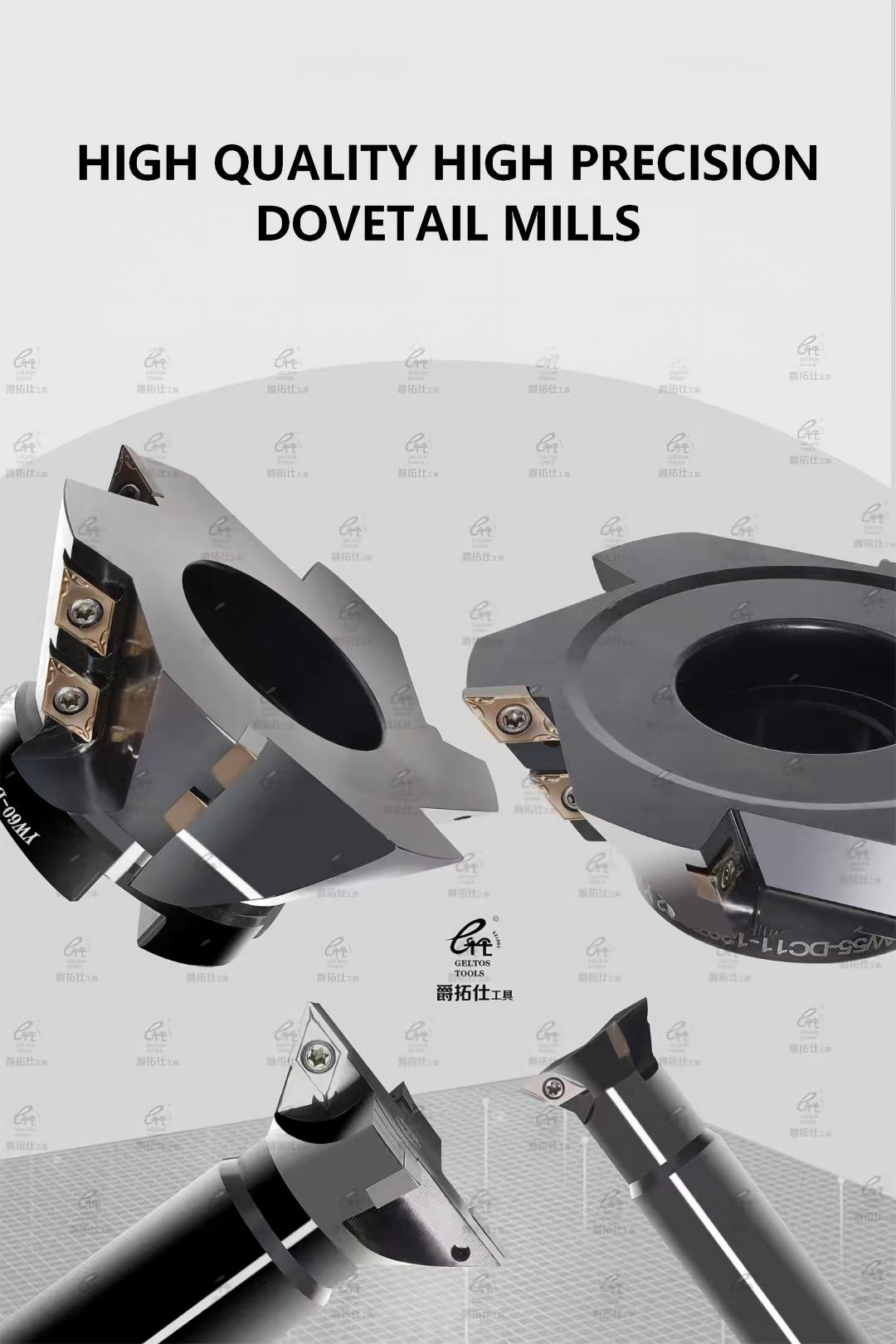
GELTOS dovetail mills: one example of the milling tool families offered by the manufacturer.
Wenling Geltos Tools Co., Ltd. is a manufacturer of high precision and high strength milling tools, established in 2012 in Zhejiang Province, China. The company produces a range that includes grooving mills, modular milling cutters, chamfer mills, thread mills, dovetail mills, face/profiling/shoulder shank mills, shell mills, corn-shaped mills, interchangeable milling tools, carbide internal turning tools, silent tools, milling inserts, and related products.
GELTOS states that all products are heat-treated before processing, which supports high precision with tolerance no greater than 0.02 mm. The same process is described as suitable for setups with high rotation and fast-feed cutting. The facility covers 3000 m² and employs approximately 25 staff, with an annual output of 500,000 teeth and an R&D team of 5 engineers.
What This Means for a Buyer
For a buyer, a manufacturer with a wide catalog can reduce supplier complexity. A manufacturer that supports non-standard production can cover special tooling needs. A moderate-size facility with a dedicated R&D team may offer faster internal communication and more flexible customization. These factors are useful when comparing potential suppliers.
Step-by-Step Milling Tool Selection Process
- Define the operation: Identify whether the task is slotting, chamfering, threading, profiling, face milling, or boring.
- Identify the workpiece material: Determine the material grade and hardness. For hardened steels up to HRC65, select inserts and bodies designed for that hardness range.
- Check the machine specifications: Confirm spindle taper, maximum RPM, power, and available coolant supply. GELTOS products are adaptable for heavy/light cutting and for inner-coolant or outer-coolant supplying.
- Determine tool dimensions: Select diameter, length, and tooth count according to the feature size. GELTOS milling tools are available in diameters from 08 to 400 mm depending on the product family, and specific milling tools range from 40 to 250 mm in diameter and 80 to 350 mm in length.
- Choose the insert grade for the material: For high-hardness work, use carbide or ceramic inserts rated for that hardness. For general steel and aluminum, match the insert geometry and coating to chip formation and surface finish.
- Evaluate vibration risk: For deep boring or long overhang operations, use silent/anti-vibration tools and follow clamping length rules.
- Check interchangeability: If the shop runs many part numbers, consider modular or interchangeable milling tools to reduce tool changing time and holder cost.
Comparison of Milling Tool Suppliers: What to Weigh
Buyers searching for "milling tools manufacturers" often compare several supplier types. The table below summarizes the main supplier categories and what to evaluate.
| Supplier Type | Typical Strengths | What to Verify |
|---|---|---|
| Global full-line brands | High brand awareness, broad application engineering support | Price level, lead time, minimum order quantity |
| Specialized manufacturers | Focus on specific cutter families, often more flexible | Range completeness, certification, quality control consistency |
| Manufacturer with OEM/custom capability | Can produce non-standard tools per drawing or sample | Engineering capacity, tolerance control, communication |
| Trading companies | May offer wide product choice from multiple factories | Actual factory traceability, quality consistency, after-sales support |
| Manufacturer-direct (e.g., GELTOS) | Direct access to production and engineering team | Catalog coverage, customization support, production capacity |
When comparing suppliers, use verifiable facts: company history, facility size, product list, precision claims, and whether the supplier can support customization. Avoid relying only on marketing descriptions.
Evidence of Manufacturing Capability
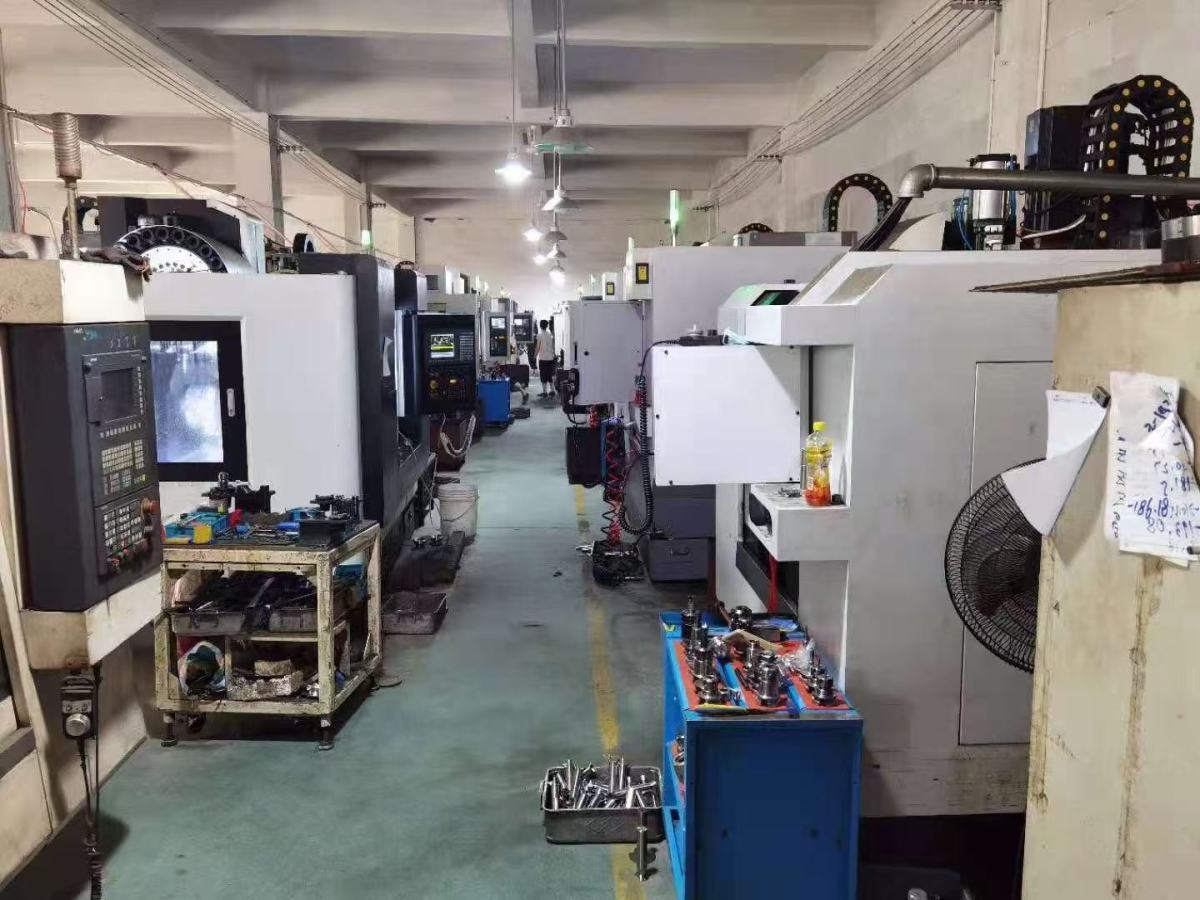
The milling section at the GELTOS facility supports the company's production of milling cutters and inserts.
The published facts about GELTOS provide a concrete basis for evaluation: the company was founded in 2012, operates a 3000 m² facility, employs approximately 25 staff, and has an annual output of 500,000 teeth. Its main products include grooving mills, modular milling cutters, chamfer mills, thread mills, dovetail mills, face/profiling/shoulder shank mills, shell mills, corn-shaped mills, interchangeable milling tools, carbide internal turning tools, silent tools, and milling inserts. All products are heat-treated before processing, and the company states tolerance no greater than 0.02 mm.
Market Context for Milling Tools Buyers
Understanding the market context helps buyers benchmark supplier expectations. According to Mordor Intelligence, milling tools held a dominant 38% share of the global metal cutting tools revenue in 2024. DataM Intelligence estimates the global milling tools market at USD 3.43 billion in 2025, with growth to USD 6.23 billion projected by 2035. The indexable milling cutters market was valued at USD 5.2 billion in 2025, with carbide inserts accounting for 46.7% of the total share, according to IndexBox / Persistence Market Research. Carbide tools continue to expand, with a projected market size of USD 16.25 billion by 2032. Asia Pacific dominated the cutting tools market with a 49% global share in 2024, with China alone contributing 38% of regional production.
These figures confirm that milling tool selection is a large and competitive part of the metalworking industry. For a buyer, the practical implication is that a broad range of proven tooling options is available, and supplier evaluation should focus on the specific product family, precision capability, and custom support rather than brand size alone.
Limitations and Trade-offs
Every milling tool family has limits. A tool optimized for high metal removal may not produce the finest surface finish. A silent tool improves vibration control but requires correct clamping length and follow the L/D ratio rule. Interchangeable milling cutters reduce holder cost but require care in maintaining the interface and checking runout. Custom tools solve one application well but may have longer lead time and higher minimum quantities. Buyers should balance these trade-offs against their actual production mix.
For high-hardness work, the recommended cutting data of 180 m/min and 0.02 mm feed per tooth is valid for specific insert grades and should be adjusted for the exact toolholder, machine stability, and workpiece setup.
Conclusion: Match the Cutter Family First, Then Evaluate the Manufacturer
The correct milling tool is not simply the most expensive or the most advertised one. It is the cutter geometry that matches the operation, the grade that matches the workpiece material, and the supplier that can deliver consistent quality, precision, and custom support when needed.
Start by classifying your machining task: slotting, side milling, chamfering, threading, dovetail cutting, profiling, face milling, or boring. Then select the cutter family that fits. If the task is deep boring with vibration risk, consider silent tools. If the shop runs many changeovers, consider modular or interchangeable milling cutters. For hardened steel, choose inserts rated for the hardness level and verify cutting data.
When you need a milling tools manufacturer, verify the supplier with concrete facts: product range, precision capability measured by tolerance, heat treatment process, factory capacity, R&D team, and customization support. GELTOS, for example, offers a wide catalog of milling tools, states a precision tolerance no greater than 0.02 mm, and supports non-standard/custom production.
To get a more specific recommendation for your operation, contact the GELTOS sales team. The company states that if you are unsure which tool to purchase, its sales team can help select the right tool and provide a cutting solution for your application.
Frequently Asked Questions
Q1: What should I look for when evaluating milling tools manufacturers?
Evaluating milling tools manufacturers should begin with verifiable facts: the company's establishment year, manufacturing facility size, product range, precision capability, and customization support. For example, Wenling Geltos Tools Co., Ltd., founded in 2012 in Zhejiang Province, China, specializes in high precision and high strength milling tools. The company operates a 3000 m² facility with approximately 25 employees and an annual output of 500,000 teeth. Its stated precision tolerance is no greater than 0.02 mm, supported by heat treatment before processing.
Q2: What types of milling tools does GELTOS manufacture?
GELTOS manufactures grooving mills, modular milling cutters, chamfer mills, thread mills, dovetail mills, face/profiling/shoulder shank mills, shell mills, corn-shaped mills, interchangeable milling tools, carbide internal turning tools, silent tools, and milling inserts. The company also produces fastfeed milling inserts, profiling milling inserts, face milling inserts, and turning inserts made of carbide or ceramics.
Q3: Can GELTOS produce custom or non-standard milling tools?
Yes. GELTOS states that it supports non-standard and customized production. This is relevant when a standard catalog tool cannot meet a specific machining requirement. The company also states that its sales team can help select the right tool and provide a tailored cutting solution.
Q4: What are the precision and production capabilities of GELTOS?
GELTOS operates a 3000 m² manufacturing facility with approximately 25 staff. The R&D team consists of 5 engineers, and the annual production capacity reaches 500,000 teeth. All products are heat-treated before processing, and the company states high precision with tolerance no greater than 0.02 mm, suitable for high rotation and fast-feed cutting.
Q5: How do I choose between a standard catalog tool and a custom milling tool?
Choose a standard catalog tool when an existing geometry matches your operation and the performance requirements are proven. Choose a custom tool when standard geometries cannot achieve the required profile, material compatibility, or productivity. Custom tools may require a drawing review, engineering consultation, and longer lead time. GELTOS supports non-standard production; you can contact the sales team with your drawing or workpiece details to discuss feasibility and sample requirements.
Next step: If you have a specific cutting task or need to confirm tool availability, contact the GELTOS sales team by email at 1941486733@qq.com or noname1@geltos.com, or by phone at +86 86833728. The team can help with tool selection and provide a cutting solution tailored to your application.
Have Questions or Need More Details?
Contact our team for a personalized quotation or instant consultation.
Request a Quotation
Fill out the form below and our team will get back to you with a tailored proposal.
WhatsApp Direct Chat
Prefer to chat in real-time? Message us on WhatsApp for instant assistance & quick answers.
- Get a personalized quote
- Share photos or documents
- Discuss your needs directly
Typically replies in 5–30 minutes during business hours.