
Silent Tools Explained: Anti-Vibration Damping for Deep Milling Operations
A silent tool is a milling tool designed to suppress vibration rather than only resist it. In deep milling — long-overhang pockets, slots and cavities where a standard cutter begins to chatter — a silent tool adds damping to the tool assembly so the cut stays stable at depths and feeds a conventional cutter cannot hold. This explainer sets out the concept, the difference from standard milling cutters, the aerospace, military and shipbuilding work where damped tools are used, and the checks a buyer should complete before ordering a specific model.
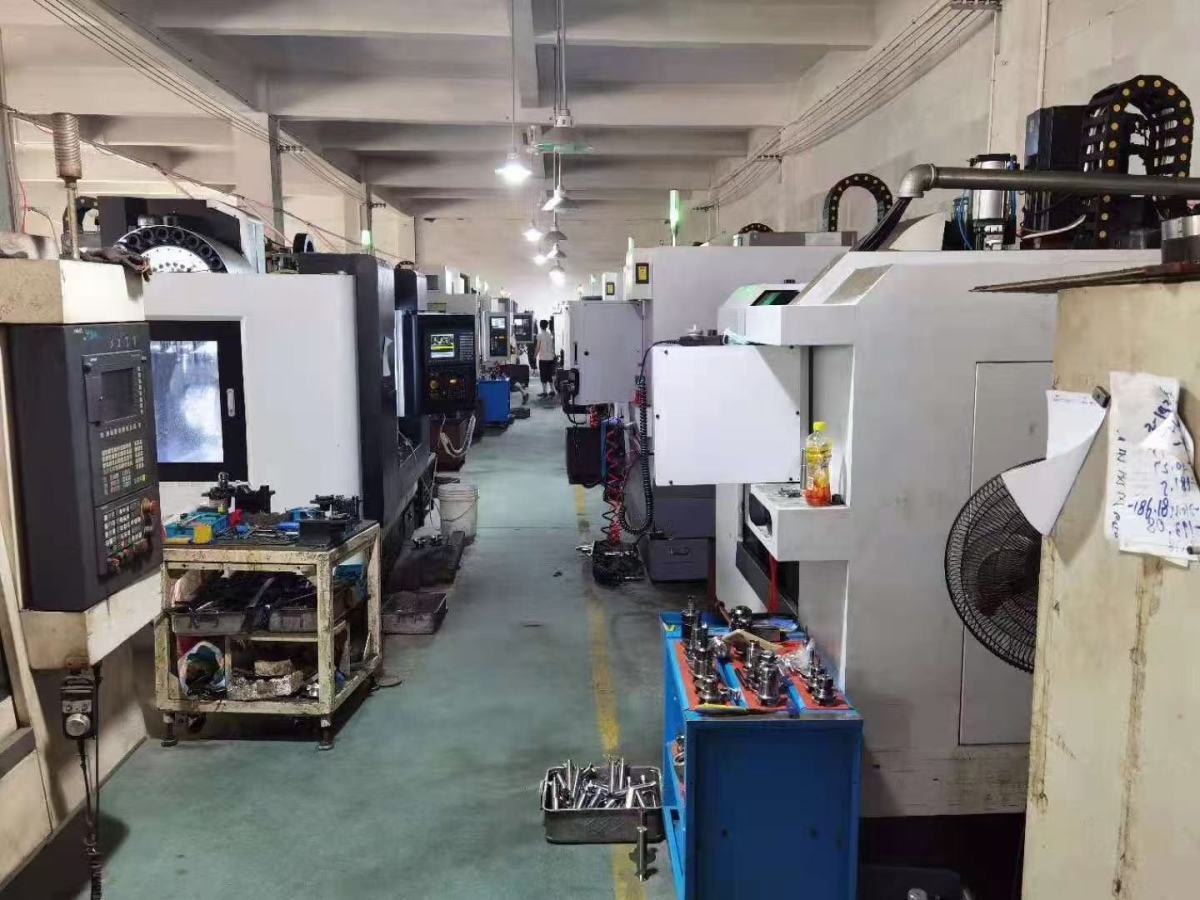
The Problem: Deep Milling Usually Fails at the Tool Assembly, Not the Insert
Deep milling is limited by the tool assembly before it is limited by the insert grade. When a cutter has to reach into a pocket, slot or cavity, overhang increases, and the tool behaves like a beam: deflection and vibration amplitude grow much faster than length does, while the natural frequency of the assembly falls toward the frequency at which teeth enter the material. Once those two frequencies come close, the cut becomes self-excited. The result is chatter.
Chatter is not only a noise problem. It transfers a periodic load into the cutting edge, the holder and the spindle, and it reproduces its own pattern on the next revolution, which is why it tends to grow rather than settle. Machinists recognise it by a set of symptoms that usually appear together:
- Regular vibration marks on the floor or wall of the cut, often with a visible pitch.
- Unstable surface finish that changes along the depth of the pocket.
- Dimensional drift and difficulty holding position or parallelism.
- Chipped or micro-fractured cutting edges and short, unpredictable tool life.
- Rising spindle load, audible ringing and increased machine vibration.
The standard response on the shop floor is to reduce depth of cut, feed rate or spindle speed until the noise stops. That works, but it works by removing productivity: more passes, longer cycles, more tool changes and more opportunities for error. In many deep-milling jobs the parameters have already been reduced to the point where the process is safe but no longer competitive, and the part still needs rework or polishing to meet surface requirements.
Parameter changes also stop helping when the geometry sets the reach. A deep closed pocket, an internal slot in a large structural part or a cavity behind a wall cannot be reached with a short, rigid cutter, and no feed or speed adjustment restores stiffness that is not there. At that point the answer is a different tool structure, not a different set of numbers.
Industry Background: Where the Demand for Damped Milling Comes From
Demand for stable deep milling follows the way large parts are now designed. The global milling tools market was projected at US$ 3.43 billion in 2025, with a forecast compound annual growth rate of 6.2% for 2026–2035, according to DataM Intelligence (2026). Growth of that kind is driven less by more machines than by harder-to-machine parts, higher material removal targets and tighter surface requirements on the parts that remain.
Three industries concentrate those requirements:
- Aerospace. Structural components are frequently machined from solid billet with deep pockets, thin ribs and long walls. Reach is fixed by the part design, and surface integrity and dimensional consistency are controlled requirements, so unstable cutting is not an option that can be tolerated and corrected later.
- Military. Armoured and structural components often combine deep cavities with tough materials and batch quantities where repeatability matters as much as the first part. A process that depends on the operator listening for chatter is difficult to repeat across a batch.
- Shipbuilding and heavy equipment. Large weldments and hull components are machined on machines whose rigidity may be lower than that of a dedicated aerospace cell, while the reach required is often greater. Damping compensates for some of what the machine cannot provide.
A second driver is the spread of high-speed spindles and fast-feed cutters. Higher spindle speeds and feed rates raise output only if the tool assembly stays stable; when stability is the constraint, additional spindle speed simply moves the process closer to the unstable region. That is why damped tooling has moved from a specialist accessory to a standard line item in deep-milling process planning.
On the supply side, milling tool production is concentrated in clusters, and Wenling in Zhejiang Province, China is one of them. WENLING GELTOS TOOLS CO., LTD., founded in 2012, manufactures milling tools from a 3,000 m² facility and lists silent tools alongside grooving mills, modular milling cutters, chamfer mills, thread mills, dovetail mills, face, shoulder and profiling shank mills, shell mills, interchangeable milling tools, milling inserts and carbide internal turning tools. Its stated product logic is precision and strength rather than the widest possible catalogue, which is the relevant background for anyone comparing damped tools.
What Silent Tools Are and How Damping Works
Definition
A silent tool, also described as an anti-vibration tool, damped tool or silent tooling, is a milling tool whose body contains a vibration-damping system in addition to the cutting head. The damping system reduces the amplitude of vibration at the tool tip, which allows the tool to be used at longer overhang, higher depth of cut or higher feed than an undamped cutter of comparable size. The word silent refers to the effect on the process, not to a guaranteed noise level.
Stiffness versus damping
A standard milling cutter controls vibration through stiffness and mass. Carbide helps because it is stiff relative to steel, and a short, thick shank helps because it resists bending. Both properties fall away quickly as overhang grows, which is why long-reach versions of standard cutters become disproportionately less capable.
Damping works on a different principle. Instead of trying to make the bar infinitely rigid, a damped bar absorbs the energy that would otherwise accumulate as vibration. In the configurations most commonly used in milling, the bar contains a tuned damping element supported by elastic members. The element is tuned close to the natural frequency of the bar and moves out of phase with it, so vibration energy is dissipated instead of amplified. The practical effect is a wider stable cutting window: the tool tolerates combinations of depth, feed and speed that would make a standard cutter chatter.
The distinction matters commercially. A silent tool is not simply a longer standard tool, and it is not a substitute for correct workholding, a rigid fixture or a machine in reasonable condition. It is a structural answer to a structural problem, applied where the geometry of the part prevents a short, rigid solution.
What to confirm about the damping system
Because the damping element is inside the bar, buyers cannot assess it by looking at the tool. Ask the supplier to state the damping principle used, the overhang range the model is intended for, whether the element is sealed for life or serviceable, and how the tool should be handled and stored. A damped bar that has been dropped, over-tightened or modified is no longer a known quantity, and that should be reflected in receiving inspection and in how the tool is treated on the shop floor.
Interfaces, heads and the rest of the catalogue
Most silent tools are sold as a system rather than a single piece: a damped bar or holder, an interface, and a cutting head or insert seat. Interchangeable and modular designs let one holder carry different milling heads, so a shop can cover several operations without buying a complete tool for each one. GELTOS states that its interchangeable and modular milling holders reduce tool-changing time and cut tool purchasing cost by fixing one holder and changing the head to suit the machining need. For a buyer, that claim is worth testing against the actual operation list: the benefit appears when several operations share one interface, not when a single operation is involved.
Material, heat treatment and the numbers buyers ask for
Silent tools are offered in carbide and HSS configurations. Carbide is the usual choice where spindle speed and feed are high and the material is abrasive or hard; HSS remains relevant where toughness and edge security matter more than speed. In both cases the bar and the cutting head are only as good as the heat treatment and grinding behind them.
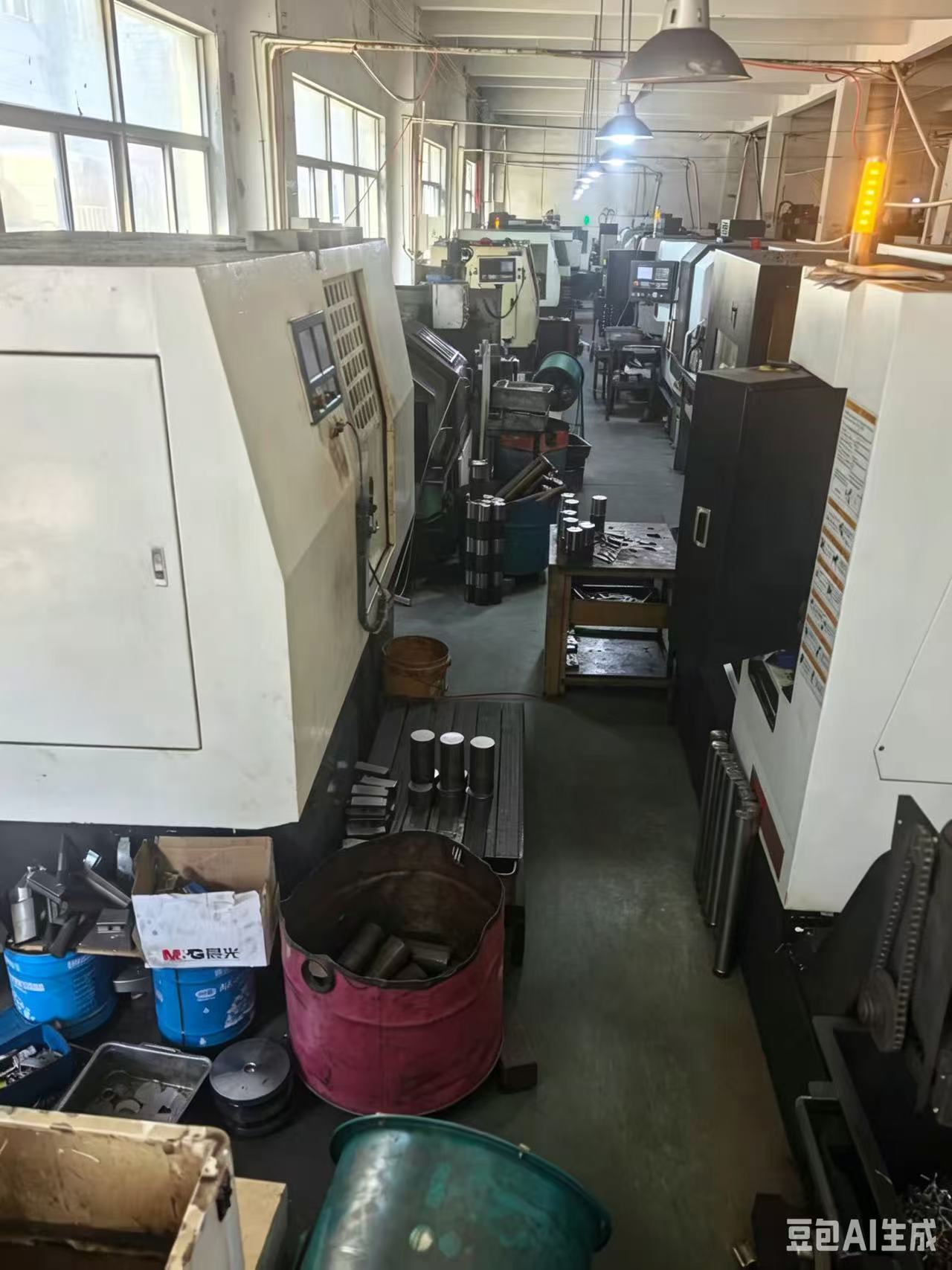
GELTOS states that its products are heat-treated before processing, holding tolerance to no greater than 0.02 mm, and that this supports high-rotation and fast-feed cutting. The company reports tool hardness of HRC40 and above, against roughly HRC30 for tools produced without that treatment. Post-quenching machining is used to improve strength and precision and to control process risk, and the documented quality route is internal factory inspection. These are manufacturer statements, not independent test results, so a buyer should request hardness records, dimensional reports and first-article inspection for the specific model rather than treating the headline figures as a specification for every item in the range.
Designations: Reading a Silent Tool Model Number
Silent tool configurations from GELTOS carry designations such as VT25-SCLCR09, VT40-SDUCR11, VT20 C20*200V and VT32 C32*480VE. These codes are the practical entry point for a quotation, but they are not self-explanatory to every buyer, and they should never be ordered on the assumption that a similar-looking code means a similar tool.
Two things are worth separating. The first is the cutting end: the insert seat and the style of cutter, which determine what the tool can do and which inserts it consumes. The second is the bar and interface: the connection to the machine, the working length and the overhang the tool is designed to run at. A designation typically encodes both, and a single character difference can change either. Before ordering, confirm the insert seat and insert grade, the shank or coupling interface, the working length, the coolant arrangement and the handedness of the cut.
Standardisation helps here. ISO 11529-2:1998 specifies the designation system for shank-type and bore-type milling cutters with indexable inserts, which gives buyers and suppliers a common way to describe the same configuration. Separately, ISO 13399 is described by Mitsubishi Materials as an international standard for the representation and replacement of cutting tools in computer-readable form, which matters if the tool data has to be loaded into CAM, tool-management or ERP systems. Neither standard proves that a specific tool performs as required; they make the conversation about the tool more precise.
Step-by-Step: Evaluating a Silent Tool for a Deep Milling Job
The sequence below is the one that avoids the two common failures: buying a damped tool that does not fit the machine interface, and buying one that fits but is not needed because the problem was fixture rigidity or programming.
- Define the operation in numbers. Record pocket depth, slot width, corner radius, material and condition, required surface and tolerance, machine model and spindle taper, and the holder currently used. A drawing plus a photo of the set-up resolves most of the ambiguity.
- Establish the required reach and the interference envelope. Measure the overhang the part actually forces, not the overhang the shop would prefer. If the required reach is within the range of a short, rigid cutter, damping is not the first solution.
- Separate parameter problems from structural problems. If the process is stable at reduced parameters but not at target parameters, the tool assembly is the constraint. If the process is unstable at any parameter, check workholding, fixture stiffness, spindle condition and tool runout first.
- Select the interface and head before the price. Confirm that the bar couples to the machine and existing holders, that the head matches the operation, and that the insert grade suits the material. GELTOS modular holders are intended to let one holder carry different heads, which is only useful if the interface matches what the shop already runs.
- Confirm the insert seat and consumables. Establish which inserts the designated seat takes, how many edges are available, and whether the inserts are a standard item or a special. A tool is only as available as its consumables.
- Audit the tool data and documentation. Ask for the dimensional drawing, hardness and tolerance records, material grade of the bar, and the recommended overhang range. Where third-party certification is required by the end customer, establish early that GELTOS relies on internal inspection and plan additional verification accordingly.
- Run a structured trial. Machine the same feature with the same fixture and step depth of cut and feed upward while monitoring sound, surface finish, dimensional result and edge wear. Stop increasing parameters at the point where the surface begins to change character, not after chatter becomes audible.
- Commercial close-out. Agree price per line item for body, heads, inserts and spares, ask for a written lead time, and set a reorder point for heads and inserts before the first production run starts.
Use Cases: Where Damped Milling Pays Back
Aerospace structural parts
Pockets and channels machined into aluminium or titanium billets combine deep reach with thin remaining walls. Chatter in these features shows up as surface marks and dimensional variation that are expensive to correct and difficult to explain in a concession. A damped tool changes the economics because it allows the operation to run closer to the intended parameters, reducing the number of passes and the hand work that follows. The same geometry also makes damped tools useful on engine and landing-gear components where access is restricted.
Military components
Military work adds tough materials and batch discipline. Where a batch of parts must be produced to the same result, a process that depends on an experienced operator backing off the feed at the first sign of noise is fragile. Damping reduces the operator-dependent part of the process, which supports repeatability across a batch and makes parameter settings easier to document and audit.
Shipbuilding and large weldments
Shipyard and heavy-equipment machining often involves large components, long reaches and machines that were not built as high-speed machining centres. Damped tooling compensates for some of the assembly compliance that cannot be removed from the machine or the set-up, which is why silent tools appear in this sector alongside more conventional long-reach cutters.
General industry: moulds, hydraulics and energy parts
Deep ribs in moulds, internal slots in hydraulic blocks and recessed features in energy components all create the same condition: reach fixed by geometry, stability limited by the tool. GELTOS also produces narrow grooving cutters that reach 2 mm in width, which matters when a damped tool has to be matched to a narrow slot rather than a broad pocket.
Comparison Table: Silent Tools Against Alternative Approaches
The table compares the approaches a buyer is most likely to shortlist for a deep-milling feature. It uses qualitative comparisons only; performance in a specific material and machine must be established by trial.
| Approach | How vibration is controlled | Typical overhang regime | Changeover and logistics | Cost logic | Main limitation |
|---|---|---|---|---|---|
| Standard solid carbide end mill | Stiffness and mass of the tool body | Short to moderate | Single piece, simple to stock and replace | Lowest purchase price per tool | Chatter once overhang exceeds the stable range; parameters must be reduced |
| Silent (damped) milling tool | Tuned damping element inside the bar, plus a stiff body | Long overhang, deep pockets and cavities | Bar plus head or insert seat; handling matters | Higher purchase price, justified by fewer passes and less scrap | Not a fix for weak fixtures or worn spindles; requires correct set-up and care |
| Modular interchangeable-head system | Stiffness of the holder, with damping where a damped bar is used | Medium to long, depending on the bar | One holder, several heads; faster tool changes | Reduces tool-changing time and tool purchasing cost across several operations | Each interface adds a connection to maintain and check |
| Long-reach HSS cutter | Toughness of the tool material, run at conservative parameters | Moderate | Simple, easy to recondition | Low initial cost | Speed and feed limited; deflection remains at long reach |
Limitations and Commercial Risk
A silent tool is a performance purchase, and it should be treated as one. The purchase price is higher than that of a comparable standard cutter, the benefit depends on the operation repeating often enough to recover that price, and the damping element imposes handling discipline that not every shop enforces. Buyers should also note that GELTOS quality assurance is documented as internal factory inspection rather than third-party certification. That is workable for many industrial buyers, but it places the burden of verification on the purchasing organisation: ask for inspection records, hardness and dimensional data, and where the end customer requires certification, plan for additional testing or an audit.
Delivery and capacity are the second commercial risk. GELTOS risk documentation identifies delivery timeline and production capacity uncertainty as risks the company manages through internal processes, and quality consistency as a further risk controlled through post-quenching machining and internal inspection. In practice, that means buyers should obtain written lead times per line item, hold buffer stock of heads and inserts, and avoid scheduling a first production run on the assumption that a special tool will arrive early. None of these points disqualifies the supplier; they define what a well-run purchase looks like.
Frequently Asked Questions
Do silent tools require third-party certification for aerospace or defense work?
Silent tools are not a certified category in themselves. ISO 11529-2:1998 standardises the designation of shank-type and bore-type milling cutters with indexable inserts, which helps buyers order the same configuration consistently, but it is not a performance or conformity certificate. GELTOS documentation states that quality assurance rests on internal factory inspection rather than third-party certification. For regulated aerospace or defense supply chains, request inspection records, material certificates and first-article reports, and plan receiving inspection or a supplier audit.
Can silent tools handle slot milling, side milling and profiling as well as boring?
Damping is a property of the tool assembly, so it can be applied to any milling operation where reach causes vibration, including slot milling, side and face milling, profiling and deep pocketing. GELTOS lists slot milling cutters, side and face cutters, chamfer tools, thread milling tools, dovetail cutters, modular milling cutters, milling inserts, interchangeable milling tools and silent tools in its range. For a specific slot or cavity, send the drawing with width, depth, corner radius, material and machine interface so the insert seat and shank can be confirmed.
How should the price of a silent tool be compared with a standard cutter?
Compare cost per accepted part, not unit price. A damped tool usually carries a higher purchase price than a standard cutter, but it can remove the extra passes, manual parameter reduction and scrapped parts that chatter causes. GELTOS states that its interchangeable and modular holders let one holder carry different milling heads, reducing tool-changing time and tool purchasing cost, and describes its cost position as goods-for-value. Ask for a quotation that separates body, heads, inserts and spares.
Can a buyer test a silent tool before placing a production order?
Yes. Request a sample or trial unit and define the test before it starts: same material, same machine, same fixture, then step up depth of cut and feed while recording surface finish, dimensional result, vibration behaviour and edge wear. A trial is more useful than a catalogue comparison because damping performance depends on the whole assembly, including holder, overhang and spindle. GELTOS handles sample and quotation requests through its sales team at noname1@geltos.com or +86 173 1753 5152.
What lead time should be planned for a silent tool order?
No fixed lead time applies to the category. It depends on whether the tool is a catalogue configuration or a special, on insert grade availability and on order quantity. GELTOS risk documentation identifies delivery timeline and production capacity uncertainty as commercial risks the company manages through internal processes, so buyers should ask for a written lead time per line item rather than a single figure. For a first order, add buffer stock of heads and inserts and confirm the reorder interval before production starts.
Conclusion: Match the Tool Structure to the Constraint
Silent tools exist because deep milling is a structural problem. When the part fixes the reach, reducing parameters is a way of accepting lower productivity rather than solving the cause. A damped tool addresses the cause directly by widening the stable cutting window, and it does so most convincingly in aerospace, military and shipbuilding work where deep features, tough materials and repeatability requirements meet.
The buying decision comes down to a short set of checks: confirm that the constraint is the tool assembly rather than the fixture or the machine; confirm the interface, head and insert seat before discussing price; ask for hardness, tolerance and inspection records rather than accepting headline figures; trial the tool on the actual feature; and settle lead time and consumable stock before the first production run. Buyers who work through that sequence get a tool that behaves as intended. Buyers who skip it get an expensive cutter that performs like the one it replaced.

Request a Silent Tool Quotation or Trial Sample
Send the drawing, material, machine interface and required reach, and the GELTOS team will confirm the matching silent tool configuration, insert seat and available heads. Catalogue models include VT25-SCLCR09, VT40-SDUCR11, VT20 C20*200V and VT32 C32*480VE; special configurations are quoted on request.
Email: 1941486733@qq.com or noname1@geltos.com | Tel: +86 86833728 | Mobile: +86 173 1753 5152
WENLING GELTOS TOOLS CO., LTD., East Side of No. Three Road, Wenqiao Town, Wenling, Taizhou City, Zhejiang Province, China
Website: www.geltos.com
Have Questions or Need More Details?
Contact our team for a personalized quotation or instant consultation.
Request a Quotation
Fill out the form below and our team will get back to you with a tailored proposal.
WhatsApp Direct Chat
Prefer to chat in real-time? Message us on WhatsApp for instant assistance & quick answers.
- Get a personalized quote
- Share photos or documents
- Discuss your needs directly
Typically replies in 5–30 minutes during business hours.