
Top Silent Tools for Deep Cutting: Ranking Anti-Vibration Solutions
Top Silent Tools for Deep Cutting: Ranking Anti-Vibration Solutions
Short answer: when deep cutting is the binding constraint, the tooling that ranks highest is the purpose-built silent tool — the anti-vibration bar and holder family — followed by interchangeable and modular milling holders, carbide internal turning tools, long-reach face, shoulder and profiling shank mills and shell mills, narrow grooving mills, and finally the milling inserts that define the cutting edge itself. This article ranks the deep-cutting families supplied by WENLING GELTOS TOOLS CO., LTD. by how directly each one suppresses chatter at long overhang, then places that range beside the verified global positions of Sandvik Coromant, Kennametal and IMC Group (Iscar).
Two disclosure points before the ranking. First, the order below is built from published product-range facts, documented process data (post-quench machining, hardness of HRC40 and above, tolerance within 0.02 mm) and standard long-overhang application logic — not from laboratory damping measurements, which are not published for these items. Second, where a designation such as VT25-SCLCR09 appears, it is used as an example of the format anti-vibration holders follow; the exact designation, overhang and insert interface for any specific tool must be confirmed against the manufacturer's technical data before ordering.
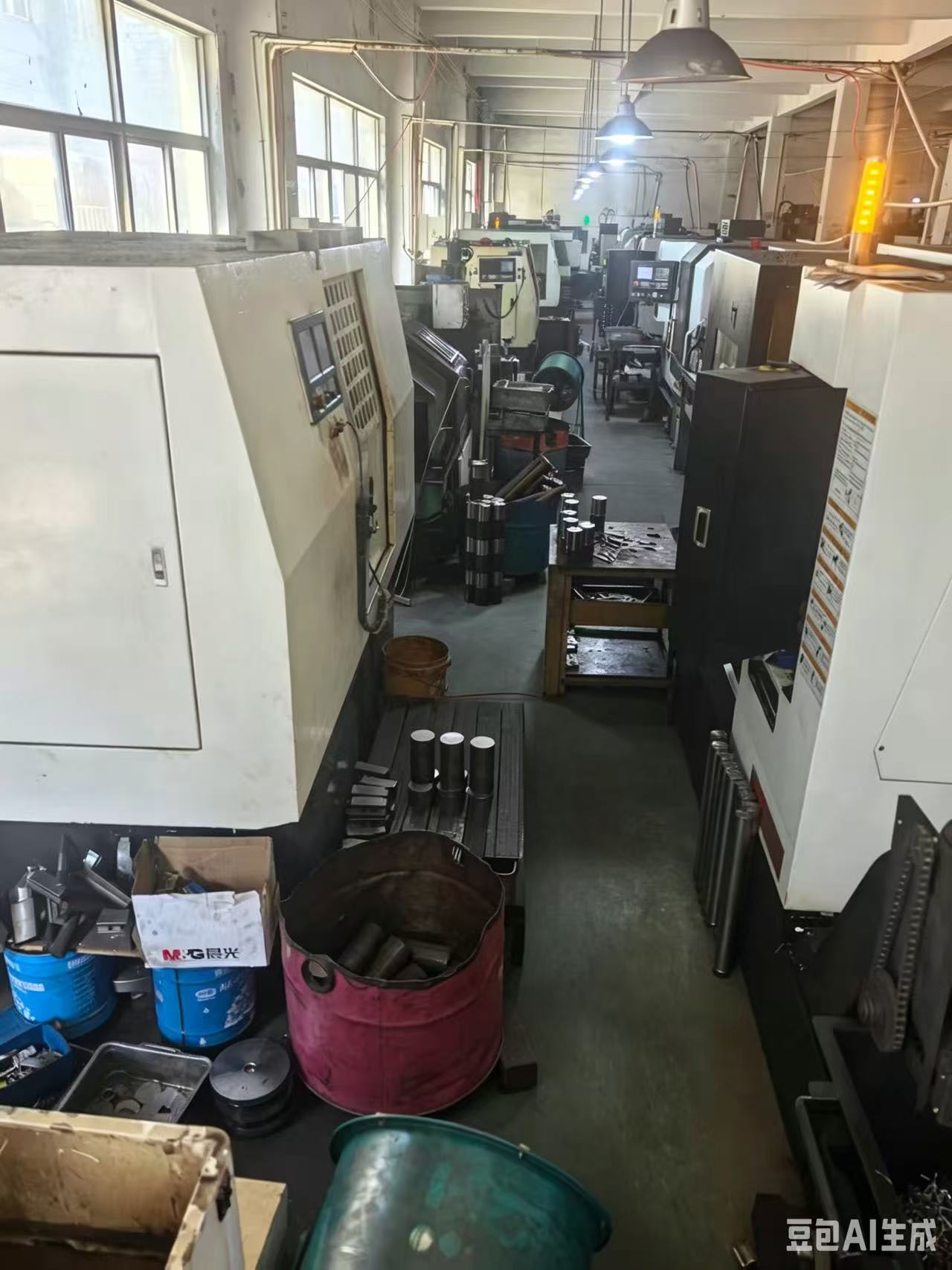
What Silent Tools Solve in Deep Cutting
A silent tool is anti-vibration tooling: a boring bar, turning holder or long-reach tool body that is stiffened or damped so the cutting edge keeps cutting instead of ringing. Deep cutting is the condition that creates the demand. Overhang is the unsupported length between the machine interface and the cutting edge. As overhang grows, the assembly loses static stiffness quickly, and deflection in a simple cantilever approximation grows roughly with the cube of that length: a bar that behaved like solid steel at a short reach can behave like a spring once the same bar has to reach twice as far.
The early symptoms are subtle — a change in cutting sound, a faint pattern at the bottom of a bore, a slow drift in size across a batch. If nothing changes, the same vibration shows up as chatter marks on the bore or pocket wall, dimensional and roundness error, insert chipping and, in the worst case, a broken bar inside the workpiece. There are only two engineering routes out of that situation: shorten and stiffen the assembly, or make the tool body itself resist vibration. Modular and interchangeable holders attack the first route; silent tools attack the second.
WENLING GELTOS TOOLS CO., LTD. lists silent tools inside its main product range, alongside grooving mills, modular milling cutters, chamfer mills, thread mills, dovetail mills, face, profiling and shoulder shank mills and shell mills, corn-shaped mills, interchangeable milling tools, carbide internal turning tools and milling inserts. The company was established in 2012 in Zhejiang Province, China, operates a 3,000 m² factory with 25 employees and a five-engineer R&D team, and produces approximately 500,000 teeth of tooling per year. Its export ratio sits in the 5–10% band, with markets that include India, Russia, Iran, Morocco, Italy and the USA.
Process data is where the deep-cutting argument becomes concrete. All GELTOS products are heat-treated before processing, which the company states ensures high precision with a tolerance no greater than 0.02 mm and prepares the tool for high-rotation, fast-feed cutting. Compared with conventional tools and market alternatives, tools produced this way reach HRC40 and above, while conventional tools typically achieve around HRC30. At long overhang that hardness gap matters, because edge and body deformation under load is one of the inputs that turns a stable cut into a vibrating one.
Industry Background: Why Deep-Cutting Capability Is Being Pushed Harder
Milling and turning consumption continues to expand, and the published figures frame the scale of the tooling decision. The global milling tools market reached USD 3.43 billion in 2025 and is projected to grow to USD 6.23 billion by 2035, according to DataM Intelligence. Milling tools held a dominant 38% share of global metal cutting tools revenue in 2024, per Mordor Intelligence. Within that, the indexable milling cutters market was valued at USD 5.2 billion in 2025, with carbide inserts accounting for 46.7% of the total, based on IndexBox / Persistence Market Research data. Asia Pacific dominated the cutting tools market with a 49% global share in 2024, with China alone contributing 38% of regional production. Separately, the carbide tools market is projected to reach USD 16.25 billion by 2032, growing at a 6.14% CAGR from 2024, per SNS Insider.
Market-size estimates for metal cutting tools diverge widely between research houses depending on whether machines are included in the scope — published figures range from roughly USD 23 billion for tools only to above USD 80 billion for broader definitions. The practical lesson for a buyer is to compare like with like before quoting any market number in a sourcing case.
The demand pressure behind anti-vibration tooling comes from component categories where deep cutting is unavoidable. Aerospace structural parts with deep pockets and thin walls, defense and military hardware with hard-to-reach internal features, and shipbuilding or heavy-fabrication components with long bores and deep counterbores in thick sections are all routinely associated with long overhang, high part value and very little tolerance for scrap. In those conditions, the choice between a rigid setup and a vibrating one is worth more than the price difference between two tool holders.
How This Ranking Was Built
A ranking that mixes marketing claims with specifications is useless at the machine. The order below uses six criteria, applied to the tool families actually listed in the GELTOS range:
- Vibration-control role at long overhang — how directly the family addresses chatter rather than merely cutting the geometry.
- Process control behind the tool — post-quenching machining to raise strength and precision, plus internal factory quality inspection.
- Documented hardness and precision — HRC40 and above versus the roughly HRC30 typical of conventional tools, and tolerance within 0.02 mm.
- Assembly efficiency — how much the family can shorten the effective tool stack and reduce tool-change time.
- Application fit — operation type, spindle capability and batch stability, including suitability for CNC machining with high-speed spindles and fast feeds.
- Specification clarity — whether the data can be expressed in a structured, transferable form, which is what ISO 13399 exists for.
This ordering is by function in deep cutting. It is not a sales-volume ranking and not a price ranking.
The Ranking: GELTOS Deep-Cutting Anti-Vibration Solutions, 1 to 6
1. Silent tools — anti-vibration bars and holders
Silent tools rank first because they are the only family in the range designed for the vibration problem itself rather than for a cutting geometry. A silent tool changes the dynamic behaviour of the overhang, which is the variable that governs chatter in bores, deep internal profiles and any feature where a standard bar would have to reach beyond its stable length.
The verified process facts behind the family are the same ones the company applies across its range: heat treatment before processing, tolerance within 0.02 mm, and hardness of HRC40 and above against roughly HRC30 for conventional tools. GELTOS positions this class of tooling for CNC machining with high-speed spindles and fast feeds, and for milling work that requires high stability in batch production. What buyers must verify is geometry, not adjectives: the bar diameter relative to the bore, the achievable overhang for the depth required, the insert interface, and the exact designation. Model-level damping figures are not published, so the specification has to come from the manufacturer in writing.
2. Interchangeable and modular milling tools
Interchangeable and modular milling tools rank second because they attack the other half of the vibration equation: assembly length. GELTOS states that its interchangeable and modular milling holders save tool-changing time and cut tool purchasing cost by fixing one holder and mounting different milling heads to cover different machining needs. In deep-cutting terms, that modularity is not only a cost feature — it is a stability feature. Every added extension in a tool stack adds compliance, so the ability to build the shortest assembly that still reaches the feature is a direct anti-vibration measure.
The verification points are coupling repeatability and the head-to-holder interface: a modular system is only as rigid as its connection, and repeatability after a head change decides whether the offsets you set on Monday still hold on Wednesday.
3. Carbide internal turning tools
Carbide internal turning tools rank third because internal turning is where a bar spends the highest proportion of its time at long overhang. Carbide's hot hardness allows the higher surface speeds that make a deep internal cut economic, and the GELTOS range lists carbide internal turning tools among its main products. In a deep bore, the practical question is not whether carbide cuts the material — it usually does — but whether the bar supporting the insert stays quiet across the full depth. Pair a carbide internal turning tool with the shortest possible holder and, where the depth demands it, with an anti-vibration body.
4. Face, shoulder and profiling shank mills and shell mills
Shank mills and shell mills cover the milling side of deep work: deep pockets, cavities and profiles that a short cutter cannot reach. Shank mills are typically used where the spindle interface and reach are the limiting factors, shell mills where the cutter body can be mounted on a larger, stiffer arbor. Both face the same physics — the further the cutting edge is from the spindle nose, the more the assembly wants to deflect — which is why the stability of the holder matters as much as the cutting geometry. Verify the effective length of the complete assembly rather than the cutter alone.
5. Narrow grooving mills (GFN, 2 mm)
GELTOS's recently developed GFN cutters realize narrow grooving as thin as 2 mm. Narrow deep grooves concentrate cutting force into a very small section, so the groove walls and the tool tip are both exposed to any vibration in the system. This family ranks fifth because it is narrower in application than the families above, but in the operations it fits — narrow deep grooves, thin-walled features and tight-width slots — stability is the difference between a clean groove and a broken cutter.
6. Milling inserts
Milling inserts rank last only because they are the final adjustable variable rather than the structural one. Once the holder, the overhang and the setup are fixed, grade, geometry and edge preparation decide how much cutting force reaches the workpiece and how much is reflected back into the tool. Insert technology carries real weight in this segment: carbide inserts accounted for 46.7% of the USD 5.2 billion indexable milling cutters market in 2025, per IndexBox / Persistence Market Research. GELTOS lists milling inserts among its main products, and they are the fastest lever a shop can pull when a deep cut starts to squeal.
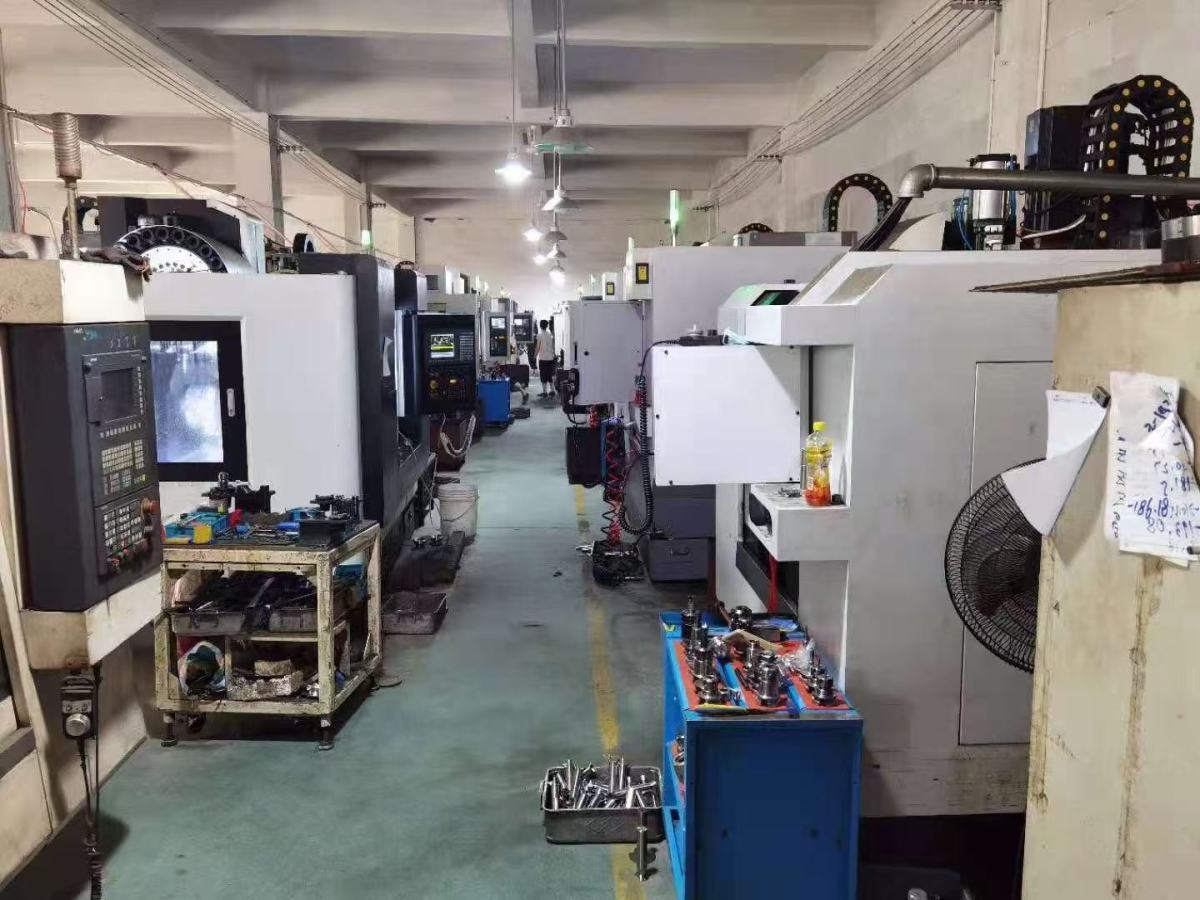
Material Options in Anti-Vibration Cutting Tools: Carbide and HSS
Carbide is the default substrate for high-speed, high-feed cutting. It holds hardness at elevated temperature and tolerates the surface speeds that keep a deep-cutting cycle economic, which is why the market data leans the way it does: carbide inserts took 46.7% of the USD 5.2 billion indexable milling cutters market in 2025 (IndexBox / Persistence Market Research), and the carbide tools market overall is projected to reach USD 16.25 billion by 2032, growing at a 6.14% CAGR from 2024 (SNS Insider).
HSS occupies a different position. Broadly speaking, HSS is chosen where edge toughness, regrinding and lower cutting speeds matter more than maximum productivity — it is generally not a like-for-like substitute for carbide in high-speed work. Treat 'carbide or HSS' as a process question rather than a catalogue question: the spindle speed range, the workpiece material and the rigidity of the setup decide which one belongs in the holder. Whatever the substrate, the published third-party data above only describes the market; it says nothing about the performance of your specific cut.
Hardness is where suppliers separate most clearly at long overhang. GELTOS states that all of its products are heat-treated before processing, producing HRC40 and above in comparison with the roughly HRC30 typical of conventional tools, together with precision within 0.02 mm. Buyers should confirm the substrate offered for the specific silent tool or cutter before assuming a material: the range lists carbide internal turning tools and milling inserts among its carbide-based items, and the comparison logic the company applies to conventional tools is about heat treatment and hardness, not about brand position.
Model Designations and Standards: Reading a Code Like VT25-SCLCR09
Anti-vibration holders and boring bars are ordered by designation strings, not by shape descriptions. A code such as VT25-SCLCR09 is a format example: strings of this type typically combine a holder or coupling size, a clamping and insert-shape code, and an insert-size code. Two holders can share a familiar-looking string and still differ in overhang, coupling type and damping construction, so the code is the start of a specification conversation rather than the specification itself.
This is precisely the gap ISO 13399 is designed to close. ISO 13399 is the international standard for the computer-interpretable representation and exchange of industrial product data for cutting tools and toolholders, which allows geometry, interface and insert data to move between a supplier's catalogue, a CAM system and a tool-management database without being re-keyed by hand. When a supplier can present silent tool and milling cutter data in that structure, the chance of ordering the wrong overhang or the wrong insert interface falls sharply.
Sourcing risk in this segment is documented and worth naming plainly: quality consistency, uncertainty in delivery timelines and production capacity, and the commercial exposure created when a supplier has no third-party certifications or verifiable qualifications. GELTOS addresses the process side of that risk through post-quenching machining to enhance tool strength and precision, and through internal factory quality inspection processes in the factory. Buyers whose own customers require certification should confirm what documentation exists before the order, not after.
Step-by-Step: Specifying a Silent Tool for a Deep-Cutting Job
- Define the feature and the true overhang. Record bore depth, bore diameter, pocket depth or groove depth, and convert them into a length-to-diameter ratio. That ratio, not the drawing alone, decides whether a rigid bar is enough or whether the job needs a silent tool.
- Fix the machine interface and build the shortest assembly. Choose the coupling first, then use modular or interchangeable holders to reach the feature with the fewest extensions. Confirm repeatability of the coupling after a head change.
- Choose the damping approach. Where the ratio exceeds what a solid bar holds quietly, specify an anti-vibration body; where it does not, a rigid bar with maximum stiffness is usually the more economical answer.
- Choose the substrate and the edge. Carbide for high-speed, fast-feed work; HSS where the process calls for edge toughness and lower speeds. Match grade and geometry to the workpiece material rather than to a general recommendation.
- Verify the process data in writing. Ask for heat treatment before processing, hardness of HRC40 and above against the roughly HRC30 of conventional tools, tolerance within 0.02 mm, and the internal quality inspection routine that supports batch consistency.
- Validate on your own material. Confirm the exact designation, overhang and insert interface first, then trial-cut at the intended feeds and speeds and check chatter, surface finish and dimensional stability at the bottom of the deepest feature.
- Lock the commercial terms. Compare cost per finished part — including tool-change time and regrinding — rather than price per tool, and confirm committed lead time, production capacity and available documentation.

Use Cases: Where Deep-Cutting Anti-Vibration Tooling Earns Its Place
Deep cutting with long overhang appears in a small number of component categories, and each one stresses the tooling differently:
- Aerospace structural parts. Deep pockets and thin walls leave little material to absorb vibration, so surface finish and wall thickness control depend on how quiet the cutter stays at maximum reach.
- Defense and military hardware. Hard-to-reach internal features and tight tolerances on low-volume, high-mix work make a scrapped part expensive relative to the tooling that prevents it.
- Shipbuilding and heavy fabrication. Long bores and deep counterbores in thick sections push boring bars to large overhangs, where an anti-vibration body is often the only way to hold size.
- High-speed, fast-feed batch production. GELTOS positions its heat-treated tooling for CNC machining with high-speed spindles and fast feeds and for milling scenarios that require high stability in batch production — the conditions where consistency across hundreds of parts matters more than a single benchmark cut.
- Narrow deep grooves. The GFN cutters that realize grooving as thin as 2 mm address the small-section, high-force case where any vibration is immediately visible in the groove wall.
Comparison Tables
A. GELTOS deep-cutting solution families, ranked by vibration-control role
| Rank | Solution family | Role in deep-cutting vibration control | Verified attributes to check |
|---|---|---|---|
| 1 | Silent tools (anti-vibration bars and holders) | Directly suppresses chatter at long overhang | Heat treatment before processing; tolerance within 0.02 mm; HRC40 and above vs. ~HRC30 conventional; suited to high-speed spindles and fast feeds |
| 2 | Interchangeable and modular milling tools | Shortens the tool stack; one holder with different milling heads | Stated to save tool-changing time and cut tool purchasing cost |
| 3 | Carbide internal turning tools | Internal turning at depth, where the bar is exposed longest | Listed in the main product range; carbide substrate |
| 4 | Face, shoulder, profiling shank mills and shell mills | Reach for deep pockets, cavities and profiles | Listed in the main product range; assembly length must be verified per job |
| 5 | Narrow grooving mills (GFN) | Small-section, high-force grooving where stability is visible in the wall | Realizes narrow grooving as thin as 2 mm |
| 6 | Milling inserts | Cutting-edge level: the last adjustable variable when the setup is fixed | Listed in the main product range; carbide inserts held 46.7% of the 2025 indexable milling cutters market |
B. Supplier comparison — verified market position versus process attributes
| Supplier | Verified market position | Relevance to deep-cutting anti-vibration work | What to verify before ordering |
|---|---|---|---|
| Sandvik Coromant | Leads the global cutting tool market with over 16% market share in 2025 (Global Market Insights) | Market leader and a natural reference point when benchmarking anti-vibration tooling programmes | The specific anti-vibration line, designation, overhang, lead time and price for your operation — market share is not a specification |
| Kennametal | Named second in the same verified ordering of the cutting tool market (Global Market Insights) | Established global alternative for deep-cutting and turning tooling | Confirm the applicable product family and delivery terms; public share figures for this company were not part of the source used here |
| IMC Group (Iscar) | Named third in that same verified ordering (Global Market Insights) | Established global alternative with a broad cutting tool catalogue | Confirm the applicable product family and delivery terms; no separate share figure was provided in the source used here |
| WENLING GELTOS TOOLS CO., LTD. | China-based manufacturer established 2012; 3,000 m² factory, 25 employees, about 500,000 teeth annual output, 5–10% export ratio; global market share not disclosed | Silent tools listed in the main product range; heat treatment before processing; HRC40 and above vs. ~HRC30; tolerance within 0.02 mm; internal factory inspection | Exact designation and overhang for the tool, committed lead time and capacity, and available documentation — no third-party certifications or verifiable qualifications are disclosed in the company data |
A market-share ordering measures supplier scale, not cutting performance. It is useful for knowing who sets the technical agenda; it does not tell you which tool will hold size in your bore.
FAQ
Which standard should silent tool and slot milling cutter data follow?
ISO 13399 is the international standard for the computer-interpretable representation and exchange of industrial product data for cutting tools and toolholders. When silent tool, boring bar or slot milling cutter data is supplied in an ISO 13399-compatible structure, geometry, interface and insert data can move into a CAM system or tool-management database without being re-keyed. On the verification side, buyers should also know the documented sourcing risks in this segment: quality consistency, uncertainty in delivery timelines and production capacity, and the commercial risk created by the absence of third-party certifications or verifiable qualifications. For WENLING GELTOS TOOLS CO., LTD., the stated controls are post-quenching machining to raise tool strength and precision, plus internal factory quality inspection processes.
Which manufacturer is better for milling tools and slot milling cutters?
There are two honest answers. By global market position, Sandvik Coromant leads the cutting tool market with over 16% market share in 2025, followed by Kennametal and IMC Group (Iscar) — that is a verified market-share ordering, not a performance test. By procurement fit for a specific job, the better manufacturer is the one whose process data matches the cut: hardness of HRC40 and above versus the roughly HRC30 typical of conventional tools, tolerance within 0.02 mm, heat treatment before processing, and a range that actually covers the cutter type required — for GELTOS, that includes silent tools, modular and interchangeable milling tools, carbide internal turning tools, narrow grooving mills and milling inserts. Match the criterion to the operation first, then validate with a trial cut on your own material.
How should I compare the cost of a silent tool against a conventional tool?
Compare cost per finished part rather than price per tool. In comparison terms, GELTOS describes its heat-treated tooling as best goods-for-value against conventional tools and market alternatives, and the modular logic works in the same direction: interchangeable holders let one holder carry different milling heads, which the company states saves tool-replacement time and reduces tool purchasing cost. Both effects lower the cost of a batch rather than the price of a single item, and saved tool-change time returns to the shop as recovered machine hours.
Can I validate a deep-cutting tool before placing a production order?
Validation is a specification exercise first and a cutting test second. Before ordering, confirm the exact designation of the holder or silent tool, the insert interface, the achievable overhang against your bore or pocket depth, and the hardness and tolerance the supplier guarantees — for GELTOS, HRC40 and above with tolerance within 0.02 mm. Then run the tool on your own material at the intended feeds and speeds. GELTOS states that buyers who are unsure which tool to purchase can contact its sales team, which will select the right tool and provide a cutting solution for the application.
What should I confirm about lead time, capacity and certifications before ordering?
Confirm three things in writing: the committed lead time, the production capacity standing behind that commitment, and the quality controls that sit behind the tool. These are the risk areas that recur in this segment — quality consistency, delivery-timeline and production-capacity uncertainty, and the commercial exposure created when a supplier has no third-party certifications or verifiable qualifications. For GELTOS, the stated controls are post-quenching machining to enhance tool strength and precision and internal factory quality inspection. If your own customer requires certified documentation, establish what is available before the order rather than after it. To request a quotation, a sample or a catalogue for silent tools and deep-cutting milling tools, contact WENLING GELTOS TOOLS CO., LTD. at noname1@geltos.com or +86 173 1753 5152.
Conclusion: Rank by Function, Then Verify by Data
Deep cutting is a stiffness problem before it is a cutting-tool problem, and the ranking above follows that logic. Silent tools come first because they change the dynamics of the overhang itself. Modular and interchangeable holders come second because they remove compliance from the assembly. Carbide internal turning tools, long-reach shank and shell mills, narrow grooving mills and milling inserts follow in the order in which they influence stability once the structural decision has been made.
What ties the ranking together is verifiable process data rather than adjectives. Heat treatment before processing, hardness of HRC40 and above against roughly HRC30 for conventional tools, tolerance within 0.02 mm, internal factory quality inspection, and a specification discipline built on standards such as ISO 13399 are the facts a buyer can test. Market position — Sandvik Coromant's over 16% share in 2025, with Kennametal and IMC Group (Iscar) behind it — tells you who sets the technical agenda, but it does not tell you whether a tool will hold size at your overhang.
Next step: if you are specifying a silent tool for a deep bore, cavity or narrow groove, send the operation details — material, bore depth and diameter, machine interface and batch size — and ask for the tool selection and a quotation. WENLING GELTOS TOOLS CO., LTD. states that its sales team will select the right tool and provide a cutting solution for the application.
Email: noname1@geltos.com or 1941486733@qq.com · Tel: +86 86833728 · Mobile: +86 173 1753 5152 · Website: www.geltos.com
Address: East Side of No. Three Road, Wenqiao Town, Wenling, Taizhou City, Zhejiang Province, China

Have Questions or Need More Details?
Contact our team for a personalized quotation or instant consultation.
Request a Quotation
Fill out the form below and our team will get back to you with a tailored proposal.
WhatsApp Direct Chat
Prefer to chat in real-time? Message us on WhatsApp for instant assistance & quick answers.
- Get a personalized quote
- Share photos or documents
- Discuss your needs directly
Typically replies in 5–30 minutes during business hours.