Partnering With a Milling Tools Manufacturer: FAQs on Lead Times and Support
Partnering with a milling tools manufacturer raises different questions than buying a single cutter. A first order is about price and delivery; a partnership is about what happens on the fourth order, when the drawing has changed, the material has changed, or the machine has been replaced. Wenling Geltos Tools Co., Ltd. is a milling tools manufacturer founded in 2012 in Wenling, Zhejiang Province, China. The questions below are the ones buyers ask most often before they move from a single order to a long-term supply agreement.
Short answers for buyers evaluating this supplier
- Lead time is not published as a fixed table. It is confirmed in the quotation for each order, and it depends mainly on whether the tool is a catalogue item or a custom design that must first be agreed on drawing.
- Support starts before the order. Tool selection and cutting-solution advice come from an in-house R&D team of five engineers, not from a catalogue alone.
- Customisation is supported. Non-standard production includes narrow grooving down to 2 mm with GFN cutters, plus interchangeable and modular milling heads that share one holder.
- Export references exist. The company reports an export ratio of 5–10%, lists India, Russia, Iran, Morocco, Italy and the USA among its markets, and cites a two-year project with a buyer in Russia covering five milling tool units.
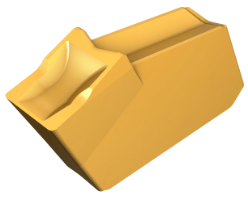
GFN grooving cutter from Wenling Geltos Tools, developed for narrow grooving as thin as 2 mm.
Why Lead Time and Support Decide Whether a Milling Tools Partnership Works
A milling cutter is a small share of a machining budget and a large share of schedule risk. If a shell mill, a T-slotter or a thread mill arrives late, the machine it was bought for stands idle. If it arrives on time but does not behave like the drawing, the problem moves from logistics to engineering — and that is where a supplier's real capability becomes visible.
Two questions are usually asked too late in sourcing. The first is how long will this actually take, normally raised after the price has been negotiated. The second is who answers when the tool does not perform as expected, normally raised after the first complaint. Both have the same root cause: buyers evaluate a milling tools manufacturer on its catalogue, but they live with its engineering response and delivery discipline for years.
In this product category, support has four concrete parts, and each one should be confirmed before a supply agreement rather than after:
- Tool selection — matching cutter type, diameter, width, length and tooth count to the operation.
- Application advice — coolant supply, cutting speed, feed and depth of cut for the material being machined.
- Interface compatibility — holder, shank and insert system matching the machine and the existing tool inventory.
- Replenishment — replacement heads, inserts and repeat orders of the identical specification, which is what a partnership is actually made of.
Industry Background: What Is Changing in Milling Tools Sourcing
The global milling tools market was estimated at US$ 3.43 billion in 2025 and is forecast to grow at a CAGR of 6.2% between 2026 and 2035, according to a DataM Intelligence market report published in 2026. A growing category attracts more suppliers, and it also changes buyer behaviour: importers increasingly request an engineered tool against a drawing instead of a catalogue equivalent with a new label on it.
Two standardisation trends shape those requests. ISO 11529-2:1998 defines the designation system for shank type and bore type milling cutters with indexable inserts, which makes a drawing readable across languages and countries. ISO 13399 is described by tool manufacturers as the international standard for representing cutting-tool data in computer-readable form, which matters when a buyer needs catalogue data to flow into CAD/CAM or a tool-management system. Separately, custom solid-carbide cutters are often quoted against shaft references such as DIN 6535 HA or DIN 6535 HB (Weldon), as listed on other manufacturers' product pages.
These references are useful in procurement, but they do not transfer automatically from one supplier to another. A standard number printed on another manufacturer's page is not evidence that a given supplier's SKU conforms to it. It is a specification to be requested, checked on the drawing, and confirmed in the inspection documents of the actual order.
Who Wenling Geltos Tools Co., Ltd. Is
Wenling Geltos Tools Co., Ltd. is a Chinese milling tools manufacturer founded in 2012 in Zhejiang Province, producing high-precision and high-strength milling tools. Its main range covers grooving mills, modular milling cutters, chamfer mills, thread mills, dovetail mills, face, profiling and shoulder shank mills, shell mills, corn-shaped mills, interchangeable milling tools, carbide internal turning tools, silent tools and milling inserts.
Company-reported figures describe a 3,000 m² manufacturing facility with approximately 25 employees, including an R&D team of five engineers, and an annual production capacity of 500,000 teeth. Products are heat-treated before machining, which the company states supports a tolerance no greater than 0.02 mm and suitability for high-rotation and fast-feed cutting. The published product centre lists shank mills, shell mills, corn-shape milling tools, milling heads and holders, carbide internal turning tools and carbide small-hole tools.
Export is a minority but established part of the business. The company reports an export ratio of 5–10% and names India, Russia, Iran, Morocco, Italy and the USA among its markets — a distribution that spans both price-sensitive and technically demanding destinations.

The Wenling Geltos Tools facility in Wenling, Zhejiang Province — a 3,000 m² site with approximately 25 employees, as reported by the company.
What a Long-Term Partnership With Geltos Includes
Support before the order: selection, R&D and cutting solution
Tool selection is where most first orders are won or lost. Geltos states that buyers who are unsure which tool to purchase can contact the sales team, which will select the right tool and provide a cutting solution for that specific case. The selection work is backed by an in-house R&D team of five engineers — a structure that fits high-mix, low-volume and custom work better than pure catalogue distribution.
In practice, selection needs four pieces of information from the buyer: the material being cut, the machine and spindle, the holder interface, and the required geometry. Geltos publishes a wide dimensional envelope for its milling tools — diameters from 08 mm to 400 mm, widths from 1 mm to 20 mm, lengths from 80 mm to 350 mm and 1 to 20 teeth, as illustrated by models such as the HTS-20-H06-C16T4-120 SP04 milling cutter. Products are described as suitable for mounting on CNC milling machines and machining centres, compatible with high-speed spindles and fast-feed conditions, with inner-coolant or outer-coolant supply and with both heavy and light cutting.
Customisation: OEM geometry, modular heads and special tools
Non-standard and customised production is supported, which is the practical difference between a manufacturer and a trader for buyers with special geometry. Three areas show how far that capability reaches.
- Narrow grooving. The recently developed GFN cutters are designed for grooving as thin as 2 mm.
- Modular and interchangeable tooling. Interchangeable and modular milling holders let one holder carry different milling heads, so a buyer can cover several machining needs without purchasing a complete tool each time. The company states this saves tool-change time and reduces tool purchasing cost.
- Inserts and grades. Milling inserts are supplied in carbide and ceramics under designations such as APMT1135, SNMX1206, LNMU0303ZER and 4NKT0603, covering turning, face milling, profiling milling and fast-feed milling. Published cutting data for the fast-feed insert family includes a recommended cutting speed of 180, a feed rate of 0.02 and suitability for materials up to HRC65.
Vibration-damped tooling is part of the same picture. Silent tools in the range include VT25-SCLCR09, VT40-SDUCR11, VT20 C20*200V and VT32 C32*480VE, made in HSS and carbide for aerospace, military and shipbuilding work. The mounting guidance published for these tools is specific: clamping length should be no less than a 4 L/D ratio, and the span between the two screws should be greater than 4XD. For a buyer, that level of installation detail is itself a support signal — it tells you the supplier expects to be involved after delivery.
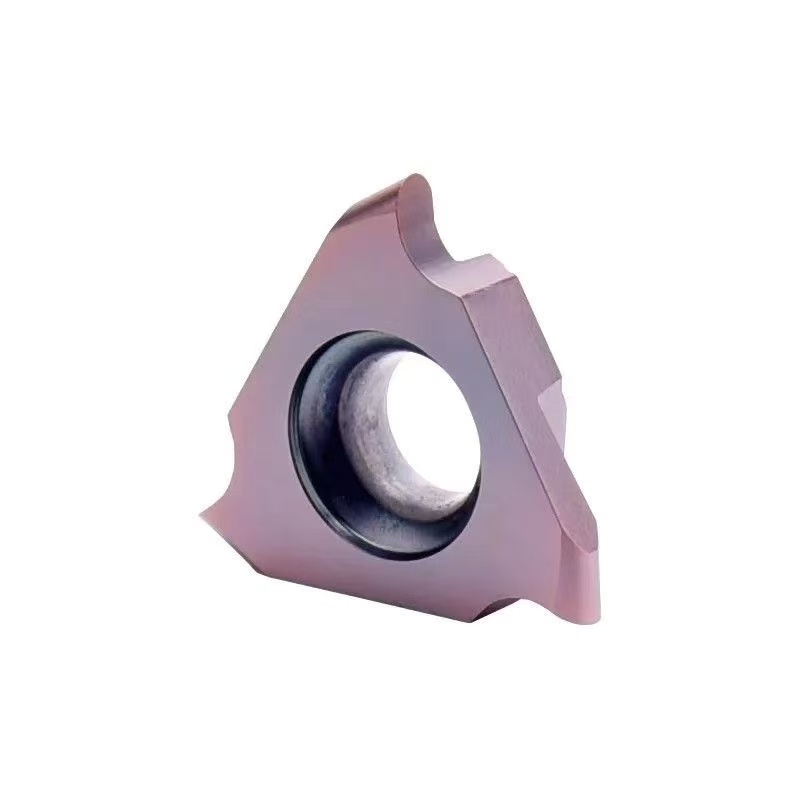
Milling inserts such as the TGF32 are supplied in carbide and ceramics for turning, face milling, profiling and fast-feed milling.
Export experience: what the references actually show
Export experience should be judged by continuity, not by a country count. The clearest reference point for Geltos is a two-year project with a buyer in Russia covering five milling tool units. Two years and five units is not a volume record; it is a continuity record. It shows a supply relationship that survived more than one order cycle, which is the part of export experience that matters when a buyer is deciding whether to consolidate purchases with a single manufacturer.
The remaining evidence is broad rather than deep: an export ratio of 5–10% and named markets including India, Russia, Iran, Morocco, Italy and the USA. For a first-time importer, that pattern is worth reading correctly — the company is primarily a domestic manufacturer that also exports, so the export process is established but export volumes are not the core of the business. Buyers with very large annual volumes should confirm capacity and scheduling expectations directly during quotation rather than infer them.
Documentation: what to request, and what is not published
Quality assurance at Geltos is described in the company's published profile as in-house factory inspection, and third-party certification is not listed. That does not disqualify the supplier, but it changes what a buyer should ask for before the first order:
- the material grade of the cutter body and of the insert;
- heat-treatment confirmation for the specific production batch;
- the inspection record showing the measured tolerance against the stated 0.02 mm;
- a dimensional drawing for the quoted SKU, especially for custom tools;
- the designation reference used on the drawing, for example an ISO 11529-2 style designation for indexable shank and bore type cutters, so both sides read the same specification.
Buyers operating in markets where a third-party certificate is a legal requirement should confirm the current document situation directly with the supplier before ordering, instead of assuming it from a product page.
How an Order Runs, Step by Step
- Define the operation before the part number. Material and hardness, machine and spindle, holder interface, and the feature to be cut: slot, shoulder, thread, chamfer, face or deep cavity. The same cutter designation can be right for one of these and wrong for another.
- Send the drawing or specification. For custom and non-standard tools, the drawing is the order. A designation reference makes the drawing portable between languages.
- Use the selection support. Geltos will select the tool and propose a cutting solution where the buyer is uncertain; the five-engineer R&D team is the resource behind that step.
- Fix the lead time in the quotation. Geltos does not publish a standard lead-time table, so the expected production time should be stated per SKU. Expect the answer to differ between a catalogue cutter inside the standard range and a new geometry that first needs to be approved on drawing.
- Validate. A sample or first-article check before volume commitment is the cheapest way to catch a geometry or grade mismatch, and it converts a lead-time question into a known production time for repeat orders.
- Production and inspection. Products are heat-treated before machining, then checked against the stated tolerance no greater than 0.02 mm.
- Repeat and replenish. Interchangeable heads and inserts are ordered against the tool body already in use, which is where the modular concept returns its value across a long relationship.
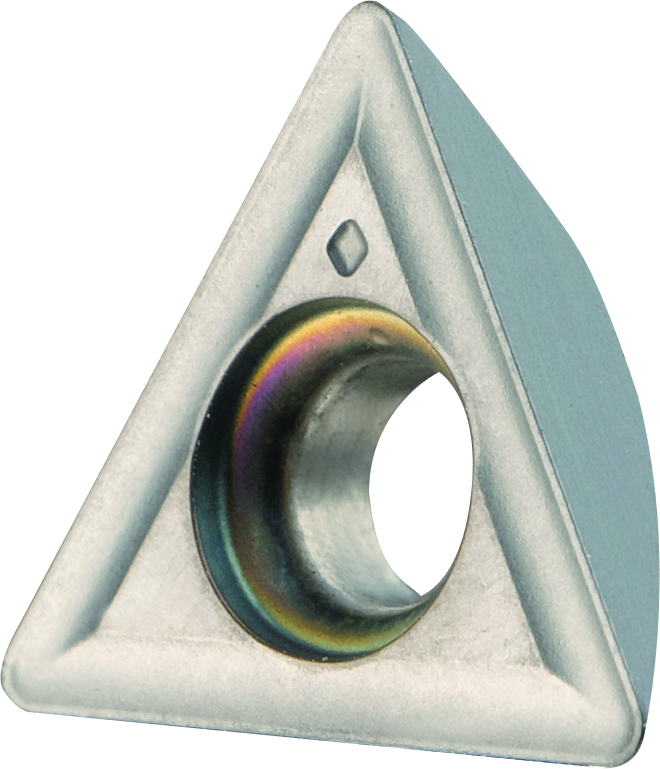
Inserts such as the TCEX090204 are the replenishment item in a long-term supply agreement: the holder stays, the cutting edge is replaced.
Where This Partnership Fits: Use Cases
Deep-cut aerospace, military and shipbuilding work
Long overhangs cause chatter. Silent tools in the Geltos range are designed for deep cutting with vibration damping and are intended for aerospace, military and shipbuilding applications. The published installation rules — clamping length of at least a 4 L/D ratio and a screw span greater than 4XD — should be treated as requirements, not suggestions.
Automotive and batch production
In repeated production, the cost driver moves from the first tool to the replacement cycle. Modular and interchangeable holders let a single holder serve different milling heads, which reduces both tool-change time and the number of complete tools a line has to keep in stock. Inserts graded for materials up to HRC65 cover the harder end of batch work.
Mould making and general precision machining
Mould and job-shop work mixes operations: narrow grooves, dovetails, chamfers, T-slots, threads. The Geltos range covers these as separate cutter families, and the GFN cutters extend narrow grooving down to 2 mm. Because the tools are described as suitable for CNC milling machines and machining centres with inner- or outer-coolant supply, a mixed workshop can standardise on one supplier without changing its machine setup.
Importers and distributors building a range
A distributor needs a supplier that can fill gaps rather than only supply best-sellers. Non-standard production, interchangeable heads and a catalogue spanning 08 mm to 400 mm in diameter give a distributor room to answer local requests without a second supplier. The two-year Russia project and the 5–10% export ratio are the reference points to discuss when negotiating a first distributor order.
Standard vs Custom: What Changes for Lead Time and Support
| Decision point | Standard catalogue milling tool | Custom / non-standard tool | What it means for you |
|---|---|---|---|
| How the item is defined | Listed in the product centre: shank mills, shell mills, corn-shape tools, heads and holders, carbide internal turning and small-hole tools | Non-standard and customised production, defined on drawing | Catalogue items can be quoted from a designation; custom items need a drawing first |
| R&D involvement | Selection support from the sales team | Tool selection plus cutting-solution work by the 5-engineer R&D team | Custom work carries a design step before production |
| Lead time basis | Confirmed per order at quotation | Confirmed per order after drawing approval | Ask for a stated time per SKU; no fixed table is published |
| Validation step | First order confirms fit and grade | Sample or first article before volume | Validation converts an estimate into a known repeat production time |
| Repeat ordering | Same model re-ordered | Replacement heads and inserts on an existing holder | Modular heads reduce tool purchasing cost over the relationship |
| Typical fit | Established, repeatable operations | Special geometry such as grooving down to 2 mm | Match the sourcing route to how stable the operation is |
Frequently Asked Questions
Does Wenling Geltos Tools hold third-party certification, and what documentation can a buyer request?
The company's published profile describes quality assurance through in-house factory inspection, and third-party certification is not listed. Products are heat-treated before machining, with a stated tolerance no greater than 0.02 mm. Buyers can therefore request the material grade of body and insert, heat-treatment confirmation for the batch, the inspection record showing measured tolerance, and a dimensional drawing for the quoted SKU. Where a market requires a third-party certificate, the current position should be confirmed directly with the supplier before the order is placed. Relevant standard references to put on the drawing include ISO 11529-2 for the designation of shank type and bore type milling cutters with indexable inserts, and ISO 13399 for computer-readable tool data.
Can Geltos manufacture custom or OEM milling tools, and who does the tool design?
Yes. Non-standard and customised production is supported, and the design and selection work is handled by an in-house R&D team of five engineers supported by the sales team, which selects the tool and proposes a cutting solution for the specific case. Concrete customisation examples include GFN cutters for narrow grooving down to 2 mm, interchangeable and modular holders that accept different milling heads on one holder, and milling inserts in carbide and ceramics under designations such as APMT1135, SNMX1206, LNMU0303ZER and 4NKT0603. Silent tools such as VT25-SCLCR09, VT40-SDUCR11, VT20 C20*200V and VT32 C32*480VE cover vibration-damped deep cutting for aerospace, military and shipbuilding work.
What drives the cost of a milling tools order?
Geltos does not publish a price list; cost is quoted per order against the specification. In this category the main cost drivers are the cutter body material (alloy steel, spring steel, carbide, HSS or ceramics), the geometry and number of teeth, whether the design is a catalogue item or a new custom tool, the insert grade and cutting data required, and the quantity in the repeat cycle. Two design choices directly reduce long-term cost: interchangeable and modular holders, where one holder carries different milling heads, and inserts, where only the cutting edge is replaced instead of the whole tool. For a like-for-like comparison, ask for the quotation to state the material grade and the inspection tolerance, so the price can be compared at the same specification.
Can we validate a milling tool before committing to a long-term supply agreement?
Validation is arranged case by case with the sales team, and it is the step that converts an estimated lead time into a known repeat production time. The most useful validation covers the operation rather than the tool alone: cut the actual material on the actual machine with the actual holder, then check the geometry and the measured tolerance against the drawing. For custom and non-standard tools this first-article step also confirms the drawing itself, which shortens every later order. To request a sample or a first article, contact the sales team with the drawing, material, machine and holder interface.
How long does an order take, and what affects lead time?
Geltos does not publish a standard lead-time table, so the expected time is confirmed in the quotation for each order. The factors that move it are: whether the item is a catalogue tool already inside the standard range or a custom design that must be approved on drawing first; how many dimensions or heads the order covers; whether inserts and heads are ordered together with the body; and how quickly drawing approval and any sample validation are completed. Two practical ways to shorten the cycle are to order replacement heads and inserts against an existing holder rather than complete new tools, and to keep the drawing on file after the first approval so repeat orders can be quoted and scheduled directly. To get a specific lead time for your part, send the drawing and required quantity to 1941486733@qq.com or noname1@geltos.com and ask for a quotation with a stated production time.
Conclusion
Lead time and support are not department functions attached to a milling tools order; they are the product of how the supplier is built. Wenling Geltos Tools Co., Ltd. is a 2012-founded manufacturer in Zhejiang with a 3,000 m² facility, approximately 25 staff and an R&D team of five engineers, producing grooving mills, modular milling cutters, chamfer, thread and dovetail mills, shank and shell mills, interchangeable milling tools, silent tools and inserts — heat-treated before machining and stated at a tolerance no greater than 0.02 mm. Its export record is modest but real: a 5–10% export ratio, buyers in India, Russia, Iran, Morocco, Italy and the USA, and a two-year project in Russia covering five milling tool units.
That combination suits buyers who need engineered tools and direct engineering contact more than buyers who need a fixed online lead-time table. The practical next step is not to ask for a general price list but to send one real operation — material, machine, holder and drawing — and ask for two numbers: the tool recommendation and the confirmed production time for that SKU. The second number is the one that tells you whether the partnership will hold.
Send your drawing and get a quoted lead time
Wenling Geltos Tools Co., Ltd. — East Side of No. Three Road, Wenqiao Town, Wenling, Taizhou City, Zhejiang Province, China.
Email: 1941486733@qq.com / noname1@geltos.com
Tel: +86 86833728 | Mobile: +86 173 1753 5152 | Website: www.geltos.com
Include the material, machine, holder interface and required geometry. Ask for a sample or first article if the tool is custom, and request the inspection record with the shipment.

Have Questions or Need More Details?
Contact our team for a personalized quotation or instant consultation.
Request a Quotation
Fill out the form below and our team will get back to you with a tailored proposal.
WhatsApp Direct Chat
Prefer to chat in real-time? Message us on WhatsApp for instant assistance & quick answers.
- Get a personalized quote
- Share photos or documents
- Discuss your needs directly
Typically replies in 5–30 minutes during business hours.