
Ranked: 6 Milling Tools for Deep-Cut, Vibration-Damped Aerospace and Shipbuilding Work
Ranked: 6 Milling Tools for Deep-Cut, Vibration-Damped Aerospace and Shipbuilding Work
Six milling tool categories carry most of the load when a shop has to cut deep, hold vibration down and keep tolerance tight in aerospace and shipbuilding work: silent (anti-vibration) tools, fastfeed milling inserts, face and profiling milling inserts, shell mills, modular milling cutters and grooving mills. This ranking orders them by fit for that specific job, and every inclusion reason below is tied to a stated product fact from the GELTOS range rather than to a general claim about “performance.”
At a glance: 1. Silent / anti-vibration tools · 2. Fastfeed milling inserts · 3. Face and profiling milling inserts · 4. Shell mills · 5. Modular milling cutters · 6. Grooving mills.
The deep-cut problem: where milling tools fail first
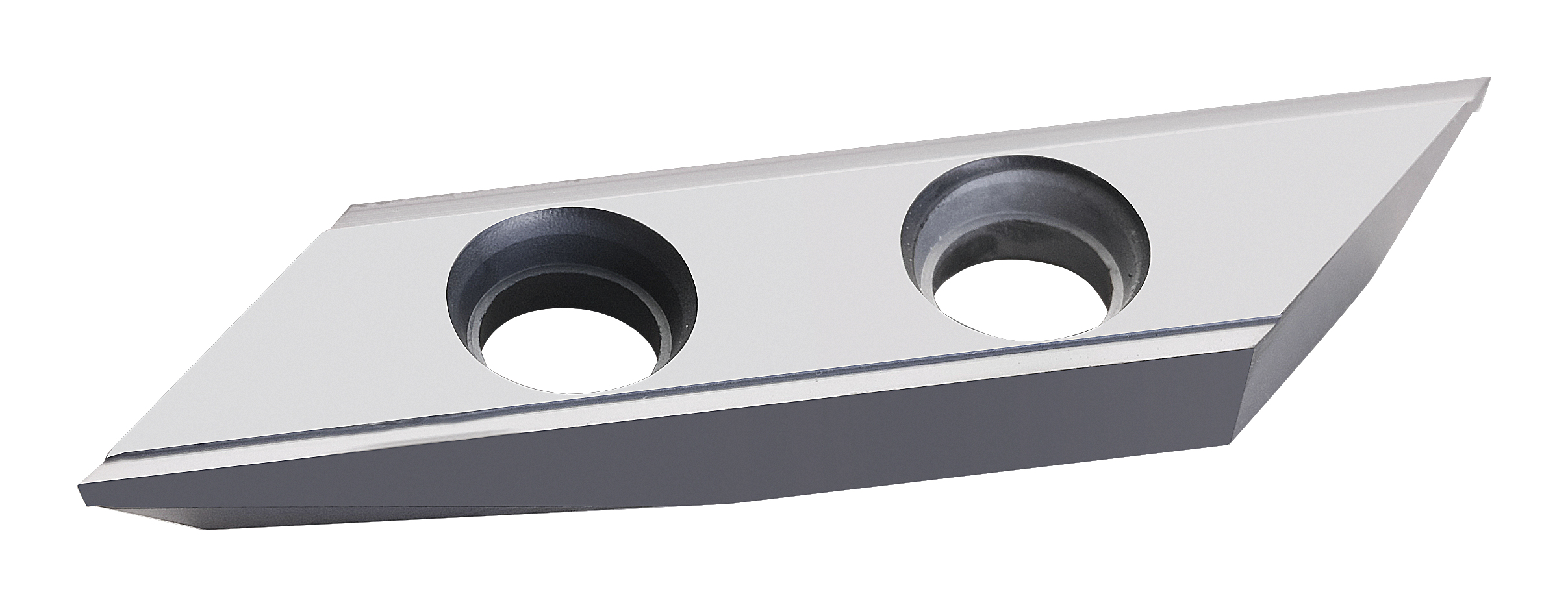
Deep cutting is not simply “a bigger cut.” It is three constraints acting at the same time. The first is overhang: the longer the tool extends relative to its diameter, the more it deflects. The second is the workpiece: aerospace and shipbuilding work routinely involves heat-treated and high-strength materials that resist cutting and push cutting forces back into the tool. The third is tolerance: once a deep bore or a long profile is out of specification, reworking is expensive or impossible.
When those three constraints meet, the failure mode is usually chatter — vibration that shows up as poor surface finish, unstable dimensions and shortened insert life. That is why the ranking below is dominated by tools that address either depth capability, vibration damping, or both.
The GELTOS product data states a concrete set-up rule for its silent tool family: the clamping length should be no less than a 4 L/D ratio, and the span between two screws should be bigger than 4XD. Read as a purchasing constraint, this means the damped tool is intended to be used inside a rigid, correctly clamped set-up — if a machine cannot hold that condition, a damped tool loses much of its advantage. That single rule explains more about deep-cut tool selection than most catalogue text.
The second cross-cutting fact is precision. All products from this manufacturer are heat-treated before processing, which the company states ensures high precision with a tolerance no greater than 0.02 mm, and suits high-rotation and fast-feed cutting. That figure, 0.02 mm, is the precision baseline against which the six categories below are compared.
Industry background: why deep-cut, damped tooling keeps gaining attention
Milling is the single largest slice of the metal cutting tool business. According to Mordor Intelligence, milling tools held a dominant 38% share of global metal cutting tool revenue in 2024. DataM Intelligence estimates the global milling tools market at USD 3.43 billion in 2025, projected to grow to USD 6.23 billion by 2035. Within that, IndexBox / Persistence Market Research values the global indexable milling cutters market at USD 5.2 billion in 2025, with carbide inserts accounting for 46.7% of the total. SNS Insider projects the carbide tools market reaching USD 16.25 billion by 2032 at a CAGR of 6.14% from 2024.
Supply is concentrated and Asia-heavy. Grand View Research reports that Asia Pacific dominated the cutting tools market with a 49% global share in 2024, with China alone contributing 38% of regional production. On the brand side, Global Market Insights reports Sandvik Coromant leading the global cutting tool market with over 16% market share in 2025, followed by Kennametal and IMC Group (Iscar). Published market-size estimates vary widely depending on whether machines or only tools and inserts are counted, so figures should always be read with their scope attached.
One technical development matters directly to buyers building tool data into a CAM or procurement system: ISO 13399, maintained under ISO Technical Committee TC 29, is the international standard for the computer-interpretable representation and exchange of industrial product data for cutting tools and toolholders. When a supplier can provide tool data in a structured, standards-aligned form, deep-cut programming and tool inventory management become substantially easier.
Scope note: this article ranks tool categories by fit for deep-cut, damped, precision work. Supplier brand rankings are a different exercise and require different evidence.
Ranking criteria used in this list
Each of the six categories was assessed against four criteria drawn from the product data itself:
- Depth capability — whether the tool type is intended for deep cutting, and whether the data states an overhang or clamping condition.
- Vibration damping — whether damping is part of the tool design, or has to come from the machine set-up.
- Precision contribution — how the category supports the stated tolerance of no greater than 0.02 mm after heat treatment.
- Industry fit — whether the category is stated as applicable to aerospace and shipbuilding, the two industries in the title.
The ranking: six milling tool categories for deep, damped, precise cutting
1. Silent / anti-vibration tools (VT series) — deep cutting with damping built in
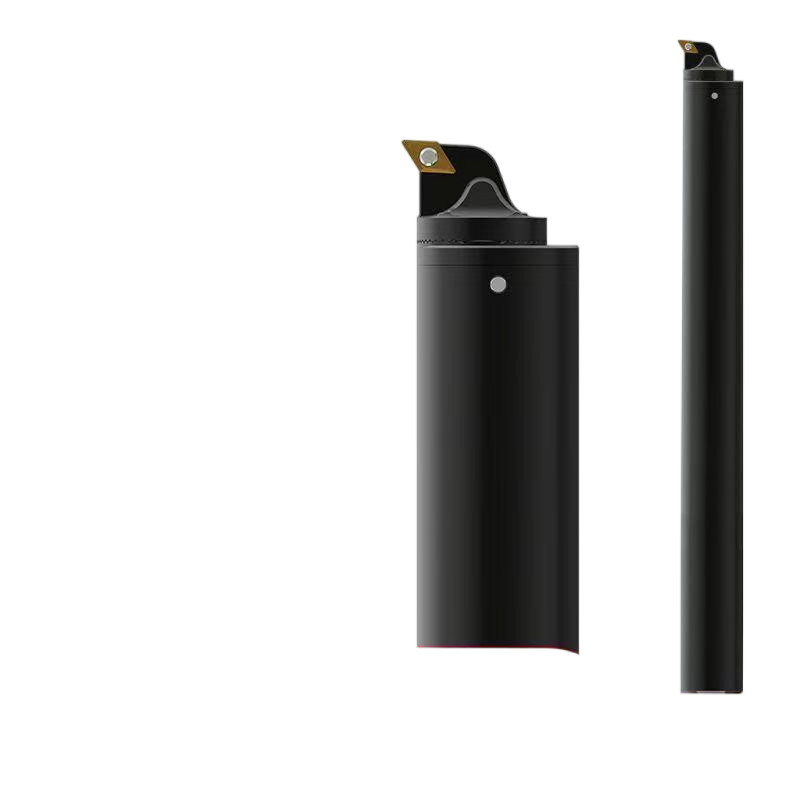
Silent tools (anti-vibration tools, dampen tools) are designed for deep cutting operations that require vibration damping, and are intended for aerospace, military use and ship building industries. In the GELTOS range they are classified as internal turning tools made of HSS and carbide, with model designations such as VT25-SCLCR09, VT40-SDUCR11, VT20 C20*200V and VT32 C32*480VE.
This category ranks first because it is the only one in the list where damping is a stated design purpose rather than a consequence of the machine set-up. In deep internal work, where overhang is unavoidable, that is the difference between a stable cut and a scrapped part. The limit is equally clear: damping is not free. The tool requires a clamping length of no less than 4 L/D and a screw span greater than 4XD, and it is aimed at deep internal operations rather than at shallow, short-reach milling where a simpler tool does the same job for less.
2. Fastfeed milling inserts — highest material removal per pass
Fastfeed milling inserts are classified together with profiling, face and turning inserts in the same carbide insert family, and are made of carbide and ceramics. Their stated cutting data is specific: suitable for materials up to HRC65, with a recommended cutting speed of 180 and a feed rate of 0.02. Model designations include APMT1135, SNMX1206, LNMU0303ZER and 4NKT0603, and applicable industries are mechanical processing, automobile, aerospace, woodwork and ship building.
Fastfeed inserts rank second because they attack the deep-cut problem from the other direction: instead of damping a long cut, they shorten the job by removing material at high feed, which reduces the number of passes and therefore the total time a slender tool spends in the cut. The practical limit is that an insert alone does not damp anything. Damping comes from the body and the holder, so a fastfeed insert on a long, weakly clamped tool still chatters. The HRC65 ceiling is also a real boundary: above it, these inserts are not the stated solution.
3. Face and profiling milling inserts — surface and contour control on large surfaces
Face milling inserts and profiling milling inserts are classified alongside the fastfeed types and share the same applicable industries: mechanical processing, automobile, aerospace, woodwork and ship building. Where they differ is the job they finish. Face milling establishes a flat reference surface; profiling inserts follow a contour or shoulder. In aerospace and shipbuilding both operations are preparatory and finishing steps that determine whether downstream deep cuts start from a true datum.
They rank third because their contribution to deep-cut work is indirect but essential: a face that is not flat at the start becomes a dimensional error at depth. The limitation is straightforward — for a deep cavity or a long bore, these inserts are not the tool that solves the access problem.
4. Shell mills — large-diameter facing with depth capacity
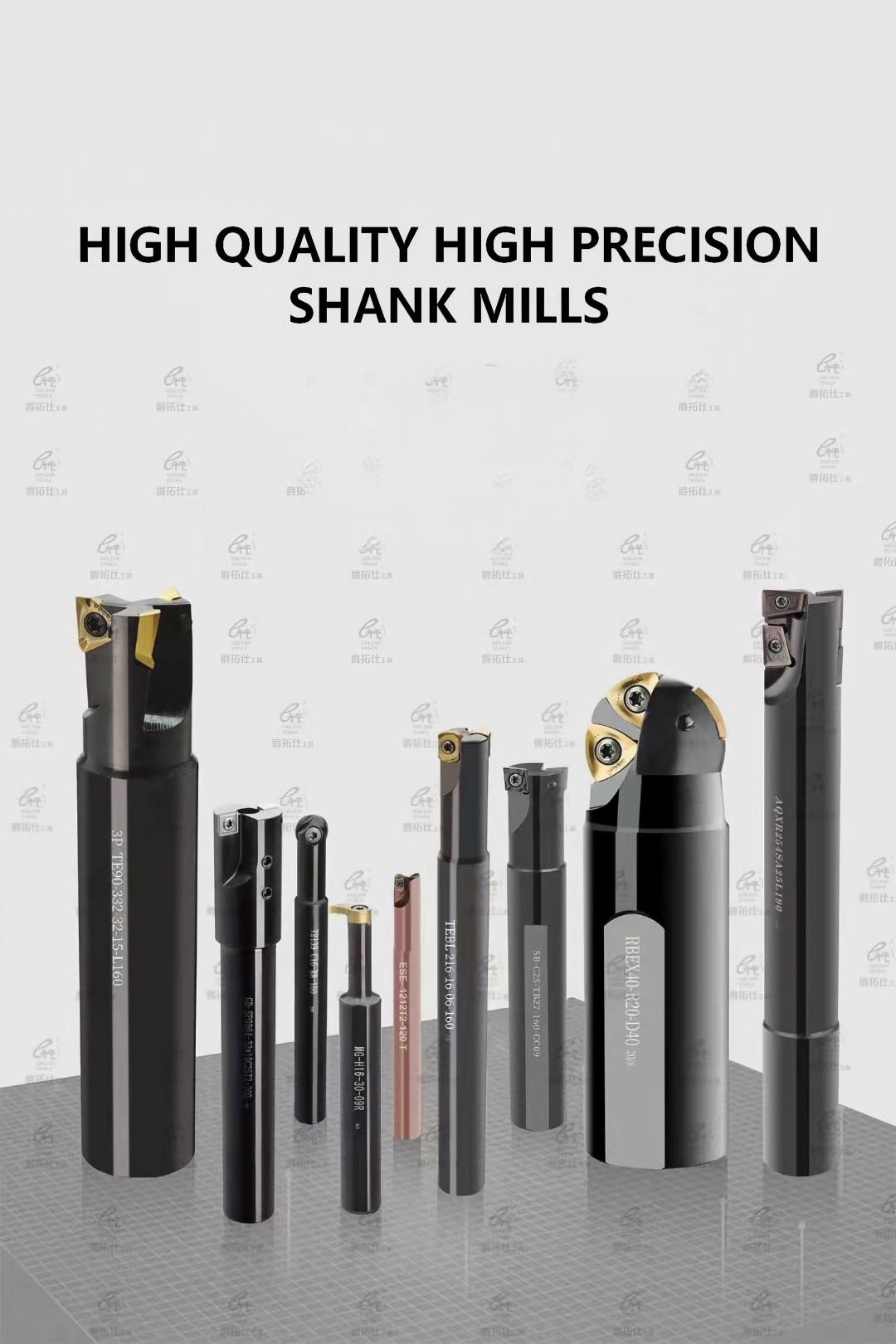
Shell mills belong to the broader CNC milling cutter family that also includes grooving mills, chamfer mills, boring mills and face/shoulder/profiling shank mills. The stated working range for this tool family is a diameter of 40–250 mm, a length of 80–350 mm and 1–20 teeth, in materials covering alloy steel, spring steel and carbide, at HRC40–50, with applicable industries including automobile, aerospace, metal cutting & machining and mechanical workshops.
Shell mills rank fourth because large-diameter bodies give broad coverage per pass, which shortens cycle time on the large weldments and structural plates typical of shipbuilding and heavy aerospace fabrication. The trade-off is torque and stability: a large diameter demands a rigid spindle and a well-supported workpiece, and a shell mill is not the answer to a long-reach internal cut.
5. Modular milling cutters — one holder, several machining needs
Interchangeable and modular milling holders let a single holder carry different milling heads, so different machining needs are met without changing the whole tool assembly. The company states that this structure greatly saves tool changing time and cuts tool purchasing cost. Model designations in this milling tool range include HTS-20-H06-C16T4-120 SP04, JP 100*2.0T10-FMB22 GFN2.0J, MG2009-W150T50, MC H16-20-09-N and B45 SP03 C10T1-120ap4-8, and the range spans diameters from 08 mm to 400 mm.
Modular cutters rank fifth for deep-cut damping specifically, not for overall value. They add efficiency and reduce cost per operation, which matters in batch production where tool changes break the cycle. But every modular joint is a potential rigidity loss, so on a genuinely deep, long-reach cut the buyer should expect to pair the modular system with a damped or heavily supported set-up rather than relying on the modularity itself.
6. Grooving mills — narrow grooves down to 2 mm
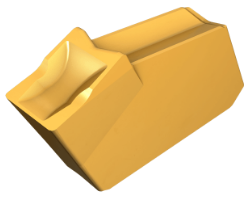
Grooving mills are named first in the company’s product list, and the recently developed GFN cutters realize narrow grooving as thin as 2 mm. The stated width range across grooving-related tooling is 1 mm to 20 mm. Grooving inserts and profiling inserts sit in the same carbide insert family.
Grooving mills rank sixth here because they are a specialty, not a deep-cut generalist. Their value is dimensional: a 2 mm groove is a narrow, high-aspect feature where tool strength and edge stability matter more than depth of cut. Where a drawing calls for that feature, no face mill or shell mill substitutes for it — but it is not the tool a buyer selects to solve chatter in a long bore.
Step-by-step: matching one of these tools to a deep-cut job
The sequence below is a practical order of decisions. Steps 1 to 3 eliminate tool categories; steps 4 to 6 confirm that the chosen tool can actually be delivered and held to the required tolerance.
- Step 1 — Define the depth-to-diameter ratio. If the operation is deep internal cutting with unavoidable overhang, move directly to the silent tool family. If it is open-surface milling at moderate depth, shell mills or face mills remain viable.
- Step 2 — Confirm the set-up can hold the damping condition. For silent tools, the clamping length should be no less than 4 L/D and the span between two screws should be bigger than 4XD. If the machine cannot hold that, reconsider the tool rather than the specification.
- Step 3 — Set material and cutting data. For fastfeed inserts, the stated envelope is materials up to HRC65 with a recommended cutting speed of 180 and feed rate of 0.02; the insert material is carbide or ceramics.
- Step 4 — Fix the body geometry. Check the available envelope: diameters of 40–250 mm, lengths of 80–350 mm and 1–20 teeth are stated for the milling tool family, while the wider catalogue runs from 08 mm to 400 mm in diameter.
- Step 5 — Decide between dedicated and modular. If one machine must run several different operations, a modular or interchangeable holder reduces changeover time and purchasing cost; if it must run one deep, vibration-sensitive operation, prefer the dedicated damped tool.
- Step 6 — Verify tolerance and data before ordering. Confirm the heat-treatment process behind the stated tolerance of no greater than 0.02 mm, and ask for tool data in a structured format consistent with ISO 13399 if the tool will be programmed into CAM.
Use cases: where each category earns its place
The industry assignments below come directly from the product data, together with the reason the category appears in a deep-cut context.
- Aerospace and military components: silent tools are intended for aerospace, military use and ship building, which makes them the first entry point when a long internal cut in a high-strength part cannot be avoided.
- Shipbuilding and heavy fabrication: the same damped family appears in ship building, while shell mills and face milling inserts cover the large flat surfaces and weldments that dominate hull and structural work.
- Automobile and mechanical processing production lines: fastfeed, face and profiling inserts are stated as applicable to mechanical processing, automobile and woodwork, where cycle time and insert change frequency drive cost.
- Mixed-operation machine shops: modular and interchangeable milling holders suit shops that switch between operations on the same machine, because one holder carries different milling heads.
- Grooving and narrow-feature work: GFN grooving mills handle narrow grooves down to 2 mm, with the range extending to 20 mm in width.
Comparison table: the six categories side by side
| Rank | Category | Primary role | Vibration damping | Stated size / cutting data | Stated industries |
|---|---|---|---|---|---|
| 1 | Silent / anti-vibration tools (VT series) | Deep internal cutting where damping is required | Yes — damping is the stated design purpose | Clamping length no less than 4 L/D; screw span bigger than 4XD; HSS and carbide; models VT25-SCLCR09, VT40-SDUCR11, VT20 C20*200V, VT32 C32*480VE | Aerospace, military use, ship building |
| 2 | Fastfeed milling inserts | High-feed material removal to shorten the cut | Not stated — rigidity comes from the body and holder | Up to HRC65; V=180; F=0.02; carbide, ceramics; models APMT1135, SNMX1206, LNMU0303ZER, 4NKT0603 | Mechanical processing, automobile, aerospace, woodwork, ship building |
| 3 | Face and profiling milling inserts | Flat reference faces and contour/shoulder profiling | Not stated | Same carbide insert family and cutting data as fastfeed types | Mechanical processing, automobile, aerospace, woodwork, ship building |
| 4 | Shell mills | Large-diameter face milling on big surfaces | Not stated — requires a rigid spindle and set-up | Diameter 40–250 mm; length 80–350 mm; 1–20 teeth; HRC40–50; alloy steel, spring steel, carbide | Automobile, aerospace, metal cutting & machining, mechanical workshop |
| 5 | Modular / interchangeable milling cutters | One holder, multiple milling heads; faster changeover | Not stated — joints are a rigidity variable | Range diameters 08 mm to 400 mm; models include MC H16-20-09-N and MG2009-W150T50 | Automobile, aerospace, metal cutting & machining, mechanical workshop |
| 6 | Grooving mills | Narrow grooves and slot-type features | Not stated | GFN cutters realize narrow grooving as thin as 2 mm; stated widths 1 mm to 20 mm | Metal cutting & machining, mechanical workshop, automobile, aerospace |
All precision figures in this comparison rest on one company-stated baseline: products are heat-treated before processing, with tolerance no greater than 0.02 mm.
Frequently asked questions
1. What should a buyer verify before ordering milling tools for deep-cut aerospace or shipbuilding work?
Verify four things. First, the clamping condition for damped tools: the clamping length should be no less than a 4 L/D ratio and the span between two screws should be bigger than 4XD. Second, the precision process: products are heat-treated before processing, with a stated tolerance no greater than 0.02 mm. Third, the material and cutting data: for example, carbide and ceramics up to HRC65 with V=180 and F=0.02 for fastfeed inserts, and alloy steel, spring steel or carbide at HRC40–50 for the milling tool family. Fourth, where the tool will be programmed into CAM, ask for structured tool data consistent with ISO 13399.
2. Which milling tool category is built for deep cutting with vibration damping?
Silent tools, also described as anti-vibration tools or dampen tools. They are designed for deep cutting operations requiring vibration damping, are made of HSS and carbide, and are intended for aerospace, military use and ship building industries. Representative model designations are VT25-SCLCR09, VT40-SDUCR11, VT20 C20*200V and VT32 C32*480VE. They are classified in the product data as internal turning tools rather than as face or shell milling bodies.
3. Do modular milling cutters actually reduce tool purchasing cost?
Yes, according to the product data. Interchangeable and modular milling holders allow one holder to be fixed with different milling heads, so a single holder covers different machining needs. The company states that this greatly saves tool changing time and cuts tool purchasing cost. The caveat for deep-cut work is rigidity: every modular connection is a joint, so the benefit is measured in changeover time and inventory cost rather than in added damping.
4. How can a buyer confirm the right tool before committing to production?
Send the workpiece material, the cutting depth, the machine type and the required tolerance to the supplier and ask for a tool recommendation against those inputs. Wenling Geltos Tools Co., Ltd. states that its sales team will select the right tool for the application and provide a cutting solution for it, and the company also supports non-standard and customization production. The company can be reached at noname1@geltos.com or 1941486733@qq.com, or by phone at +86 86833728 and mobile +86 173 1753 5152. If the application is deep and vibration-sensitive, quote the 4 L/D clamping condition in the request so the recommendation matches the real set-up.
5. How should a buyer evaluate a milling tools manufacturer such as Wenling Geltos Tools Co., Ltd.?
Evaluate on verifiable production facts rather than on claims. Wenling Geltos Tools Co., Ltd., founded in 2012 in Zhejiang Province, China, specializes in manufacturing high precision and high strength milling tools and operates a 3000 m² facility with approximately 25 staff, a 5-engineer R&D team and an annual output of 500,000 teeth. Its product range covers grooving mills, modular milling cutters, chamfer mills, thread mills, dovetail mills, face/profiling/shoulder shank mills and shell mills, corn-shaped mills, interchangeable milling tools, carbide internal turning tools, silent tools and milling inserts, with main markets including India, Russia, Iran, Morocco, Italy and the USA. The relevant questions for a deep-cut project are whether the manufacturer can hold the stated 0.02 mm tolerance through heat treatment and whether it can supply interchangeable heads and damped tools from the same range. A practical next step is to request a quotation and a tool recommendation for one specific job: contact the sales team at noname1@geltos.com or visit www.geltos.com.
Conclusion: choose by constraint, not by catalogue size
The six categories above are not competing for the same job. Silent tools rank first because they are the only category whose stated purpose is deep cutting with vibration damping, and because the 4 L/D clamping rule tells a buyer exactly what the set-up must deliver. Fastfeed, face and profiling inserts rank next because they shorten or prepare the cut, shell mills because they cover large surfaces, modular cutters because they reduce changeover time and purchasing cost, and grooving mills because a 2 mm groove has no substitute.
The single baseline that binds all six together is process discipline: products are heat-treated before processing with a stated tolerance no greater than 0.02 mm, and the working envelope of the milling tool family is 40–250 mm diameter, 80–350 mm length and 1–20 teeth, with the wider catalogue running from 08 mm to 400 mm. Match those numbers to the drawing and the machine before you match them to a price.

Need a deep-cut tool recommendation?
Send the workpiece material, cutting depth, machine type and required tolerance, and the GELTOS sales team will select the right tool and provide a cutting solution for the application. Silent tools, fastfeed and profiling inserts, shell mills, modular milling cutters and grooving mills are all supplied from the same range.
Email: noname1@geltos.com · 1941486733@qq.com
Tel: +86 86833728 · Mobile: +86 173 1753 5152
Website: www.geltos.com · Blog: blog.geltos.com
Wenling Geltos Tools Co., Ltd. · East Side of No. Three Road, Wenqiao Town, Wenling, Taizhou City, Zhejiang Province, China
Have Questions or Need More Details?
Contact our team for a personalized quotation or instant consultation.
Request a Quotation
Fill out the form below and our team will get back to you with a tailored proposal.
WhatsApp Direct Chat
Prefer to chat in real-time? Message us on WhatsApp for instant assistance & quick answers.
- Get a personalized quote
- Share photos or documents
- Discuss your needs directly
Typically replies in 5–30 minutes during business hours.