
Selecting Milling Tools for Deep-Cut Vibration Damping with Silent Tools
A technical guide for buyers and process engineers who must specify milling tools, silent tools and CNC milling cutters for long-reach, deep cutting operations in aerospace, military and shipbuilding production.
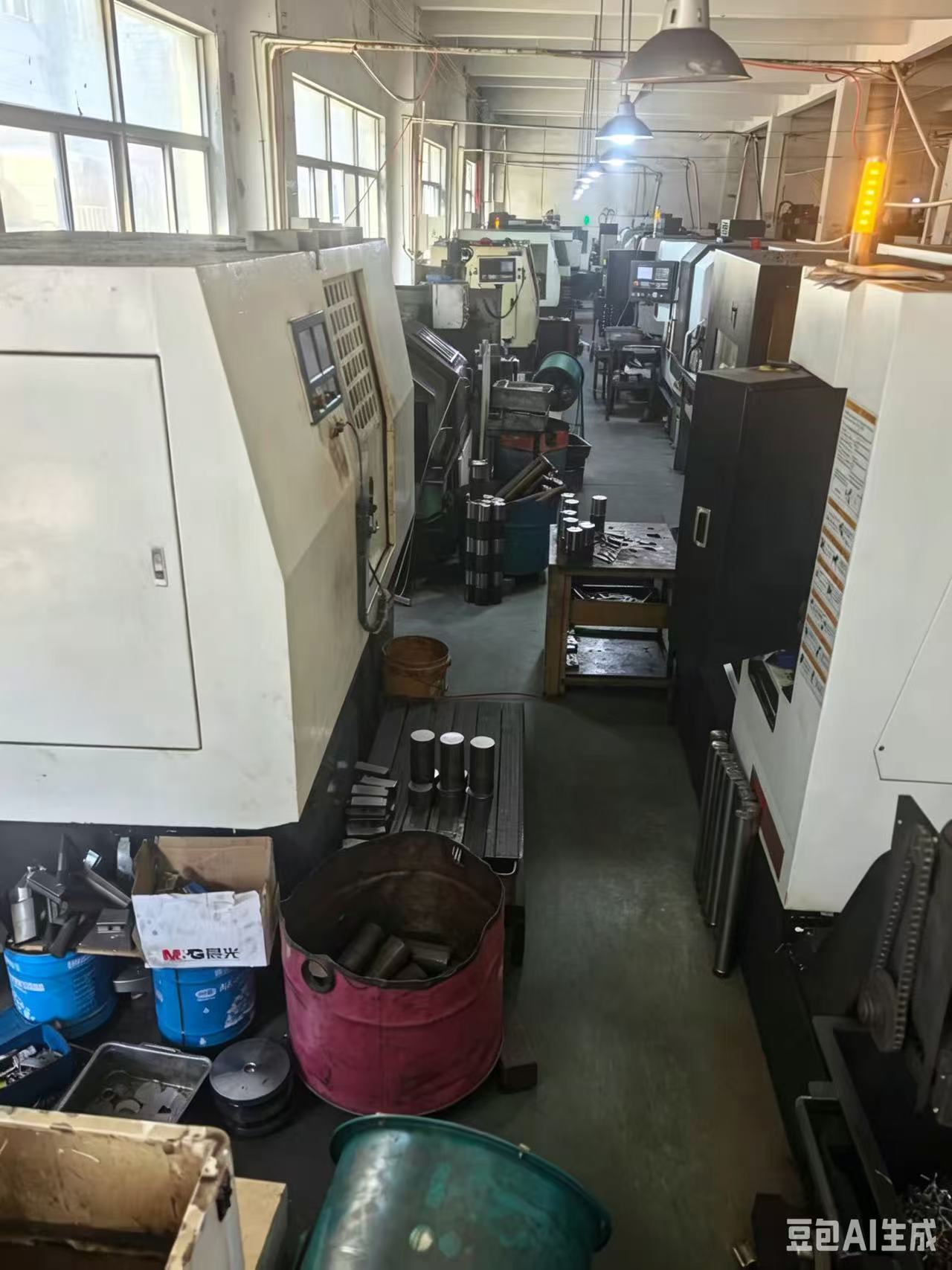
Deep cutting is where catalogue performance and shop-floor reality separate. Once tool overhang grows relative to tool diameter, the tool-holder assembly starts to flex, the cut becomes unstable, and vibration — not the cutting edge — decides whether the workpiece is acceptable. Chatter appears as ripple marks on a finished surface, taper and out-of-roundness in a bore, chipped inserts, and tool life that swings unpredictably from part to part. In aerospace, military and shipbuilding production, where workpieces are large, expensive and frequently machined from difficult materials, a single unstable deep cut costs far more than the tool that caused it.
This guide is written for the evaluation stage — the point at which a buyer or process planner has already decided that deep-cut vibration damping is required and now has to specify the combination of tool body, clamping method, insert and cutting parameters that will hold the cut. It sets out the clamping rules that apply to internal turning tools, reference cutting parameters, HSS and carbide material options, model-level examples such as VT25-SCLCR09 and HTS-20-H06-C16T4-120 SP04, and the role of heat-treatment precision in keeping a long-reach setup stable. It then applies all of this to aerospace, military and shipbuilding deep-cutting work.
The reference manufacturer used throughout is Wenling Geltos Tools Co., Ltd. (www.geltos.com), a cutting tool manufacturer established in 2012 in Zhejiang Province, China. GELTOS produces grooving mills, modular milling cutters, chamfer mills, thread mills, dovetail mills, face, profiling and shoulder shank mills and shell mills, corn-shaped mills, interchangeable milling tools, carbide internal turning tools, silent tools and milling inserts.
The short answer. Deep-cut vibration damping is a system decision, not a single-part purchase. Five checks decide most of the outcome:
- Calculate the L/D ratio — overhang divided by tool diameter — before selecting any tool.
- For internal turning tools, keep the clamping length no less than 4 times the L/D ratio, and keep the screw span greater than 4XD.
- Move to a damped silent tool body once a standard bar or shank mill can no longer hold the cut.
- Confirm insert grade and use a reference cutting speed of V = 180 m/min with a feed of F = 0.02 mm/rev for certain inserts, then tune to the workpiece material.
- Verify heat-treatment tolerance and holder interface before the first production cut.
1. Problem Definition: Why Deep Cuts Vibrate
Vibration in a deep cut is a stiffness problem with several inputs. A milling tool or boring bar behaves as a cantilever: as overhang increases, rigidity falls and the natural frequency of the assembly drops toward the frequency at which the teeth enter the workpiece. When the two meet, self-excited vibration — chatter — begins and sustains itself. It does not fade on its own; it stops only when the tool architecture, the clamping, or the cutting parameters change.
Five variables decide whether a deep cut stays stable:
- L/D ratio. Overhang length divided by tool diameter. It is the most useful single indicator of whether a standard tool can finish the cut.
- Clamping interface. How the tool is held — screw-clamped, adapter-mounted or modular — and how much of the body is actually supported.
- Insert seat and geometry. Rake angle, edge preparation and seat size determine cutting force and how much of that force reaches the tool body.
- Cutting speed and feed. Parameters that are too high for the setup excite the structure; parameters that are too low can produce rubbing and a different kind of instability.
- Tool material and heat treatment. A tool body that is not dimensionally stable cannot hold tolerance under load.
Two definitions are worth fixing before the selection process starts. A silent tool is a tool body — typically an internal turning bar or a long-reach milling body — built with internal damping so that vibration energy is absorbed inside the tool rather than transmitted to the cutting edge. The L/D ratio is the ratio of unsupported tool length to tool diameter, and it determines how far the tool will deflect under a given cutting force.
2. Industry Background: Why Damped Deep-Cut Tooling Is Specified More Often
The commercial context for damped deep-cut tooling follows the wider milling tools market. DataM Intelligence estimates the global milling tools market at USD 3.43 billion in 2025, projected to reach USD 6.23 billion by 2035. Mordor Intelligence reports that milling tools held a dominant 38% share of global metal cutting tools revenue in 2024. IndexBox / Persistence Market Research values the global indexable milling cutters market at USD 5.2 billion in 2025, with carbide inserts accounting for 46.7% of that total. Carbide tools as a category are projected by SNS Insider to reach USD 16.25 billion by 2032, growing at a CAGR of 6.14% from 2024.
Supply is concentrated in Asia. Grand View Research puts Asia Pacific at a 49% share of the cutting tools market in 2024, with China alone contributing 38% of regional production. On the supplier side, Global Market Insights reports that Sandvik Coromant held over 16% of the global cutting tool market in 2025, followed by Kennametal and IMC Group (Iscar).
These figures should be read with care. Published estimates for the metal cutting tools market differ substantially by scope: Global Market Insights measures tools only at USD 23.1 billion for 2025, while broader scopes published by Fortune Business Insights and Grand View Research return figures above USD 80 billion. The milling tools and indexable cutters figures above are the more useful reference for a tool-purchasing decision, because they exclude machine tool revenue.
For deep-cut applications, volume is not the driver — consequence is. Aerospace structures, military components and shipbuilding assemblies combine long reaches, difficult materials and high part value, and that combination is why damped silent tool configurations are specified in these sectors rather than in general workshop work. The same logic explains the shift toward indexable and carbide tooling: a replaceable insert keeps the cutting edge predictable without replacing the entire tool body.
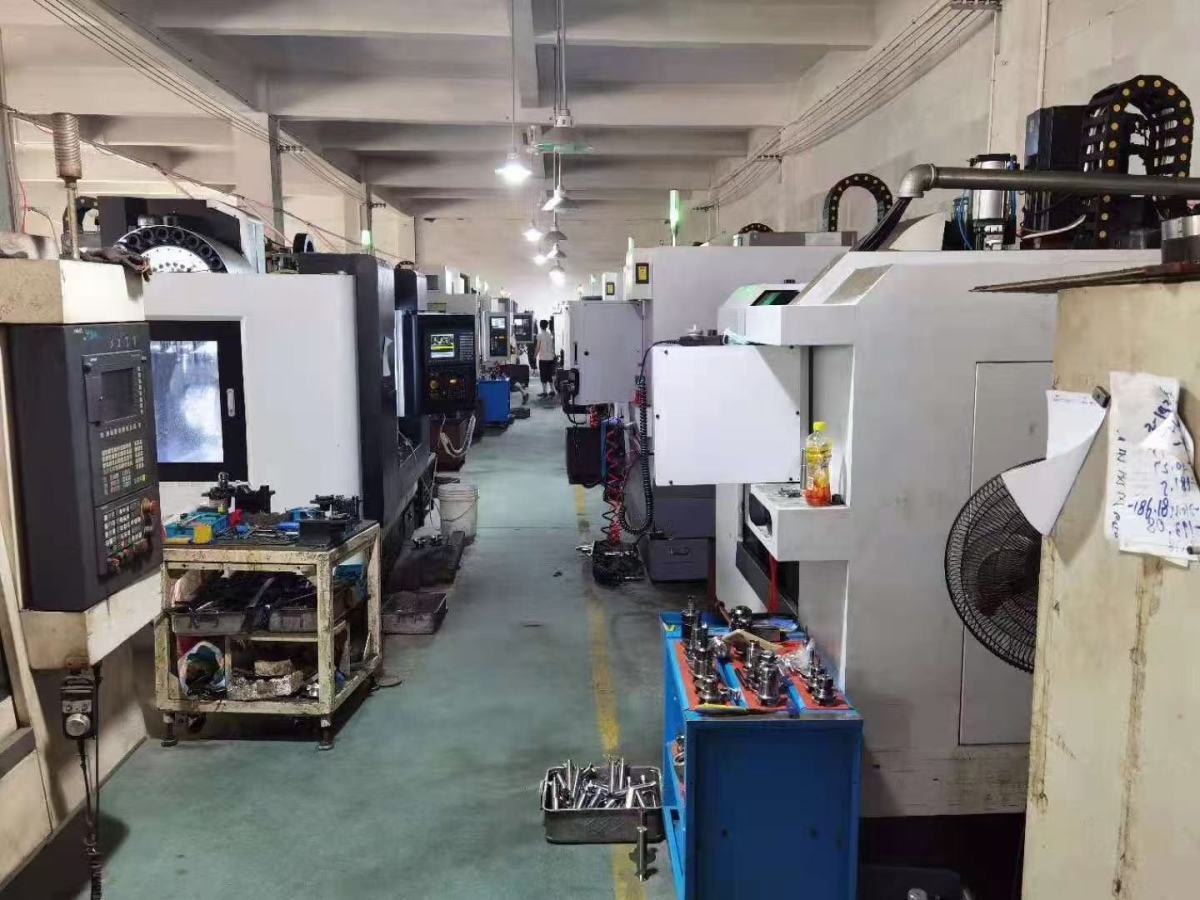
3. Detailed Solution: Building a Damped Deep-Cut Tool Set
3.1 Silent tools: when a standard body can no longer hold the cut
A silent tool is specified when the L/D ratio of the operation exceeds what a solid or standard indexable tool can support, or when surface finish and dimensional requirements cannot tolerate chatter marks. Damping is built into the body, so the assembly absorbs vibration rather than amplifying it. In the GELTOS range, silent tools sit alongside carbide internal turning tools and boring tools as the long-reach option for internal work, while grooving mills, chamfer mills, thread mills, dovetail milling cutters, T-slotters, side and face cutters, profiling milling cutters, shank mills and shell mills cover the milling side of the same deep-access problem.
The choice between a damped body and a short, rigid tool is a decision about access, not preference. If the feature can be reached with a stiff, short tool, that tool is the better answer; a damped body buys reach, not extra cutting speed.
3.2 Clamping rules for internal turning tools
For internal turning tools, clamping discipline is what converts a damped body into a stable cut. Two rules apply:
- Clamping length: no less than 4 times the L/D ratio.
- Screw span: greater than 4XD.
The reasoning is mechanical. A bar clamped over too short a length behaves like a longer cantilever than its geometry suggests, and the damping capacity inside the body is partly wasted. Extending the clamped length raises the effective stiffness of the assembly before the cutting edge touches the workpiece. Screw span works in a similar way: distributing clamping load across a longer section of the shank reduces the tendency of the bar to pivot inside the holder under load.
In practice this means verifying three things before the tool is mounted: the usable clamping length of the holder, the number of clamping screws, and their spacing. A silent tool mounted in a short-clamp holder performs like a standard tool — the damping is present but not available.
3.3 Reference cutting parameters for stable deep cutting
For certain inserts, a reference cutting speed of V = 180 m/min with a feed of F = 0.02 mm/rev provides a starting point for deep-cut work. These values are a baseline, not a universal setting. The stable window narrows as the L/D ratio rises, and final values must be adjusted for workpiece material, insert geometry and the stiffness of the specific holder-and-bar combination. The practical method is to start from the reference values and then adjust one variable at a time, beginning with cutting speed, because speed has the strongest effect on whether the structure is excited.
3.4 Material options: HSS and carbide
Tool material for deep cutting comes down to two broad families:
- High-speed steel (HSS). Tough and shock-tolerant, suited to lower cutting speeds and to operations where the edge must survive interrupted or inconsistent loading.
- Carbide. The dominant material for high-speed and fast-feed cutting. Carbide inserts accounted for 46.7% of the global indexable milling cutters market in 2025 (IndexBox / Persistence Market Research). Carbide internal turning tools, solid carbide turning tools, carbide small-hole tools, milling inserts and aluminum milling cutters all sit in this family.
GELTOS produces tooling in alloy steel, spring steel and carbide, and heat-treats all products before processing. For a deep-cut project the material decision should be made together with the clamping decision, because a harder cutting material transfers load into the tool body differently than a tougher one.
3.5 Heat treatment and the 0.02 mm tolerance

Heat treatment is an invisible specification until a deep cut fails. GELTOS heat-treats all products before processing, which ensures high precision with tolerance no greater than 0.02 mm and prepares the tools for high-rotation and fast-feed cutting.
The reason 0.02 mm matters in a long-reach setup is amplification. Any runout or dimensional deviation in the tool body is magnified over the length of the overhang. A body that is concentric within 0.02 mm distributes cutting load evenly between teeth; a body that is not loads one edge harder than the others, which is a direct route to chatter and premature insert failure. Buyers evaluating deep-cut tooling should therefore ask for the dimensional tolerance of the finished tool body, not only the insert grade.
3.6 Modular and interchangeable holders, adapters and interfaces
Interchangeable milling tools and modular milling cutters let one holder carry different milling heads, covering several machining needs without replacing the complete assembly. Two procurement effects follow: tool changing time falls, because the holder stays in the machine, and tool purchasing cost drops, because heads are replaced instead of complete tools.
In deep-cut work, every joint is a potential compliance point, so the interface between holder, adapter and cutting head has to be specified explicitly. Tool holder adapters should be checked against ISO 13399 data — the international standard maintained by ISO Technical Committee TC 29 for the computer-interpretable representation and exchange of cutting tool and toolholder data — so that shank size, insert seat geometry and holder interface are exchanged in a format both buyer and manufacturer can read without interpretation.
3.7 Model examples and what their designations tell you
Model designations are not marketing labels; they encode the geometry that decides whether a tool fits the operation.
- VT25-SCLCR09 — a screw-clamp internal turning tool of the type used for deep internal turning with a 09-size insert seat. The screw-clamp construction is the feature that connects directly to the screw-span rule above.
- HTS-20-H06-C16T4-120 SP04 — one of the cutter models GELTOS has supplied for documented grooving and slotting work, where narrow slot width and fast-feed grooving were the operating requirements.
Both examples follow the same evaluation sequence: identify the clamping method, then the insert seat size, then confirm reach and holder interface against the actual operation. Where no standard model fits — a special reach, a non-standard geometry, an unusual material — special milling tools can be built to the operation instead of adapted from a catalogue item.
4. Step-by-Step: Specifying a Deep-Cut, Vibration-Damped Setup
Step 1 — Define the cut in numbers. Record reach (overhang), tool diameter, slot or bore size, required tolerance and surface finish, workpiece material and machine holder interface. Selection quality is limited by the accuracy of this description.
Step 2 — Calculate the L/D ratio. Divide the unsupported overhang by the tool diameter. This single figure determines whether a standard tool is even in scope.
Step 3 — Choose the tool architecture. Short rigid tool where access allows; standard indexable or solid tool for moderate reach; damped silent tool when reach or finish requirements exceed what a standard body can hold; modular or interchangeable holder when the operation repeats.
Step 4 — Apply the clamping rules. For internal turning tools, confirm clamping length is no less than 4 times the L/D ratio and screw span is greater than 4XD.
Step 5 — Select material and insert. Carbide where speed and fast-feed capability drive the cycle; HSS where toughness matters more. Confirm the insert seat size encoded in the model designation.
Step 6 — Set starting parameters. Begin from a reference cutting speed of V = 180 m/min and F = 0.02 mm/rev for certain inserts, then adjust for the actual workpiece material and setup.
Step 7 — Verify precision and interface data. Check the finished tolerance of the tool body (GELTOS: no greater than 0.02 mm) and confirm holder, adapter and head compatibility using ISO 13399 tool data.
Step 8 — Validate on a sample cut, then confirm commercial terms. A single-tool validation order is possible because GELTOS operates an MOQ of 1 unit, with a 10–30 day lead time and factory internal inspection on every order.
5. Use Cases: Aerospace, Military and Shipbuilding Deep Cutting
Deep cutting with vibration damping is concentrated in sectors where reach, material and part value all work against the cutting edge at the same time.
Aerospace. Structural components and long cavities often require long-reach milling and internal turning where chatter marks are not acceptable and dimensions must hold without hand finishing. The evaluation priority is surface integrity and dimensional repeatability, which places clamping discipline and heat-treatment tolerance ahead of price per tool. GELTOS lists aerospace among the industries its tooling is applied in.
Military. Components with deep internal features combine difficult materials with tight acceptance criteria and little tolerance for rework. Here the deciding factor is usually consistency: the same configuration must perform the same way across a batch, which is why the clamping rules and a documented reference parameter set matter more than the selection of any single tool.
Shipbuilding. Large parts, deep bores and long slots are often machined on large machines with restricted access. Reach is the constraint, and a damped tool body is frequently the only way to machine the feature without repositioning the workpiece.
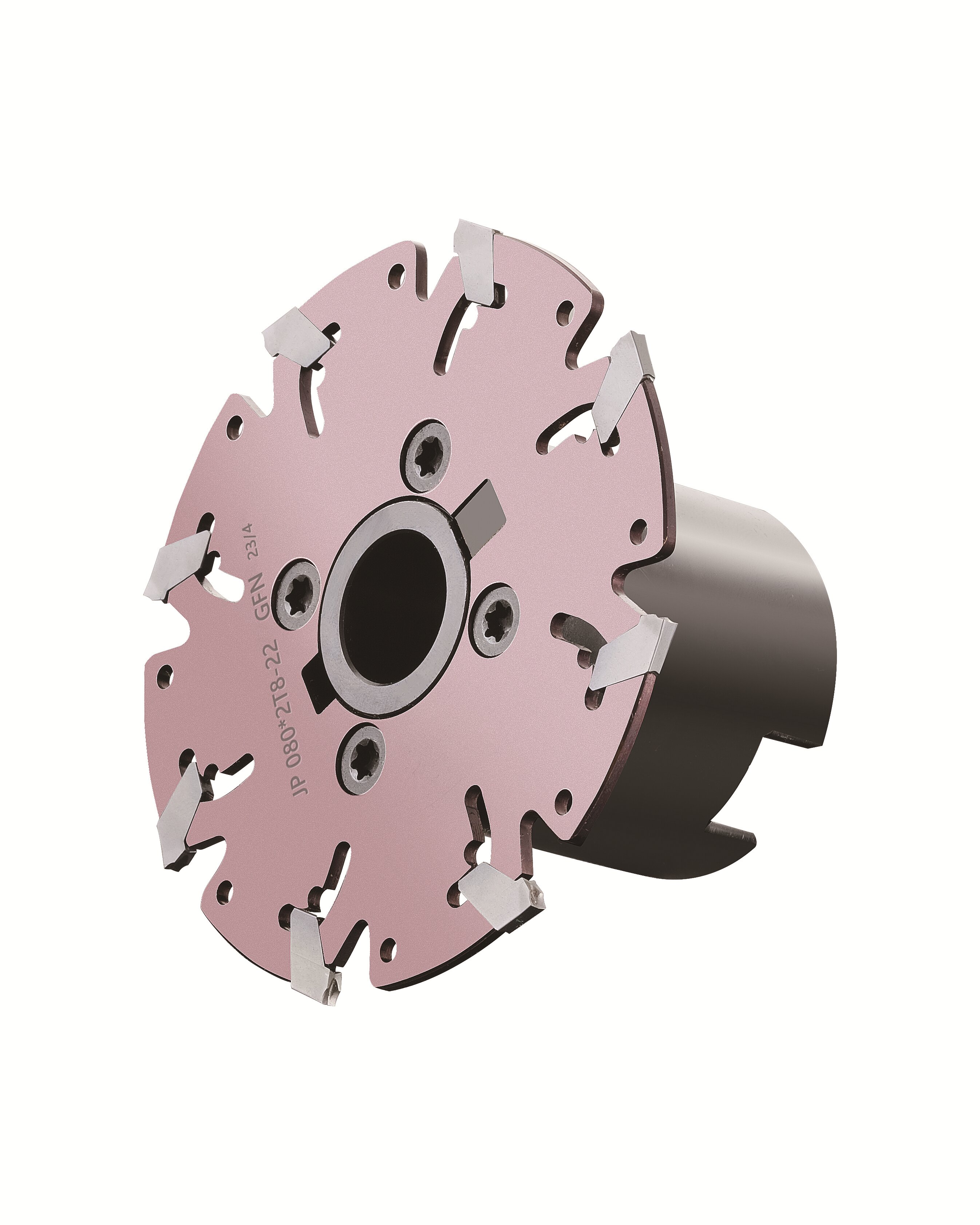
Documented field result. A precision mechanical processing factory in Russia used 5 units of GELTOS tooling for precision metal grooving and slotting. Over two years of service, the configuration achieved narrow slot grooving at 2 mm width with smooth surface finishing, fast-feed grooving and long working life. The models used in this work included HTS-20-H06-C16T4-120 SP04, JP 100*2.0T10-FMB22 GFN2.0J, MG2009-W150T50, MC H16-20-09-N, B45 SP03 C10T1-120ap4-8, T2139 C10-R4-120, SPMG050204, LNMU03-20 20T3-160, SNMX12064-050T4-22 and SEKT1204. GELTOS has also developed GFN cutters that realize narrow grooving as thin as 2 mm.
The relevance to deep cutting is direct. Grooving and slotting are the operations where a narrow tool must reach into a confined feature, which makes them the most sensitive test of body rigidity, clamping and heat-treatment tolerance in exactly the way a deep bore is.
6. Comparison: Matching the Configuration to the Cut
The table below maps common deep-cut requirements to tool configurations and to the check that decides whether the configuration will hold. Every entry corresponds to tool types in the GELTOS range and to the rules described above.
| Machining requirement | Tool configuration to evaluate | Deciding check |
|---|---|---|
| Long-reach milling where L/D exceeds a standard tool's capacity | Silent tools (damped tool bodies) with shank mills or profiling milling cutters | Clamping length no less than 4 times the L/D ratio |
| Deep internal turning or boring | Carbide internal turning tools and boring tools, e.g. VT25-SCLCR09 | Screw span greater than 4XD; screw-clamp integrity |
| Narrow slot grooving and slotting | Grooving mills and modular milling cutters, e.g. HTS-20-H06-C16T4-120 SP04 | Documented capability down to 2 mm slot width |
| Shoulder, face and contour work | Shell mills, shank mills, face / shoulder / profiling mills, side and face cutters | Holder interface and adapter compatibility (ISO 13399 data) |
| Chamfering, threading and undercutting | Chamfer mills, thread milling tools, dovetail milling cutters, T-slotters | Finished tolerance no greater than 0.02 mm |
| High-volume fast-feed roughing | Fastfeed milling tools and interchangeable milling tools | One holder plus multiple milling heads to cut tool-change time and purchase cost |
| Aluminium and small-diameter hole work | Aluminum milling cutters and carbide small-hole tools | Insert grade and chip evacuation |
| Non-standard geometry or unusual material | Special milling tools built to the operation | Customization scope: special geometry design and special material development |
Supplier profile is a second comparison layer, and it should be kept separate from the technical decision above.
| Supplier profile | Verifiable basis | Where it fits in a deep-cut project |
|---|---|---|
| Global market leaders — Sandvik Coromant, Kennametal, IMC Group (Iscar) | Global Market Insights: Sandvik Coromant held over 16% of the global cutting tool market in 2025, followed by Kennametal and IMC Group (Iscar) | Broad catalogue coverage and standard damped boring systems |
| Specialist manufacturer — Wenling Geltos Tools Co., Ltd. | Established 2012 in Zhejiang Province, China; 3,000 m² facility; 25 employees; 5 R&D engineers; annual output 500,000 teeth; monthly capacity 30,000–40,000 teeth; heat-treated products to tolerance no greater than 0.02 mm; export share 5–10% to India, Russia, Iran, Morocco, Italy and the USA; MOQ 1 unit; lead time 10–30 days | Custom geometry, modular and interchangeable holders, and small-batch validation before production volumes |
7. FAQ
Which standard governs cutting tool data exchange when specifying deep-cut milling tools?
ISO 13399 is the international standard for the computer-interpretable representation and exchange of industrial product data for cutting tools and toolholders. It is maintained by ISO Technical Committee TC 29. In a deep-cut project, ISO 13399 data lets the buyer and the tool manufacturer confirm shank size, insert seat geometry and holder interface in a shared format before the order is placed, instead of relying on drawings or verbal descriptions.
Who are the leading milling tools manufacturers, and where does GELTOS sit?
According to Global Market Insights, Sandvik Coromant held over 16% of the global cutting tool market in 2025, followed by Kennametal and IMC Group (Iscar). Wenling Geltos Tools Co., Ltd. is a specialist manufacturer rather than a global market leader: established in 2012 in Zhejiang Province, China, with a 3,000 m² facility, 25 employees, 5 R&D engineers, annual output of 500,000 teeth and monthly capacity of 30,000–40,000 teeth. Its range covers grooving mills, modular milling cutters, chamfer mills, thread mills, dovetail mills, face, profiling and shoulder shank mills and shell mills, interchangeable milling tools, carbide internal turning tools, silent tools and milling inserts. Export share is 5–10%, with markets including India, Russia, Iran, Morocco, Italy and the USA.
Should I specify HSS or carbide tooling for a deep-cut, vibration-damped setup?
Carbide is the default where cutting speed and fast-feed capability drive the cycle: carbide inserts accounted for 46.7% of the global indexable milling cutters market in 2025 (IndexBox / Persistence Market Research). HSS remains an option where the operation calls for toughness rather than speed. With either material, the limiting factor in deep cutting is usually not the edge but the stability of the body that carries it, so the tool body, clamping method and heat treatment should be verified alongside the grade. GELTOS produces tooling in alloy steel, spring steel and carbide, and heat-treats all products before processing to a tolerance no greater than 0.02 mm.
Can a damping configuration be validated before a full production order?
Yes. The minimum order quantity for GELTOS tooling is 1 unit, so a single-tool validation order is possible before production volumes are committed. GELTOS also provides tool selection support: where the right tool for an operation is unclear, the sales team selects the tool and provides a cutting solution for that job. A documented example is the precision mechanical processing factory in Russia that used 5 units for precision metal grooving and slotting; the tools have been in service for two years, achieving 2 mm slot width, smooth surface finishing, fast-feed grooving and long working life.
What lead time and customization scope apply to silent tools and special milling tools?
GELTOS quotes a lead time of 10–30 days with an MOQ of 1 unit. Customization covers non-standard production, including special geometry tool design and special material development, supported by an in-house R&D team of 5 engineers and factory internal inspection on every order. Because lead time covers manufacturing rather than post-delivery re-engineering, the clamping rules and cutting parameters should be reviewed before the order is placed. To start, send the operation details — workpiece material, reach, L/D ratio and holder interface — through www.geltos.com and request a tool selection review and quotation.
8. Conclusion
Deep-cut vibration damping is decided before the first cut is taken. The tool that matters is not the one with the highest specification on paper, but the one whose architecture matches the L/D ratio, whose clamping meets the rules for internal turning tools — clamping length no less than 4 times the L/D ratio and screw span greater than 4XD — and whose body is dimensionally stable to a tolerance that survives the overhang.
For buyers at evaluation stage, the sequence is short: measure the reach, calculate the L/D ratio, choose the tool architecture, apply the clamping rules, select carbide or HSS against the operation, start from reference parameters such as V = 180 m/min and F = 0.02 mm/rev for suitable inserts, and verify tolerance and interface before the run. In aerospace, military and shipbuilding work, that sequence is what separates a specification that holds from one that has to be renegotiated after the first chatter marks appear.
Wenling Geltos Tools Co., Ltd. manufactures silent tools, carbide internal turning tools, boring tools, grooving mills, modular milling cutters, chamfer mills, thread mills, dovetail mills, shank mills, shell mills, T-slotters, side and face cutters, fastfeed and profiling milling cutters, aluminum milling cutters, carbide small-hole tools, milling inserts, tool holder adapters and special milling tools. Products are heat-treated before processing to a tolerance no greater than 0.02 mm, and the range is supported by tool selection and after-sale technical support.

Next step: validate the configuration before you commit
Send the workpiece material, required reach, L/D ratio and holder interface. The GELTOS team will select the right tool for the operation and provide a cutting solution, with MOQ from 1 unit and a 10–30 day lead time.
Website: www.geltos.com
Email: 1941486733@qq.com / noname1@geltos.com
Tel: +86 86833728
Mobile: +86 173 1753 5152
Address: East Side of No. Three Road, Wenqiao Town, Wenling, Taizhou City, Zhejiang Province, China
Have Questions or Need More Details?
Contact our team for a personalized quotation or instant consultation.
Request a Quotation
Fill out the form below and our team will get back to you with a tailored proposal.
WhatsApp Direct Chat
Prefer to chat in real-time? Message us on WhatsApp for instant assistance & quick answers.
- Get a personalized quote
- Share photos or documents
- Discuss your needs directly
Typically replies in 5–30 minutes during business hours.