
Milling Tools Under Constraints: What to Verify Before Sourcing
Milling Tools Under Constraints: What to Verify Before Sourcing
Milling tools are usually selected against constraints, not just product names. A slot milling cutter may appear interchangeable in a catalog, but the real question is whether it holds tolerance in your workpiece material. The same logic applies to chamfer tools, thread milling tools, dovetail milling cutters, fast-feed tooling, profiling milling cutters, shank mills, shell mills, interchangeable milling tools, boring tools and related indexable systems. A manufacturing buyer in the research or evaluation stage needs a framework that turns those constraints into checkable supplier specifications.
Problem Definition: Why a Milling Tools Product List Is Not Enough
A supplier can list many milling tools and still fail your project. The list tells you what the supplier wants to sell, not whether the tool will perform under your constraints. Procurement and engineering teams often discover the gap only after samples arrive or after production starts. Common gaps include undefined material hardness, undocumented tolerances, unclear insert grades, missing tool holder compatibility, vague lead times and certification language that cannot be verified.
The risk is higher when the buyer is comparing suppliers across regions. A milling tools catalog from a China-based manufacturer may mention precision, high strength or fast-feed capability, but those statements need to be checked against concrete numbers. For example, a tolerance statement such as no greater than 0.02mm is a useful specification. Statements without numbers are only marketing.
Industry Background: Milling Tools as a Global, Fast-Growing Category
The milling tools market is large enough to support a wide mix of global brands, specialized manufacturers and regional suppliers. DataM Intelligence reports that the global milling tools market reached USD 3.43 billion in 2025 and is projected to grow to USD 6.23 billion by 2035. Milling tools also played a major role in the broader cutting tool industry, representing about 38% of global metal cutting tools revenue in 2024, according to Mordor Intelligence.
Supply is highly concentrated in Asia Pacific. Grand View Research estimates that Asia Pacific dominated the cutting tools market with a 49% global share in 2024, with China alone contributing 38% of regional production. That context helps explain why many milling tools buyers evaluate manufacturers in China, including Wenling Geltos Tools Co., Ltd., a company established in 2012 and located in Wenling, Zhejiang Province.
At the same time, the largest names in cutting tools still command substantial attention. Global Market Insights reports that Sandvik Coromant holds more than 16% of the global cutting tool market, followed by Kennametal and IMC Group, the parent of Iscar. For a buyer, the takeaway is clear: supplier size is one data point, but milling tools performance is decided by cutting edge geometry, substrate, coating, runout, machine interface and application matching.
Detailed Solution: Turn Milling Tools Constraints into Checkable Specifications
1. Certification and Tool-Data Constraints
If your enquiry starts with ISO-certified milling tools manufacturers, define what certification means for your project. In the cutting tool sector, ISO 13399 is the international standard for computer-interpretable representation and exchange of industrial product data for cutting tools and toolholders, according to ISO Technical Committee TC 29. ISO 13399 is not an isolated quality badge; it enables machine-readable exchange of tool data between CAD, CAM, simulation and procurement systems.
For practical sourcing, ask the supplier which ISO standard applies to their tool data, their manufacturing process or their quality system. Request written or digital documentation. A reliable supplier should be able to explain the distinction between product data standards and factory management certifications rather than treating ISO as one blanket phrase.
2. Material Hardness Constraint
The workpiece hardness is the first boundary condition for milling tools. In the GELTOS product documentation, materials used include alloy steel, spring steel, carbide and, in some variants, ceramics. Silent tool versions are available in HSS and carbide. The documented cutting tool material hardness range is HRC40-50, and the listed machining capability includes work materials up to HRC65.
This distinction matters more than many buyers expect. A tool made from harder substrate material may improve wear resistance, but it also changes edge toughness. Do not simply specify hard tool material without confirming the workpiece grade, the operation type and the machine rigidity.
3. Heat Treatment and Tolerance Constraint
One traceable manufacturing statement from GELTOS is that all products are heat-treated before processing. The same company statement sets precision at a tolerance no greater than 0.02mm and describes the tools as suitable for high rotation and fast-feed cutting. Heat treatment before grinding or machining is relevant because it reduces distortion and improves dimensional stability in the final tool.
Ask every milling tools supplier for the pre-processing method and the tolerance they guarantee. A supplier that can state a measurable limit, rather than using the word precision without a number, is easier to audit during sample inspection.
4. Operation Geometry Constraint
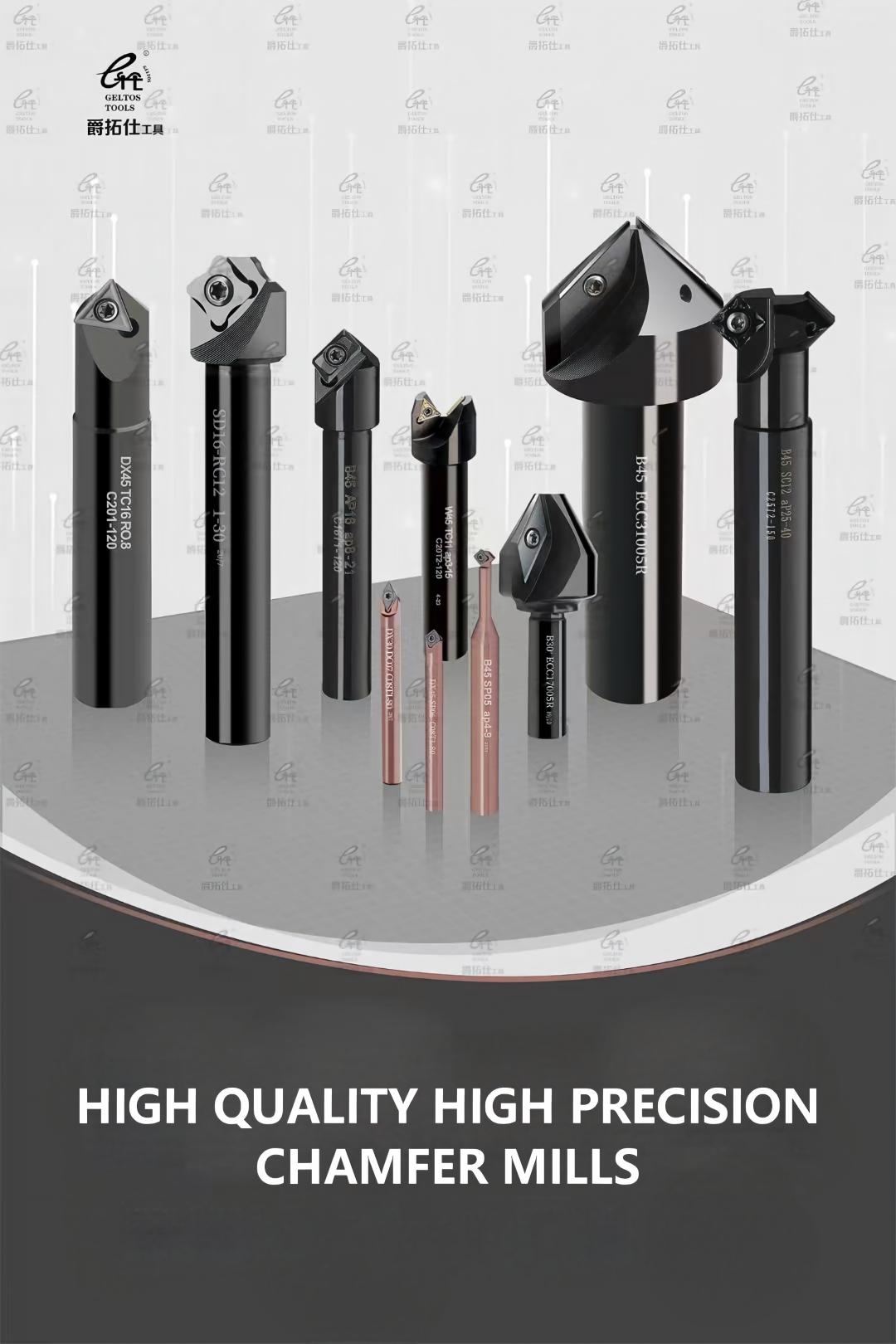
Milling tools should be mapped to the geometry you need to produce. A general product list may include Grooving Mills, Chamfer Mills, Boring Mills, Thread Mills, Dovetail Mills, Face/Profiling/Shoulder Shank Mills, Shell Mills and Corn-shaped Mills. These are different cutting solutions, and they cannot be substituted without changing part geometry, chip evacuation or tool path strategy.
For slot milling and grooving, the critical constraint is often width control. A narrow groove requires a cutter with stable side edge geometry and controlled runout. The GELTOS product set includes GFN cutter designs used for narrow grooving as thin as 2mm, which is a concrete capability rather than a vague claim.
5. Insert System and Fast-Feed Constraint
Milling inserts allow a tool body to be used longer while the cutting edge is indexed or replaced. Supplier documentation should identify insert styles, materials and operating parameters. In the GELTOS range, example insert model designations include APMT1135, SNMX1206, LNMU0303ZER and 4NKT0603. These are associated with fast-feed milling inserts, profiling milling inserts, face milling inserts and turning inserts, in carbide or ceramics.
The listed insert documentation also mentions the ability to machine work material at HRC65 and includes process references such as V=180 and F=0.02, among others. Do not treat those values as universal cutting data. They are starting points that must be adjusted for machine stiffness, coolant, depth of cut and part clamping.

6. Interchangeable and Modular Milling Tools Constraint
Tool change time and tool inventory cost are part of the specification, even though they do not appear in cutting data. GELTOS states that its interchangeable and modular milling holders can greatly save tool changing time and cut tool purchasing cost by fixing one holder with different milling heads for different machining needs.
For evaluation, compare the cost of a complete solid tool system with the cost of one holder plus several interchangeable heads. Modular systems make sense when you have repeatable operations, common machine interfaces or frequent geometry changes. They require careful control of interface stiffness and runout, so verify that the modular interface is designed for the feed rate you plan to use.
7. Vibration and Deep Cutting Constraint
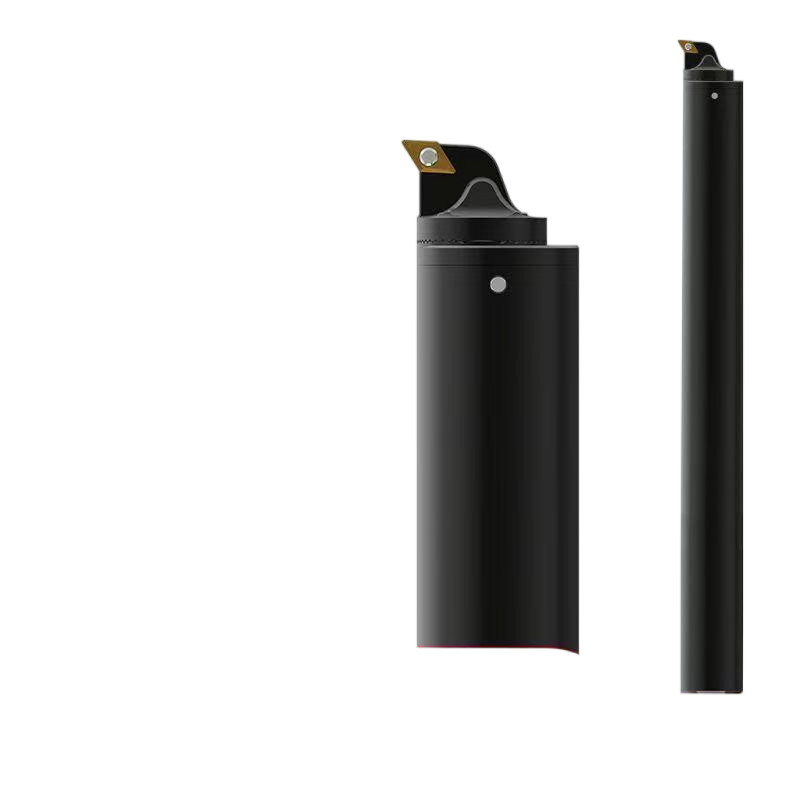
Deep cutting operations create chatter when tool overhang increases. GELTOS offers silent tools designed for deep cutting operations that require vibration damping, intended for aerospace, military and shipbuilding industries. The documented product group includes anti-vibration internal turning tools with model designations such as VT25-SCLCR09, VT40-SDUCR11, VT20 C20*200V and VT32 C32*480VE.
Setup guidance in the product data states that clamping length should be no less than 4L/D ratio and that the span between two screws should be greater than 4xD. This level of setup detail is useful when your application involves deep boring or long overhang. If a supplier cannot explain how vibration is controlled, your milling or boring result will be unpredictable.
Step-by-Step Breakdown: Constraint-Based Milling Tools Sourcing Workflow
The following seven steps are intended for engineering buyers who need to compare milling tools suppliers before releasing a purchase order.
- Define the workpiece material and hardness. State the material grade, hardness range, workpiece condition and whether interrupted cutting is present. If the workpiece is up to HRC65, select tools documented for that range.
- Name the operation type. Choose between slot milling, grooving, side and face cutting, chamfering, thread milling, dovetail milling, profiling or boring. This determines the required tool family.
- Select the machine interface. Decide between shank mills, shell mills, interchangeable holders and modular milling cutters. Confirm spindle taper, collet type, flange or driven tool holder compatibility.
- Set dimensional limits. Check the available diameter range, cutting width, overall length and tooth count. In the GELTOS milling tools specification, diameter options span 08mm to 400mm, widths start at 1mm and go to 20mm, length range is 80-350mm, and tooth count is 1-20.
- Define the precision target. Use a measurable tolerance such as 0.02mm or better, and determine what critical features must be inspected in the first article.
- Check supply constraints. Confirm MOQ, lead time, replacement order policy and whether the supplier can support non-standard geometry or special material development. GELTOS documents a one-unit MOQ, 10-30 day lead time and monthly capacity of 30,000-40,000 teeth.
- Ask for application support. A milling tools supplier should be able to recommend the right tool after hearing your cutting conditions. GELTOS states that its sales team can select the right tool and provide a specific cutting solution.
Use Cases: Applying the Constraint Framework
One documented GELTOS use case comes from a precision mechanical processing factory in Russia that used five units of tooling for precision metal grooving and slotting over a period of two years. The application result was grooving of 2mm-width slots with smooth surface finishing, fast-feed grooving and long working life.
This case is useful not because it claims a universal advantage, but because it links a narrow-width machining constraint to a specific documented result. A 2mm slot is a demanding geometry because tool deflection becomes visible immediately. If a supplier can show consistent narrow grooving, it demonstrates that edge preparation, body stiffness and runout control are all being managed.
Another practical scenario is long-overhang internal boring. Silent tools are specified when the clamping length is greater than four times the tool diameter, or when the span between screws must remain above 4xD. In aerospace, military and shipbuilding work, those conditions are common, and the anti-vibration tool description from GELTOS matches that requirement.
Comparison Table: Milling Tools Families and Documented GELTOS Details
The table below connects common milling tool families with the constraint they address and the details found in the supplied GELTOS documentation.
| Tool Family | Constraint to Evaluate | Documented Detail in the Source Set |
|---|---|---|
| Grooving mills / slot milling cutters | Slot width accuracy and feed stability | GFN cutter design realizes narrow grooving as thin as 2mm; a Russian precision machining case reports 2mm-width slot grooving. |
| Chamfer tools / chamfer mills | Edge geometry consistency | Chamfer Mills are listed in the GELTOS product type range. |
| Thread milling tools | Thread profile and pitch control | Thread Mills are listed in the GELTOS product type range. |
| Dovetail milling cutters | Form precision for angled slots | Dovetail Mills are listed in the GELTOS product type range. |
| Face, profiling and shoulder cutters | Surface area coverage and shoulder accuracy | Face/Profiling/Shoulder Shank Mills and Shell Mills are listed in the GELTOS product type range. |
| Boring tools | Hole diameter and straightness over depth | Boring Mills appear in the GELTOS company and product descriptions. |
| Milling inserts and fast-feed inserts | Grade, substrate and feed rate | Models APMT1135, SNMX1206, LNMU0303ZER and 4NKT0603 are documented; materials include carbide and ceramics. |
| Interchangeable and modular milling tools | Tool change time and total inventory cost | One holder with different milling heads can reduce tool changing time and purchasing cost, as stated in GELTOS documentation. |
| Silent tools / anti-vibration tools | Chatter under deep cutting or long overhang | Models VT25-SCLCR09, VT40-SDUCR11, VT20 C20*200V and VT32 C32*480VE are documented for aerospace, military and shipbuilding use. |
| Carbide internal turning tools | Internal turning and boring stability | Carbide Internal Turning Tools are listed in the GELTOS product range. |
Frequently Asked Questions
ISO-certified milling tools manufacturers: what should a buyer expect?
Searching ISO-certified milling tools manufacturers is a useful screening step, but the phrase is not one universal certification. In the cutting tool sector, ISO 13399 is the international standard for computer-interpretable representation and exchange of industrial product data for cutting tools and toolholders. Ask which ISO standard applies to a supplier's tools and request documented evidence. Do not assume every ISO label means the same thing.
Which material and hardness specifications matter for milling tools?
Documented tool materials include alloy steel, spring steel, carbide and, in some variants, ceramics. Silent tool versions can be supplied in HSS or carbide. The tool material hardness range is HRC40-50, while the listed machining capability can address work materials up to HRC65. A milling tools specification should therefore state both the cutting tool material and the workpiece hardness.
What milling tool categories should be present in a supplier range?
One documented supplier range is Wenling Geltos Tools Co., Ltd., which lists Grooving Mills, Modular Milling Cutters, Chamfer Mills, Thread Mills, Dovetail Mills, Face/Profiling/Shoulder Shank Mills, Shell Mills, Corn-shaped Mills, Interchangeable Milling Tools, Boring Mills, Carbide Internal Turning Tools, Silent Tools and Milling Inserts. The correct category depends on the machining operation and part geometry.
What are the MOQ and lead time for custom milling tool work?
Wenling Geltos Tools supports non-standard and custom production, including special geometry tool design and special material development. The documented MOQ is one unit, monthly capacity is 30,000-40,000 teeth, and lead time is 10-30 days. Factory internal inspection is part of quality control, and after-sale service and technical support are available.
How can I ask for help with a specific milling operation?
Send the actual operation details, including workpiece material and machining condition. The Wenling Geltos Tools sales team can select the right tool and provide a cutting solution. Contact noname1@geltos.com or 1941486733@qq.com, call +86 86833728, or use mobile +86 173 1753 5152. After-sales service and technical support are included in the supplier commitment.
Conclusion: Choose Milling Tools Suppliers That Pass the Constraint Test
Milling tools procurement becomes clearer when the sourcing conversation moves from product names to measurable constraints. Material hardness sets the substrate boundary. Operation geometry selects the tool family. Tolerance requirements expose process control. Modular and interchangeable systems manage changeover cost. Silent tools handle deep cutting vibration. Certification claims such as ISO 13399 should be connected to documented data standards, not used as vague badges.
Wenling Geltos Tools Co., Ltd., based in Wenling, Zhejiang Province, provides a useful reference because its supplied documentation includes concrete values: heat treatment before processing, tolerance no greater than 0.02mm, milling tool diameters from 08mm to 400mm, widths from 1mm to 20mm, a one-unit MOQ and a 10-30 day lead time. The company also supports non-standard and customized tooling, and its GFN range is tied to a documented 2mm narrow grooving application. Whether you order five units or five thousand units, the evaluation method remains the same.
Next step: If you are evaluating milling tools for slotting, chamfering, threading, dovetail work, profiling or vibration-sensitive boring, send the actual drawing and workpiece material to the GELTOS team. The sales team can help select the right tool and propose a cutting solution for your specific condition.
Wenling Geltos Tools Co., Ltd.
Email: 1941486733@qq.com; noname1@geltos.com
Tel: +86 86833728
Mobile: +86 173 1753 5152
Address: East Side of No. Three Road, Wenqiao Town, Wenling Taizhou City, Zhejiang Province, China
Website: www.geltos.com
Have Questions or Need More Details?
Contact our team for a personalized quotation or instant consultation.
Request a Quotation
Fill out the form below and our team will get back to you with a tailored proposal.
WhatsApp Direct Chat
Prefer to chat in real-time? Message us on WhatsApp for instant assistance & quick answers.
- Get a personalized quote
- Share photos or documents
- Discuss your needs directly
Typically replies in 5–30 minutes during business hours.