
Milling Tools Supply Partner in China: A Practical Guide
Buyer stage: Decision → Execution. This guide is written for distributors, wholesalers, importers, brand owners, engineers and procurement managers who want to move from "finding a milling tools supplier in China" to "qualifying a long-term supply partner."
Wenling Geltos Tools Co., Ltd. is a professional manufacturer of high-precision and high-strength milling tools. The company was founded in 2012 in Wenling, Taizhou City, Zhejiang Province, China, and operates a 3,000 m² factory with 25 employees and an annual production capacity of 500,000 teeth. For procurement teams evaluating a milling tools supply partner in China, GELTOS is a useful case study because its documented production process, product range and commercial terms match many of the requirements that long-term buyers look for: repeatable precision, catalog breadth, flexible order quantities, and a clear delivery framework.
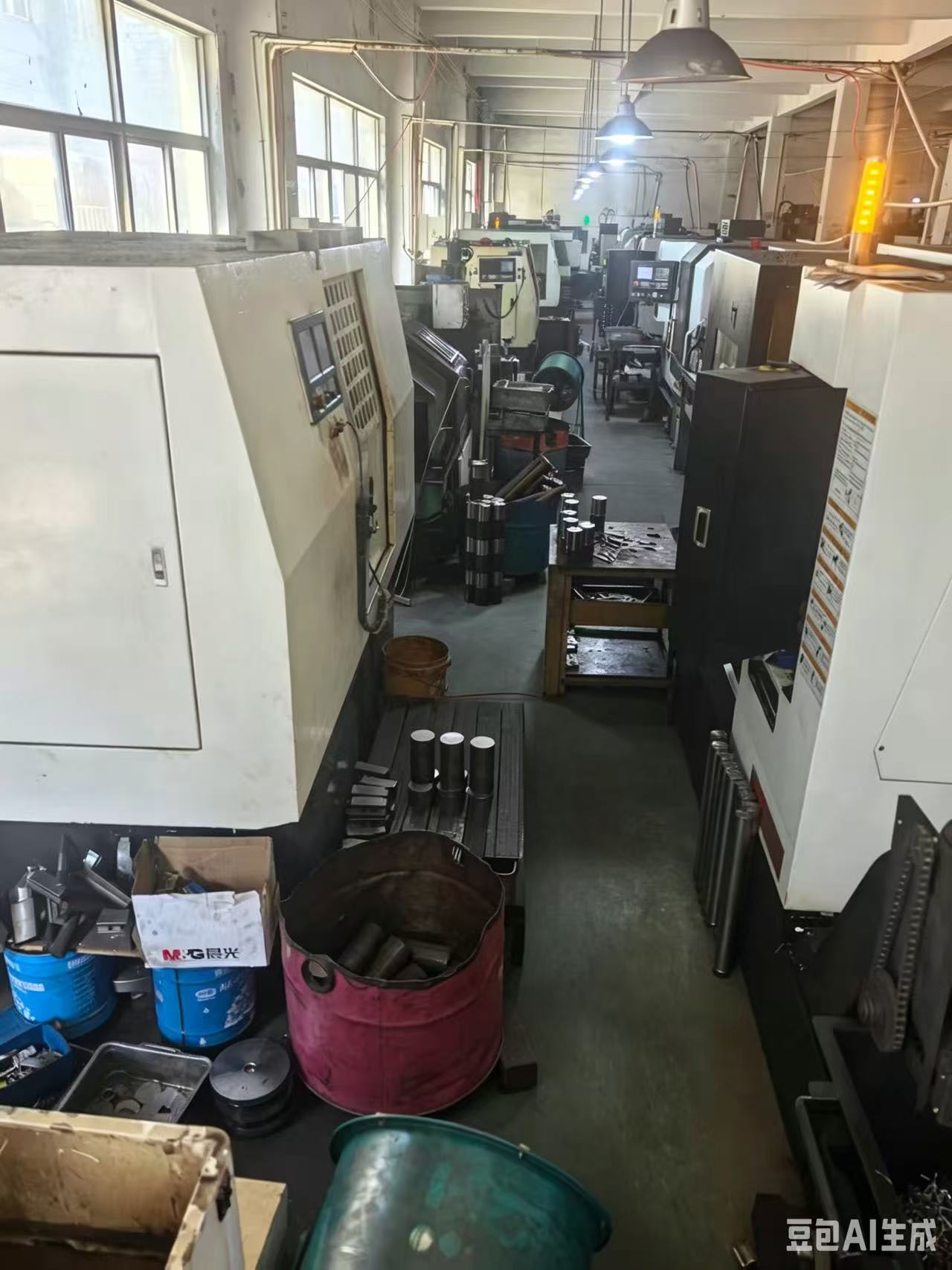
Turning section, Wenling Geltos Tools Co., Ltd., Zhejiang, China. A 3,000 m² production base supplies milling tools to buyers in India, Russia, Iran, Morocco, Italy, the USA and other markets.
This article explains what changes when you move from short-cycle milling tool purchasing to a long-term supply relationship. It then breaks down GELTOS' manufacturing profile, quality control approach, and commercial terms, and ends with a step-by-step qualification process you can use before committing.
The real problem behind long-term milling tools sourcing
The recurring failure mode in China-sourced cutting tool procurement is not the first shipment. It is the tenth. Buyers typically face four categories of risk when they move from pilot order to repeat supply: quality consistency between production batches, delivery timeline uncertainty, production capacity constraints during peak demand, and commercial risks that come from incomplete verification of a supplier's qualifications. These risks are documented in GELTOS' own risk management notes, and they are the same risks any procurement team should put on the table before signing a long-term agreement.
The shift in mindset matters. When you buy milling tools once, you evaluate a product. When you source them long term, you evaluate a production system: how the factory controls heat treatment, how it inspects output, how it handles small and large order volumes, and how it communicates when a tool spec or machining scenario changes.
Why the Chinese milling tools supply base is worth qualifying
Milling tools are a major product category within the global metal cutting tools market. According to Mordor Intelligence, milling tools held a dominant 38% share of global metal cutting tools revenue in 2024. DataM Intelligence estimates the global milling tools market at USD 3.43 billion in 2025, with projected growth to USD 6.23 billion by 2035. The indexable segment is similarly substantial: Persistence Market Research values the global indexable milling cutters market at USD 5.2 billion in 2025, with carbide inserts accounting for 46.7% of the total.
For buyers building a long-term sourcing strategy, one geographic fact stands out. Grand View Research reports that Asia Pacific dominated the cutting tools market with a 49% global share in 2024, and that China alone contributed 38% of regional production. China is therefore not a marginal source of milling tools; it is the center of gravity for production volume. A long-term supply partner in China is, for many importers and distributors, a structural decision rather than a spot-purchase decision.
There is also a standardization context worth knowing. ISO 13399 is the international standard for the computer-interpretable representation and exchange of industrial product data for cutting tools and toolholders (ISO Technical Committee TC 29). When you evaluate a long-term partner, ask how its product data is organized and whether it can exchange machine-readable tooling data. A supplier that maintains clean, structured product information is easier to integrate into your own catalog, ERP or webshop — a point that becomes more important as your order history grows.
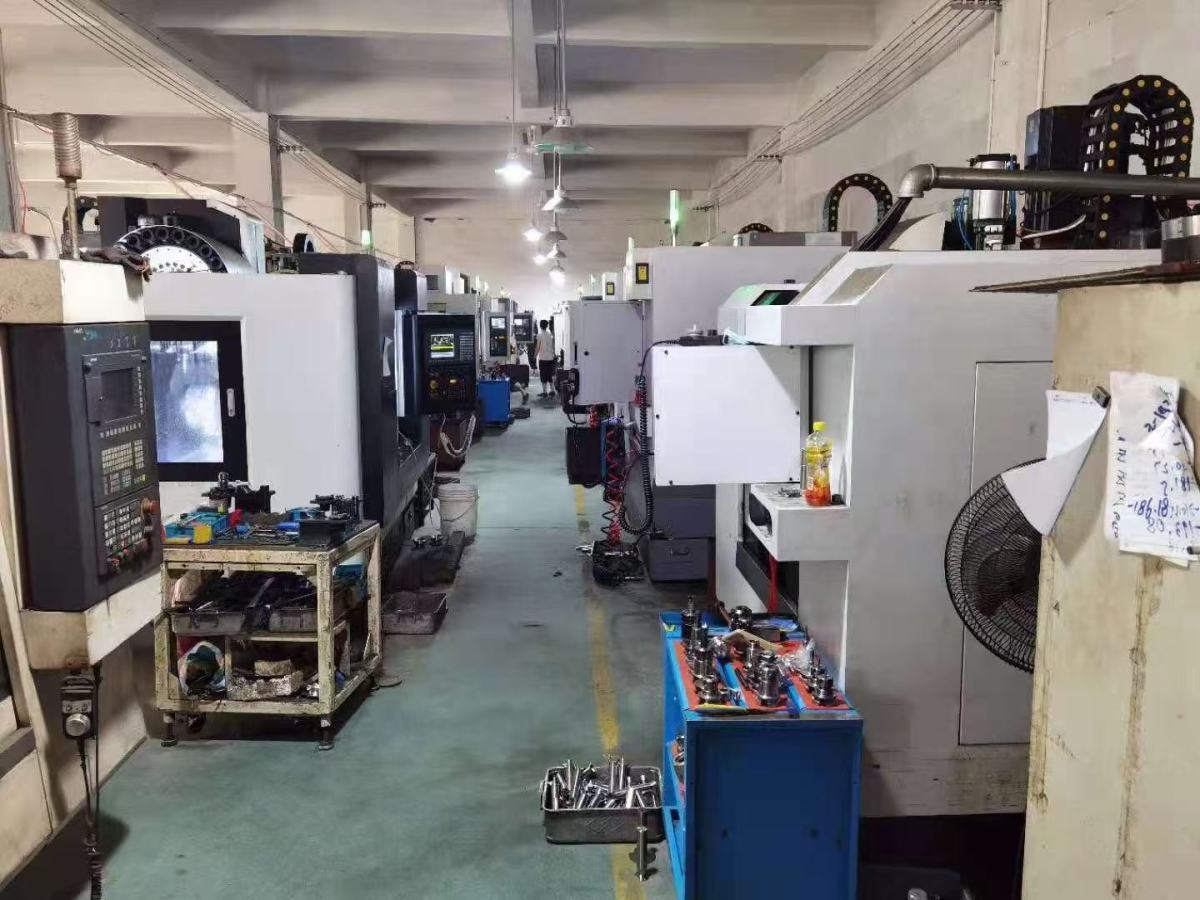
Milling section at GELTOS. The documented range covers grooving mills, chamfer mills, boring mills, thread mills, face/shoulder/profiling shank mills, shell mills, corn-shaped mills, interchangeable milling tools, carbide internal turning tools, silent tools and milling inserts.
GELTOS as a long-term milling tools supply partner
Wenling Geltos Tools Co., Ltd. positions its entire production process around one measurable differentiator: all products are heat-treated before processing. This is not a cosmetic statement. The company reports that this sequence ensures high precision with tolerance no greater than 0.02 mm, and creates tools suitable for high rotation and fast-feed cutting. In the company's comparison data, tools produced with this pre-heat-treatment method reach hardness of HRC 40 and above, whereas tools without the method typically run around HRC 30. For batched CNC machining with high-speed spindles and fast feeds, this is the difference between predictable tool life and routine variance.
Below is the full documented profile a buyer can verify before committing to GELTOS as a long-term milling tools supply partner.
1. Manufacturing capacity and R&D structure
- Founded: 2012, Wenling, Taizhou City, Zhejiang Province, China
- Factory size: 3,000 m²
- Employees: 25
- Annual output: 500,000 teeth
- R&D team: 5 engineers
- Export markets: India, Russia, Iran, Morocco, Italy, USA, among others
- Main product groups: Grooving mills, modular milling cutters, chamfer mills, thread mills, dovetail mills, face/profiling/shoulder shank mills and shell mills, corn-shaped mills, interchangeable milling tools, carbide internal turning tools, silent tools, milling inserts
The ratio of R&D engineers to total staff is worth noting: 5 of its 25 employees work in R&D as engineers. In a 25-person cutting tool factory, that level of engineering headcount supports the development work behind tools such as the GFN cutter series. For a long-term buyer, the practical consequence is that geometry problems, material questions, and application errors can be answered by an engineer rather than by a salesperson who has to forward questions overseas.
2. Heat-treated machining as a repeatability mechanism
Heat treatment changes the steel's internal structure before the final machining operations. Because the tool body is already hardened, subsequent grinding and cutting operations must be precise enough to hold tolerance on a hard surface. GELTOS reports that this approach keeps tolerance within 0.02 mm and supports hardness in the HRC 40–50 range for the applicable material mix (alloy steel, spring steel, carbide). The result is a cutting tool that is less likely to deflect or wear unevenly when used at high spindle speeds and high feed rates.
The comparison is concrete: GELTOS states that its pre-heat-treatment method yields HRC 40 and above, while without the pre-heat-treatment method hardness is approximately HRC 30. This is not a claim that every tool in a batch is identical — no factory can guarantee that — but it is a stated baseline that a buyer can test with sample parts during pilot qualification.
3. Catalog breadth that supports one-stop sourcing
Long-term supply contracts are easier to justify when the supplier covers a significant share of your tooling range. GELTOS' documented range includes grooving mills, chamfer mills, boring mills, thread mills, face/shoulder/profiling shank mills, shell mills, corn-shaped mills, interchangeable milling tools, carbide internal turning tools, silent tools and milling inserts. In practical procurement language, this covers many of the categories buyers search for when consolidating a cutting tool catalog:
- Slot milling and narrow grooving — the GFN cutter series achieves grooving as thin as 2 mm
- Side and face operations — face/shoulder/profiling shank mills and shell mills
- Chamfer, thread and dovetail geometries — chamfer mills, thread milling tools, dovetail milling cutters
- Fast-feed and high-speed scenarios — tools designed for high rotation and fast-feed cutting
- Boring and internal turning — boring tools, carbide internal turning tools
- Indexable and insert-based work — milling inserts, interchangeable heads
- System-level tooling — modular milling cutters, interchangeable milling tools, silent tools, and tool holder adapters used with modular holders
The same range is supported by a published specification envelope: HRC 40–50, teeth count 1–20, length 80–350 mm, diameter 40–250 mm. Available cutter diameters span 08 mm up to 400 mm, and widths span 1 mm to 20 mm. For a distributor or wholesaler, this envelope determines how many geometries can be sourced from one partner before you need a second supplier.
4. Interchangeable and modular tooling as a cost lever
One of the strongest arguments for a long-term relationship with GELTOS is the interchangeable and modular milling holder system. The company states that these holders can greatly save tool changing time and reduce tool purchasing cost by fixing one holder with different milling heads to enable different machining needs. For a production shop or a distributor selling to machine shops, this changes the economic calculation: instead of buying a complete solid tool for every operation, the customer replaces only the head. Tool change time on the machine drops, inventory depth per SKU decreases, and the cost of expanding into a new milling geometry is contained.
5. GFN cutters: narrow grooving down to 2 mm
Within the milling range, GELTOS has developed GFN cutters that realize narrow grooving as thin as 2 mm. This is a specific engineering capability: cutting a 2 mm slot on a production machine requires both a sufficiently rigid cutter body and a controlled runout tolerance. The GFN series is a good example of why a specialized manufacturer with a dedicated R&D team can be a better long-term fit than a trading company that resells generic import tooling. When your application requires an unusual geometry, the manufacturer's own development capability determines whether your request becomes a product or a rejection letter.
6. Procurement terms designed for importers and distributors
A long-term supply relationship must survive procurement reviews. For this reason, the commercial terms should be examined as closely as the tool geometry. GELTOS publishes terms that are relatively importer-friendly:
- Minimum order quantity: 1 unit — trial orders do not require container-level commitment
- Delivery method: FOB — Free on Board, a standard Incoterm for international tool buyers with freight forwarding in place
- Acceptance: pre-shipment test — orders are tested before shipment, supporting quality verification at the factory gate
- Payment: 100% TT — bank wire transfer before production; a common term for first-time manufacturer relationships
It is important to state the limitation alongside the convenience: 100% TT prepayment shifts payment risk to the buyer. For a long-term relationship, buyers can negotiate credit terms after several successfully delivered orders. The fact that GELTOS starts with a 1-unit MOQ and FOB delivery reduces the size of the trial commitment even if payment is prepaid.
7. Quality assurance and risk control
Quality assurance at GELTOS is built on internal factory inspection processes. The company explicitly addresses the four risks that matter in long-term supply: quality consistency, delivery timeline uncertainty, production capacity, and commercial risk from the absence of third-party certifications. In its own risk control documentation, GELTOS states that it enhances tool strength and precision through post-quenching machining and implements internal factory quality inspection processes to maintain product standards.
The honest engineering view is this: internal inspection is not the same as third-party certification. If your compliance policy requires external certificates, GELTOS' published documentation does not claim them. The verifiable controls are the heat-treatment process, the 0.02 mm tolerance statement, the pre-shipment test, and the internal inspection system. A procurement team that needs third-party certification should raise the question directly with the manufacturer before qualification, rather than assume the absence of a certificate means the quality system is weak. Many small specialized cutting tool factories operate rigorous internal control without carrying the overhead of external certification.

GELTOS factory building, Wenling, Zhejiang Province. Supplier qualification should include the production site itself, not only the catalog.
Step-by-step: how to qualify a Chinese milling tools manufacturer
The following sequence applies to GELTOS and to any potential milling tools supply partner in China. It moves from capability mapping to execution in six steps.
Step 1 — Map your catalog to the manufacturer's documented range. List your target SKUs against the supplier's published product groups: slot/grooving operations (GFN cutters), side and face work (shank mills, shell mills), chamfer, thread, dovetail and corner geometries, boring and internal turning, insert-based work, interchangeable and modular systems. If your defined range includes aluminum milling cutters, T-slot cutters, special milling tools, or carbide small-hole tooling, confirm how the factory covers them — as standard product or as a custom tooling request.
Step 2 — Verify the heat-treatment and precision baseline. Ask for the hardness range (GELTOS reports HRC 40–50) and the tolerance statement (≤ 0.02 mm). Request samples and measure hardness and cutting edge geometry in your own shop or through a third-party lab. Verify the material groups used (alloy steel, spring steel, carbide) against your workpiece material.
Step 3 — Assess capacity against your peak volumes. A 500,000-teeth annual capacity with 25 employees and a 3,000 m² factory is a specialized operation. It is well suited to a focused range of standard and modular geometries. If your forecast demands high-volume output of several dozen different SKUs in the same month, discuss capacity allocation before signing — do not assume a small factory can absorb order spikes without lead time impact.
Step 4 — Review the commercial terms with your finance team. With GELTOS this means: MOQ of 1 unit, FOB delivery, pre-shipment test, and 100% TT payment. Confirm which party controls freight and insurance under FOB. Check whether your payment policy allows prepayment or whether a letter of credit or partial credit terms will be required after a few orders.
Step 5 — Run a pilot order, then inspect the pre-shipment test. Use the 1-unit MOQ to order one or two representative geometries — for example, a modular milling holder plus different interchangeable heads, or a GFN grooving cutter. Inspect the parts, compare against the tolerance statement, and evaluate whether the engineering support arrives at the quality you expect.
Step 6 — Establish the communication channel for the long term. GELTOS asks buyers to contact its sales team when they are at a loss about the right tool; the team selects the right tool and provides a cutting solution for the specific application. For a long-term partner this is the clause that matters most: your supplier should be able to handle "the workpiece material changed — what does this mean for tool geometry and feeds?" without you having to redesign the process.
Request a cutting solution for your milling application
Before you run the full qualification process, you can request a sample order to verify the tolerance statement, hardness range, and delivery terms in your own shop. GELTOS selects the right tool and provides a cutting solution for your machining requirements. Email 1941486733@qq.com / noname1@geltos.com to start the conversation.
Use cases: who should consider GELTOS as a long-term milling tools supply partner
Case 1 — Distributor or wholesaler consolidating an import catalog. A trading company supplying machine shops wants to reduce the number of Chinese factories it manages. The documented range (grooving mills, chamfer mills, thread mills, dovetail mills, shank mills, shell mills, interchangeable tools, inserts) plus a 1-unit MOQ and FOB delivery makes GELTOS a workable consolidation candidate — one tooling partner covers a broad geometry set without forcing container-level inventory risk.
Case 2 — CNC machining workshop running batch production. For a job shop cutting metal components in batches, the heat-treated tool body and 0.02 mm tolerance are directly relevant. High-speed spindles and fast-feed cutting demand tool stiffness; the pre-heat-treatment process is the mechanism GELTOS uses to deliver it. The interchangeable holder system also reduces setup changeover time between different profiles in a single production day.
Case 3 — Automotive and aerospace component machining. These industries run controlled production processes where tool consistency from batch to batch affects part quality. GELTOS positions its range for metal cutting, machining and mechanical workshops; the documented hardness envelope (HRC 40–50) and narrow grooving capability (2 mm GFN cutters) address the kind of precision slots and profile geometries found in vehicle and aircraft components.
Case 4 — Manufacturer needing application engineering support, not just delivery. When a buyer knows the workpiece but not the tool, a supplier that provides tool selection and a cutting solution closes the gap. This is the service layer of a long-term relationship, and it is the reason the sales-engineering channel matters as much as the product specification.
Comparison: post-heat-treatment milling tools vs conventional alternatives
The table below summarizes the parameters as documented by GELTOS in its comparison of its products with conventional tools. It is presented from the manufacturer's perspective, and buyers should verify the stated values through sample testing.
| Comparison parameter | GELTOS post-heat-treatment tools | Conventional tools (no pre-heat-treatment) |
|---|---|---|
| Hardness | HRC 40 and above | Approx. HRC 30 |
| Precision | Tolerance no greater than 0.02 mm | General machining tolerance |
| Typical application | CNC machining with high-speed spindles and fast feeds; batch production requiring high stability | Standard milling operations |
| Cost positioning | Documented as good value for money | Market standard |
| Tool change and inventory | Interchangeable / modular holders save tool replacement time and tool purchase cost (one holder, different heads) | Full tool replacement per operation; larger inventory of complete tools |
| Working efficiency | Stated to greatly improve working efficiency | Baseline efficiency |
FAQ — long-term milling tools supply partner in China
Q1. What quality assurance processes does GELTOS use for long-term milling tools supply?
GELTOS implements internal factory quality inspection processes as its primary quality assurance procedure. All products are heat-treated before processing, which supports high precision with tolerance no greater than 0.02 mm. The company also addresses quality consistency risks, delivery timeline and production capacity uncertainties, and commercial risks from lack of third-party certifications through internal control measures. Buyers whose compliance policy requires third-party certificates should confirm this directly with the supplier during qualification.
Q2. Which milling tool types can GELTOS supply under a long-term agreement?
GELTOS manufactures grooving mills, modular milling cutters, chamfer mills, thread mills, dovetail mills, face/profiling/shoulder shank mills and shell mills, corn-shaped mills, interchangeable milling tools, boring mills, carbide internal turning tools, silent tools and milling inserts. The GFN cutter series reaches narrow grooving as thin as 2 mm. The interchangeable and modular holder system allows one holder to be paired with different milling heads, reducing tool change time and tool purchasing cost.
Q3. How does GELTOS maintain precision and strength in batch production?
GELTOS heat-treats all products before processing. The stated tolerance is no greater than 0.02 mm, and applicable tools reach HRC 40–50. The company compares this with conventional tools without the pre-heat-treatment method, which run at approximately HRC 30. This makes GELTOS' tools suitable for high-speed spindle and fast-feed CNC machining that requires stability across production runs.
Q4. What are GELTOS' commercial terms for long-term supply?
GELTOS' published terms are: MOQ of 1 unit, FOB delivery, pre-shipment test, and payment by 100% TT. Annual production capacity is 500,000 teeth, supported by a 3,000 m² factory and an R&D team of 5 engineers. Export markets include India, Russia, Iran, Morocco, Italy and the USA.
Q5. How can a buyer start with GELTOS — sample, quote or inquiry?
The recommended first step is to contact the GELTOS sales team and describe the workpiece material, machining parameters, and target tool geometry. The team selects the right tool and provides a cutting solution for the specific application. Buyers can request a quote or sample order using the 1-unit MOQ before building the long-term supply plan. Contact information: +86 86833728, 1941486733@qq.com / noname1@geltos.com, or www.geltos.com.
Conclusion
Selecting a long-term milling tools supply partner in China is a production-system decision, not a product decision. Wenling Geltos Tools Co., Ltd. offers a traceable profile for evaluation: heat-treated machining with ≤ 0.02 mm tolerance, HRC 40–50 hardness, a documented range covering grooving, chamfer, thread, dovetail, shank, shell, boring, turning, silent and insert tooling, an annual capacity of 500,000 teeth, and procurement terms (1-unit MOQ, FOB, pre-shipment test, 100% TT) that allow a low-risk pilot order. Its limitations are equally clear — internal rather than third-party certification, prepayment terms, and the capacity constraints of a 25-person specialist factory. For distributors, importers and machining workshops that want a long-term engineering-oriented source for milling tools, GELTOS is a credible partner to qualify — provided the qualification process is done with samples, measurements, and direct conversation.

GELTOS factory entrance, Wenqiao Town, Wenling, Zhejiang. For procurement teams in decision or execution stage, the next step is a sample or quote request.
Next step for procurement teams
If you are qualifying a Chinese milling tools manufacturer for long-term supply, start with a sample and a tool selection conversation with the GELTOS sales engineering team. Send your workpiece material, machining parameters and required geometry to 1941486733@qq.com / noname1@geltos.com, or call +86 86833728. The GELTOS team will confirm the right tool and cutting solution for your application before you commit to a bulk order.
Company website: www.geltos.com | Product blog: blog.geltos.com
Have Questions or Need More Details?
Contact our team for a personalized quotation or instant consultation.
Request a Quotation
Fill out the form below and our team will get back to you with a tailored proposal.
WhatsApp Direct Chat
Prefer to chat in real-time? Message us on WhatsApp for instant assistance & quick answers.
- Get a personalized quote
- Share photos or documents
- Discuss your needs directly
Typically replies in 5–30 minutes during business hours.