
Milling Tools: A Complete Guide to Types, Applications & Choosing a Manufacturer
Milling Tools: A Complete Guide to Types, Applications & Choosing a Manufacturer
.jpg)
Milling tools are the backbone of modern metalworking, enabling precision shaping, slotting, threading, and finishing across industries from automotive to aerospace. With the global milling tools market projected to grow from USD 3.43 billion in 2025 to USD 6.23 billion by 2035 (DataM Intelligence), selecting the right tools and a reliable manufacturer is critical for cost control, throughput, and part quality. This guide provides an objective overview of milling tool types, key selection criteria, and how to evaluate manufacturers — with a focus on companies like Wenling Geltos Tools Co., Ltd., a professional manufacturer established in 2012 in Zhejiang, China.
Why Milling Tool Selection Matters
Each machining operation — face milling, slotting, chamfering, profiling, or threading — demands a tool geometry, coating, and material matched to the workpiece and machine. A mismatched tool leads to chatter, poor surface finish, shortened tool life, and unplanned downtime. According to Mordor Intelligence, milling tools accounted for 38% of the global metal cutting tools revenue in 2024. This dominance underlines the need for informed procurement.
Industry Context: Where Milling Tools Fit In
Asia Pacific led the cutting tools market with a 49% global share in 2024, with China alone contributing 38% of regional production (Grand View Research). Manufacturers like Wenling Geltos Tools operate in this environment, offering products that comply with international standards such as ISO 13399 for cutting tool data exchange. Their facility covers 3,000 m² with an annual production capacity of 500,000 teeth and an R&D team of 5 engineers, enabling them to serve markets including India, Russia, Iran, Morocco, Italy, and the USA.
Comprehensive Milling Tools Portfolio
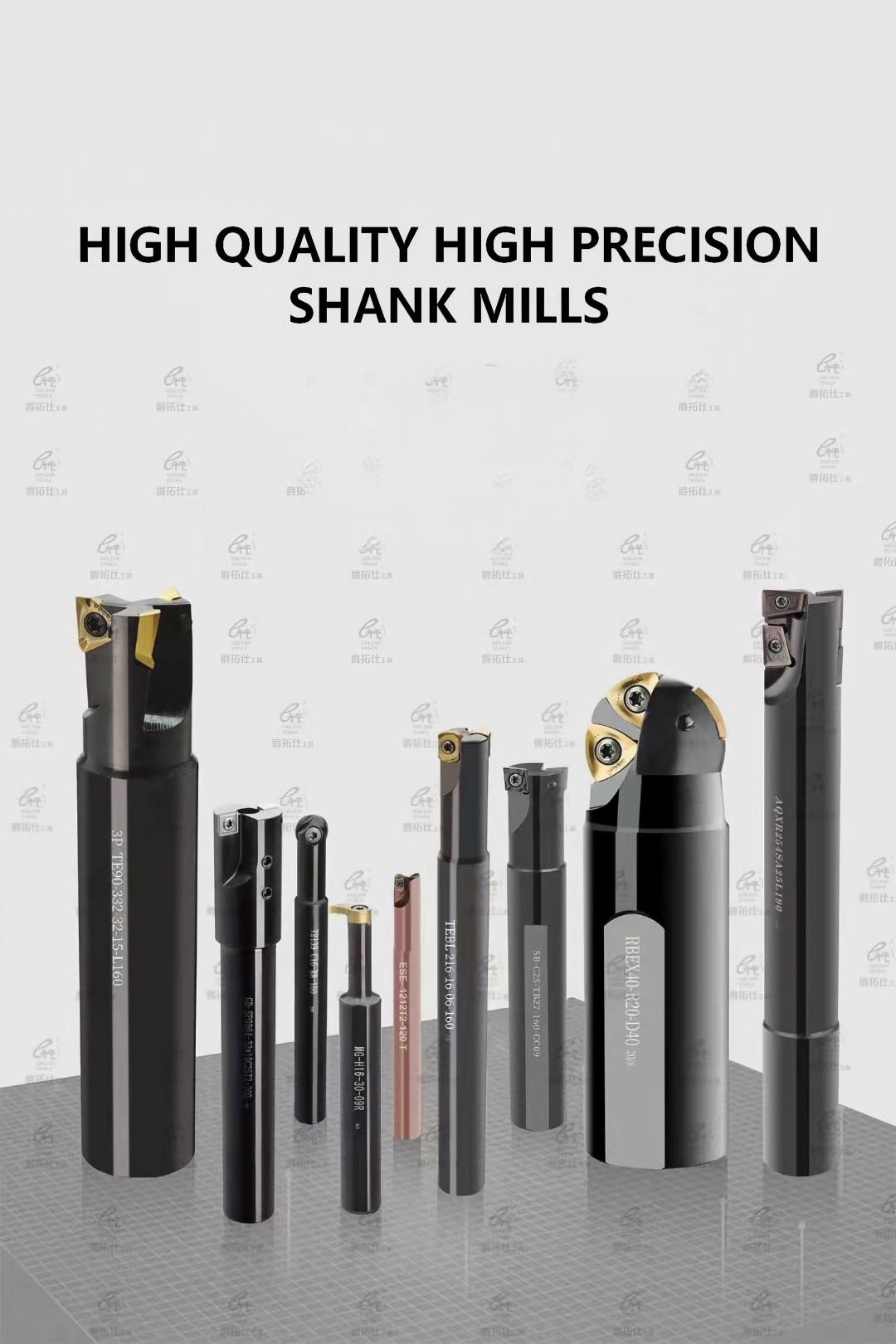
Wenling Geltos Tools specializes in high precision and high strength milling tools. Their product range includes:
- Grooving Mills – including the GFN series capable of narrow grooving as thin as 2 mm.
- Modular Milling Cutters – interchangeable heads that reduce tool change time and purchasing cost.
- Chamfer Mills – for deburring and edge preparation.
- Thread Mills – for internal and external threading on CNC machines.
- Dovetail Mills – for producing dovetail slots in mold and fixture work.
- Face / Shoulder / Profiling Shank Mills – for flat surfaces, steps, and contours.
- Shell Mills – large-diameter face milling cutters with replaceable inserts.
- Corn-shaped Mills – for complex 3D profiling.
- Interchangeable Milling Tools – one holder, multiple heads.
- Carbide Internal Turning Tools – for boring and internal profiling.
- Silent Tools (Anti-vibration) – designed for deep cutting where L/D ratio exceeds 4:1; models include VT25-SCLCR09 and VT40-SDUCR11.
- Milling Inserts – in grades for HRC up to 65, with carbide and ceramic substrates, including models APMT1135, SNMX1206, LNMU0303ZER, and 4NKT0603.
All Geltos products undergo heat treatment before processing, achieving precision tolerance no greater than 0.02 mm, suitable for high-rotation and fast-feed cutting conditions.
Step-by-Step: How to Select the Right Milling Tool
- Identify the operation – face milling, slotting, chamfering, threading, dovetail, or profiling.
- Match the workpiece material – for steel up to HRC 65 use carbide inserts; for non-ferrous materials, uncoated carbide may suffice. Ceramic inserts suit high-speed finishing of hardened steels.
- Check machine compatibility – spindle taper, reach, coolant through-spindle, and maximum RPM.
- Determine tool diameter and width – Geltos offers diameters from 8 mm to 400 mm and cutting widths from 1 mm to 20 mm.
- Evaluate tooth count – 1 to 20 teeth; fewer teeth for roughing, more for finishing.
- Consider modulus and interchangeability – modular systems let you switch heads without changing holders, reducing inventory.
- Assess vibration risk – for deep boring (L/D > 4), choose silent tools with vibration-damping design (e.g., VT20 C20*200V).
- Request a sample or technical data – test under your actual cutting parameters before bulk order.
Use Cases Across Industries
Geltos milling tools serve a broad range of industries:
- Automotive – cylinder head face milling, transmission housing slotting, and thread milling of bolt holes.
- Aerospace – profiling of titanium and aluminum structural components; silent tools for deep pocket boring.
- Metal Cutting & Machining – general workshop tasks including face milling, chamfering, and grooving.
- Woodwork – high-speed profile cutting of engineered woods.
- Shipbuilding – heavy-duty face and edge milling of large steel plates.
Product Comparison: Key Milling Tool Types
| Tool Type | Primary Application | Diameter Range | Width Range | Tooth Count | Typical Materials |
|---|---|---|---|---|---|
| Grooving Mills (GFN) | Narrow slotting, parting | – | ≥2 mm | – | Carbide |
| Chamfer Mills | Edge deburring, bevelling | – | – | – | Alloy Steel |
| Thread Mills | Internal/external threading | – | – | – | HSS, Carbide |
| Dovetail Mills | Dovetail grooves | – | – | – | HSS, Carbide |
| Face/Shoulder Shank Mills | Flat surfaces, steps | 40–250 mm | – | 1–20 | Alloy, Spring Steel |
| Shell Mills | Large-area face milling | 40–400 mm | – | – | Carbide inserts |
| Silent Tools (Boring) | Deep bore finishing (L/D≥4) | 20–40 mm shank | – | – | HSS, Carbide |
| Milling Inserts | Indexable cutting edges | – | – | – | Carbide, Ceramics |

Frequently Asked Questions About Milling Tools Manufacturers
What certifications should a milling tools manufacturer hold?
While specific certificates are not listed in public profiles, adherence to international standards such as ISO 13399 for cutting tool data exchange is a strong indicator of technical capability. Manufacturers like Wenling Geltos Tools demonstrate quality through process discipline: all products are heat-treated before finishing, achieving precision tolerances no greater than 0.02 mm. Buyers should request compliance documentation during qualification.
What is the production capacity of Wenling Geltos Tools?
Wenling Geltos Tools operates a 3,000 m² factory with approximately 25 employees and an annual output of 500,000 teeth. Their R&D team consists of 5 engineers, allowing them to support both standard and custom milling tool designs. The facility is capable of producing diameters from 8 mm to 400 mm and widths from 1 mm to 20 mm across multiple tool categories.
How do I get a sample of milling tools for testing?
To evaluate quality and performance under your specific cutting conditions, you can request samples by contacting Wenling Geltos Tools via email (1941486733@qq.com / noname1@geltos.com) or by phone (+86 86833728). Their sales team can recommend the right tool for your application and provide a unique cutting solution.
What is the lead time for custom or standard milling tools?
Lead time depends on order complexity and current production load. As a mid-sized manufacturer with an annual capacity of 500,000 teeth, Geltos can typically fulfill standard tool orders within standard industry lead times. For custom designs requiring engineering input (supported by 5 engineers), lead time may be longer. It is advisable to inquire directly for current scheduling.
For a detailed quotation or to discuss your project requirements, contact Wenling Geltos Tools today.
Ready to optimize your milling operations?
Request a sample or receive a customized tooling proposal from Wenling Geltos Tools Co., Ltd.
Email: noname1@geltos.com | Phone: +86 86833728
Have Questions or Need More Details?
Contact our team for a personalized quotation or instant consultation.
Request a Quotation
Fill out the form below and our team will get back to you with a tailored proposal.
WhatsApp Direct Chat
Prefer to chat in real-time? Message us on WhatsApp for instant assistance & quick answers.
- Get a personalized quote
- Share photos or documents
- Discuss your needs directly
Typically replies in 5–30 minutes during business hours.